
Donate
Support us in the fight for a better food system.


EcoTalent is one of 31 Our Bright Future projects across the UK. Each one is equipping 11-24 year olds to make a difference in their local community and for the environment. Our Bright Future is a £33 million programme funded by the National Lottery Community Fund.
After learning about food systems and their relationship to the environmental crisis at University and through online courses, articles etc – I decided what I personally thought were the ideal practices and concepts that our current food system should work towards. Now halfway through my EcoTalent internship with Foodrise I almost can’t believe my luck that the farm I’m working on just so happens to embody so many of these ideals – what a result! If someone were to ask me how we might improve our food systems and agricultural practices, I would say the way we grow food should be organically done incorporating biodiversity and working within complex ecosystems. This should happen on a smaller and more localised level that is community-led, environmentally sustainable (with focus on soil health and seasonality of produce) and happening more in urban spaces. To have the opportunity then to work at Sutton Community Farm that essentially practices all of these things has been such a wonderful experience.
Generally speaking, life on the farm happens at a slow pace (for the growers anyway, I’m sure the veg box team would have something to say about that). The type of growing the farm practices is very skill and labour intensive so there is always a lot that needs doing, however regardless of the slow-paced nature of the farm everything does get done in the end and seems to always work out as if by some magic agreement between the growers and the crops. I was honestly shocked at the scale of the farms production when I first started, that a community farm of 7 acres delivers over 600 veg boxes a week across South London and has 11 polytunnels, 11! I was even more shocked to find out that this was mainly done by a handful of people. It soon became evident though that this could only happen because of the vast amounts of knowledge and care that goes into the growing at the farm. If I end up with even a fraction of the knowledge that the growers at the farm have at the end of the internship, I’ll be a farming whizz.
With the exception of Hannah who had already been at the farm for 6 weeks, us EcoTalent interns started our placement on the farm during the annual ‘hunger gap’ where the winter crops have ended but the new seasons crops are not yet ready for harvest. This meant our tasks in the beginning involved everything except harvesting. Bed preparation, plant maintenance, irrigation, planting out and sewing seeds were how we spent most of our time. As already mentioned this is an extremely skill intensive form of farming, so seeing the amount work that goes into getting crops ready for harvest and learning how to do all of these tasks was extremely educational. It’s also worth mentioning the ridiculously hot weather we were experiencing at that time which made plant maintenance all that more important.
The end of the hunger gap in early June also brought with it the rain and with that, raucous celebrations by the growers at the farm. Ever since then it has been ‘harvest, harvest, harvest’ which I have thoroughly enjoyed, even the afternoon Libby and I spent harvesting 150kg of broad beans in the rain. There really is something very rewarding about harvesting crops that you have had a hand in growing, this is even more rewarding when you’re the one eating it. Besides the hundreds of kilos of broad beans, other harvesting highlights include tomatoes, aubergines and discovering what ‘aztec broccoli’ is. A quite regal looking plant that looks nothing like broccoli but tastes absolutely delicious! Whilst harvesting has brought with it more physically demanding tasks which my back and knees are probably not thankful for, for me it’s got to be my favourite aspect of the work on the farm.
Being totally immersed in food is something else that I really enjoy about being on the farm. Aside from the fact that food is actually everywhere on the farm, it’s also usually the main topic of conversation at the farm too. Whether it’s people sharing their own stories of growing at home, discussing their favourite foods or swapping recipes with each other, everyone at the farm is passionate about food and for someone who loves talking about food as much as I do I really can’t complain. This as well as the lovely volunteers at the farm who really are the beating heart of it, make it such an enjoyable working environment and one that I genuinely look forward to going into every day.
Bring on the next 7 weeks!
Spent grain makes up around 80% of the waste from commercial breweries in the UK. It arrives at the brewery dried and raw before being boiled to extract sugars before the sugar water (wort) carries on in the process that results in beer; but what about the physical grain left behind? A lot of breweries have found ways to ethically dispose of grain, with much of it going to animal feed and in some cases to green energy plants. That is a great outcome for a waste product, as the reality is that breweries use so much grain that it is sometimes easier to pay a waste contract to dispose of it at landfill. Easier does not always mean better though, particularly not when trying to tackle shortages of food and reduce food waste.
In January 2019 I ran a food service with Sprawl Kitchen to mark Burns Night in collaboration with a local brewery and bar, Handyman Brewery and Pub. As a part of the event I brewed a Scotch Ale with them, a dark beer made using roasted chocolate malt and in this case oats and lager malt. As we dug out the mash (literally digging the boiled grain out of the mash tun- the vessel in which it is boiled) it occurred to me that it is a real shame for it to go to waste. Surely it was edible? It provided the beer with some of its flavour, so what flavour was left in the now cooked grain? I am not the first person to use spent grain to make food, it is not my original idea, but it is something that as consumers we can easily plead ignorance towards, as it is not a visual part of the finished product. Nor is it a particularly desirable product, with it being a mulch of boiled grain and all. Therefore it is not used in food production as widely as it should be.
I decided to take some of the grain away (around two kilograms, wet) and use it on the menu at the pop-up event. We ended up serving a very loose version of cranachan, using blackberries instead of raspberries, making a syllabub with the aforementioned Scotch Ale. The malt was baked in the oven to dry out, to make a granola that would provide a crunch to an otherwise wet, soft dessert. I mixed the dried grain with local honey, hazelnuts, dried currants and baked it. The result was brilliant, the malt was transformed into a sweet, biscuity granola that tasted like honey, coffee and dark chocolate (because of the chocolate malt in the mash.) It was a success on the night and everybody (including ourselves) patted us on the back at how clever we had been in taking a product that would usually end up in a bin and putting it onto a menu. Of course it was edible, it is untreated grain that has only been boiled to extract (some of) its sugar.
Despite the success of the dish, and the event overall, my mind quite quickly turned to the scale in which we had achieved this success. I only took around two kilograms, wet. We roasted it to remove the moisture, therefore the dried product was probably around a third of that weight. We left behind so much more grain to go to waste. The worst thing about that is that as we are a pop-up kitchen, we do not have the capacity or facility to use more. We can only take so much per brew for specific events.
Soon after I started working with Alchemic Kitchen, Lucy (the AK project manager) and I were talking food waste issues and we landed on the topic of spent grain from breweries. The ethos of Alchemic Kitchen is to take food that would otherwise go to waste and revalue it, make something delicious out of something that others see as spent and spent malt typifies that pretty much perfectly. We chatted about using the dried malt milled down as flour, about baking with wet malt (which resulted in some delicious recipe testing- particularly a very fudgy chocolate cake made using wet grain, made by Lucy). We tried fermenting the malt to make vinegar- with varying degrees of success. However, the thing that stuck in my mind was the spent malt granola. I carried on thinking about and developing a recipe that is nut free and made the most of other surplus produce (unfortunately the delicious local honey I used previously does not fall into that category.) I landed on pumpkins, as we had an abundance of perfectly good ones donated to us after Halloween, that had been stocked for their decorative value, rather than for sustenance. I used the flesh to make a pumpkin caramel, toasted the seeds and added candied orange peel for its sweet and gelatinous qualities. At the Liverpool City Region Mayoral Green Summit last year, we served a zero-waste lunch and we included our spent grain granola bars, made with grain from Neptune Brewery. After receiving plenty of feedback on the bars, and tasting them ourselves, we decided we would be best served going back to making the granola as a loose product. I tweaked the recipe for the pumpkin caramel, roasting the flesh first before cooking with sugar, water and spices which resulted in a much richer and decadent granola. We also decided it would be best to make the granola with a malt bill designed for dark beers, as the flavour in the roasted chocolate malt offered so much to the finished product. The candied peels, made from surplus citrus fruits, made the cut and remain in the product to date.
Subsequently, as a team we have decided to make the granola a part of the Alchemic Kitchen product range and will be making it in larger batches with the intention of selling it on a consistent basis. We are working with our neighbours Melwood Beer Co. to take their used grain and dry it out ready to make the next batch in the coming weeks. We will have to navigate the lack of pumpkins at market at present but it is very much in line with Alchemic Kitchen ethos to use seasonal produce, therefore we will use something else in their absence. We will wait for the next glut, the next abundance of produce that needs rescuing from being wasted. Although I am pleased that we have found a way to work with the grain on a larger scale than before, I still think that it is important to consider the volume of spent malt that we will not be able to salvage (even just from Melwood Beer Co.) There are thousands of breweries across the country, varying massively in scale, that virtually all use grain to produce beer. We will continue to work with spent malt as an ingredient and attempt to develop other products too, as there is an untapped potential in using it as a means to feed people, at a time when people are going hungry. We are hoping to have an opportunity to work with the Danish social enterprise Circular Food Technology who have developed a way to reuse brewers grain at scale and are considering the Alchemic Kitchen as a partner for a pilot in the UK.
It has been a challenging time for a lot of people throughout Covid-19 and we have been busy responding by making fresh, hearty soup for some of the most vulnerable people in our community. The work we have been doing is so gratifying but it does feel great to be planning a visit to a brewery to get spent malt and make granola again. Keep an eye out on our social media channels to see when it is ready and available.


Today, an investigation by The Bureau of Investigative Journalism revealed that two international financial institutions, the European Bank for Reconstruction and Development (EBRD) and the International Finance Corporation (IFC), invest USD $2.6 billion in unsustainable, intensive livestock production. Foodrise, together with the Global Forest Coalition, an international coalition of NGOs and Indigenous Peoples’ organisations defending the rights of forest peoples, have written to the presidents of these organisations calling for change. We are joined in this call by 31 other civil society organisations.
Much of this $2.6 billion in financing went to support controversial ‘mega-farm’-style production in regions with high per-capita meat consumption – not to sustainable, climate-resilient and agroecological production. Livestock production is already a leading cause of climate breakdown, and business-as-usual growth scenarios for this industry project that, within ten years, the livestock sector will account for almost half (49%) of the world’s emissions budget for 1.5°C by 2030 and 80% by 2050. Industrial livestock production, or ‘Big Livestock’, is carbon-intense and extractive at its core; much of the land cleared for growing feed and cattle ranching occurs in the global South, as illustrated by disproportionate fires in the Amazon and other biomes. This, in turn, is exacerbating existing inequalities as Indigenous peoples and local communities face displacement, criminalization and violence.
We are outraged that the EBRD and IFC may be financing such destructive operations. Development finance institutions should neither materially, nor symbolically support environmental degradation through unsustainable agricultural practices. As the IFC states, “the livestock sector is a key pillar of food security and poverty reduction in many countries” – but research from the Global Forest Coalition clearly shows that there are alternatives to industrial models of production better placed to meet these aims.
Furthermore, this financing inherently contradicts both the IFC and EBRD’s policies on a ‘green transition’. From the EBRD’s strategy for a Green Economy Transition to the joint IDFC-MDB statement on alignment with the Paris Agreement, development finance institutions have a global responsibility to support low-carbon and climate resilient development. To truly support these ambitions, international development finance must take seriously their goal of redirecting financial flows ‘in support of transitions towards low-carbon and climate resilient sustainable development’, in the words of the joint IDFC-MDB statement on alignment with the Paris Agreement.
To align their finance with the Paris Agreement and resolve their blatant hypocrisy, we demand that these institutions:
Considering the threat of both the climate emergency and the global pandemic, it is essential that both the EBRD and IFC follow through with these actions. For a future that protects and sustains all livelihoods globally, there is no reason to finance unsustainable livestock production.
We eagerly await their response.
Eating seafood is good for us – the NHS recommends two portions of fish a week, with one of them being a portion of oily fish – but for those of us who choose to eat fish, we don’t want it to be at the expense of the health of the oceans and the opportunity for future generations to enjoy their bounty. More than half of us say sustainability affects our shopping decisions when it comes to seafood.
While there are lots of ways to eat protein – with plant-based sources posing the least burden on our environment, it can be difficult to access some micronutrients, like omega 3, without eating some seafood. In this context, farmed fish, like farmed salmon, can seem like the best of both worlds – high levels of micronutrients like omega 3, without putting any greater burden on wild fish. Right?
Unfortunately, the reality is not nearly as clear cut. The reason farmed salmon, especially Scottish farmed salmon, has high levels of omega 3 is because of what its fed – fish oil made from hundreds of thousands of tonnes of wild fish, such as sprat, herring, sardines and anchovies. Most of this wild fish could be eaten directly by people.
We examined whether eating farmed salmon fed on wild fish was a good way to get micronutrients into our diets. We calculated the total micronutrient output of the Scottish farmed salmon industry – salmon from Scotland tends to contain higher levels of micronutrients because it is fed on higher levels of fish oil than salmon produced in Norway or Chile. We then compared this to a model of the micronutrients that would be available if we ate some of the wild fish that is fed to Scottish salmon.
The results are stark: if we ate some of the diverse and delicious wild fish – like herring, sardines and anchovies – we could still access the same level of micronutrients produced by the Scottish salmon industry while leaving 59% of the fish caught to feed that industry in the sea. That’s over 270,000 tonnes of wild fish every year.
What’s more, we can still eat some farmed salmon: in our model we included some salmon farmed using fish oil made from by-products (the heads, bones and other trimmings) of fish caught to be eaten by people. This might mean a much smaller Scottish salmon industry – but it would also mean salmon farming that truly existed within natural limits, at least as far as marine ingredients in feed is concerned.
Eating wild fish and salmon isn’t the only way to get high quality micronutrients into our diets: farmed mussels (delicious with a garlic sauce and chips!) are very nutritious and high in omega 3. In addition, mussels don’t need feed – they live off plankton and other microscopic particles in the water. If we added some mussels to our diets, in addition to a range of small wild fish, we could leave 77% of wild fish caught to feed Scottish salmon industry in the sea, and still have a very healthy seafood diet.
In other words, despite the messages of the global salmon farming industry, catching fish to feed farmed salmon is not the answer to eating healthily and sustainably.
The salmon farming industry is aware of this contradiction at the heart of their production model. The industry has been exploring alternatives to ingredients made from farmed fish – but none are yet available at scale, and there are no guarantees that these won’t pose other environmental challenges (such as greenhouse gas emissions involved in producing them). Instead, the main industry response to challenges to its reliance on wild fish has been to hold up certification schemes, such as MSC and the MarinTrust. When we asked all six Scottish salmon companies for transparency on how and where they sourced their wild fish, only three replied in any detail: we’re grateful to the three companies who did engage – Grieg Seafood, MOWI and Loch Duart – for an insight into how these companies set standards for their feed.
What this engagement revealed is that salmon farming companies’ feed sourcing policies rely heavily on certification as a means of ensuring that the wild fish they use has been ‘sustainably’ caught. This opens up a further dilemma. The effectiveness of certification schemes at preventing overfishing is controversial. Several fisheries listed by the FAO as some of the most over-fished regions in the world are also certified for fish oil and fishmeal production by the MarinTrust (for example, Turkey and Morocco). The certification of new fisheries is fundamentally driven by market demand, and with an ever-rising demand for fishmeal and fish oil – not just from the salmon industry but also from the petfood, chicken and pig feed industries – there is limited power to check the pressure to certify new fisheries, even when they may not be sufficiently stable to warrant this. As a result, we are recommending that certification is only used as a tool to assess fish intended for direct human consumption.
Beyond the ins and outs of different sourcing policies, an important question remains: if there is a finite amount of sustainably-caught fish available in the world – and ever-increasing demand for the nutrients it contains – how should we make best use of it?
While to companies involved in the global aquaculture industry some fisheries are highly suitable to commodification to make fish feed ingredients, to many communities these fisheries are or could be a source of nutrition and livelihood. Certification of reduction fisheries is being used as tool to justify the reclassification of fish away from human food and towards animal or fish feed: this approach essentially transfers nutrients around the globe, in the process removing them from more local supply chains and redirecting them towards international supply chains where they can deliver greater financial value.
In asking the question – should we eat fish or not we oversimplify the issue; it is vital to consider what fish is eaten and who gets to eat it. We have delved deep under the surface of the global salmon farming industry, to get to grips with the flow of nutrients around the world and which currents are most likely to support both good human health AND the long-term health of our oceans. To read the full reports click here.

Full reports:
Off the Menu: The Scottish salmon industry’s failure to deliver sustainable nutrition
New research has shown we could eat a healthy diet and leave more wild fish in the sea if we ate a wider range of wild fish, and less farmed salmon. With NHS dietary guidelines encouraging UK citizens to eat at least two portions of fish a week, farmed salmon is often perceived as both a healthy choice, due to its high omega 3 content, and an option that relieves pressure on wild fish populations. But new modelling has shown that to access the same level of omega 3 and other micronutrients currently produced by the Scottish salmon farming industry, we should eat a lot less salmon, and more of a diverse range of wild fish, including sardines, anchovies and sprat[i]. By doing so we could leave 59% of fish currently caught to feed farmed salmon in the sea, helping to protect wild fish populations and ocean ecosystems.
Farmed salmon is popular: it is the most purchased seafood in UK supermarkets[ii], and Scottish farmed salmon is one of the UK’s top food exports by value[iii]. But farmed salmon’s omega 3 content is largely delivered by the inclusion of wild fish in its feed in the form of fish oil: previously, Foodrise calculated that the Scottish salmon industry uses around 460,000 tonnes of wild fish a year for this purpose, roughly equivalent to the quantity of seafood purchased by UK adults every year – and roughly 90% of these fish could be eaten by people.
New modelling has shown that if we made more the wild fish currently used to feed farmed salmon, including herring, anchovies and sardines, alongside a smaller quantity of farmed salmon, we could leave 273,000 tonnes of wild fish currently used by the Scottish salmon industry in the sea. If we added farmed mussels to our diet, which do not need feed and which contain high levels of micronutrients, we could leave 77% of wild fish caught for salmon feed in the sea, or around 354,000 tonnes.
Carina Millstone, Executive Director at Foodrise said:
“While the Scottish farmed salmon industry may cultivate a reputation for clean and green nutrition, our evidence shows that producing farmed salmon is actually creating a wasteful and unnecessary burden on our oceans: this industry is more about corporate profit than it is about healthy and sustainable food. Delicious smaller fish such as herring, anchovies and sprat are full of omega 3s and deserve a bigger place on our menu, as do superfoods like farmed mussels, which do not rely on fish from fragile ecosystems for feed, and yet are hugely nutritious.
“Catching and producing ‘super’ seafood could be the basis of a new blue economy for the UK, and government, supermarkets and chefs can do much to promote truly sustainable fishing and aquaculture. Meanwhile, if the Scottish salmon industry is serious about protecting the health of our oceans, it should stop catching wild fish for its feed.”
The modelling shows that eating a small amount of farmed salmon could be environmentally sound as well as nutritionally beneficial, so long as the fish oil it is fed is solely made from by-products, such as heads and bones, of fish caught for human consumption. Currently the industry makes around one third of its fish oil from by-products.
In addition to making poor use of the micronutrients in wild fish, the farmed salmon industry’s production methods are highly wasteful. In 2019, around 5.8 million salmon mortalities were reported by the Scottish industry, roughly 14% of total production. This compares with a 5% maximum mortality rate for chicken farms qualifying for the UK’s Red Tractor scheme. Foodrise calculates that feeding salmon that died during production in 2019 would have wasted around 25,000 tonnes of wild fish: enough to feed 2 million people their portion of oily fish per week for a year.
Foodrise also argued that certification of wild fish used in salmon feed did not act as a guarantee of sustainability, based on data provided by the Scottish industry. Out of six companies operating at scale in Scotland, three responded to Feedback’s requests for transparency on feed: Grieg Seafood, MOWI and Loch Duart. Three companies, The Scottish Salmon Company, Scottish Sea Farms and Cooke Aquaculture did not respond[iv]. The data provided by the companies demonstrated a heavy reliance on certification to try to ensure sustainably sourced wild fish.
Dr Karen Luyckx, Head of Research at Foodrise, said:
“There is strong academic evidence that certification is not a guarantee of sustainability, which is not surprising with such high demand for something that is in limited supply – but beyond this, the important question to ask is whether using wild fish to feed farmed fish, pets and other animals is a good use of the hugely important nutrients available in finite supply from our oceans. Our research concludes that it is not: at least as far as farmed salmon is concerned, it would be far better for our oceans and our health to consume some wild fish directly.”
Diversifying our seafood consumption could have considerable economic benefits. With the UK government promoting the consumption of wild fish from UK waters[v], including herring and similar ‘forage fish’ currently used to make salmon feed, there is an opportunity for fisheries authorities, chefs and retailers to promote the consumption of some of the smaller wild fish such as sprat and herring, which have become less commonly consumed in the UK.
As the UK government looks to provide further funding to the UK fishing and aquaculture industry[vi], and doubts raised about the economic contribution of salmon farming to remote coastal communities[vii], Foodrise is calling for the government to support the development of low-impact, high nutrition alternatives to salmon farming, such as mussel and seaweed farming.
Notes
Methodology note on biomass, protein and micronutrients:
Farmed salmon producers argue that when looking at fish biomass, the amount of fish that goes into producing farmed salmon is equivalent to or less than the fish that comes out. This is based on the use of wild fish to make fishmeal and fish oil, with more fishmeal produced than fish oil per unit of wild fish processed. The salmon industry’s feed requirements, primarily the need to include a certain level of omega 3 in salmon diets, govern the level of fish oil needed in their salmon feed. This leaves a certain quantity of fishmeal ‘surplus’ to requirements for the salmon industry, and this can be used to feed farmed prawns, other fish such as carp, or livestock such as pigs. However, when we look at protein in salmon feed, rather than overall fish biomass, we see that farmed salmon are fed other protein ingredients, such as soy, which also has environmental impacts. When comparing all the protein in farmed salmon diets with the protein in the final salmon product, salmon are not efficient ‘converters’ of the nutrients in feed; for every 100g of protein that went in as feed, only 28g ends up on our plates – it would be better to eat the protein in salmon diets ourselves. What salmon does provide, which other forms of protein do not, is micronutrients like omega 3. However, as this research shows, it is again more efficient and less of a burden on finite marine resources to eat a greater diversity of wild fish directly, than to access the nutrients in wild fish via farmed salmon. The only way that farmed salmon is an efficient vehicle to deliver micronutrients into our diets, is if the industry makes use of ‘by-products’ from fish caught for human consumption, which would otherwise go to waste, or be used for non-food purposes (such as chicken feed or pet food). The salmon industry makes around one third of the fish oil it needs from by-products: to operate within these limits it would therefore need to decrease current production of farmed salmon by two thirds. Other sources of by-products may be identified, however, these will need to be carefully monitored to ensure demand for fish oil does not create a perverse market incentive to drive additional fishing.
[i] https://www.mcsuk.org/press/sprats-are-big-on-sustainability
[ii] https://www.seafish.org/media/publications/Market_Insight_Factsheet_-_Seafood_in_multiple_retail_2019_update.pdf
[iii] https://www.gov.uk/government/news/food-and-drink-export-sales-soar-in-brexit-boost
[iv] Foodrise wrote to all six companies in July 2019 requesting transparency on sourcing of wild fish for feed, including locations of fisheries and types of fish used. Only Grieg Seafood and MOWI responded in any depth to these requests for transparency. See the full report for details: https://foodrise.org.uk/wp-content/uploads/2020/06/Foodrise_On-the-Hook_June-2020_LoRes.pdf
[v] https://www.seafish.org/article/sea-for-yourself
[vi] https://www.gov.uk/government/news/government-announces-financial-support-for-englands-fishing-businesses
[vii] https://www.thetimes.co.uk/article/salmon-not-a-big-economic-fish-after-all-sr3tdkph2
This week our Alchemic Kitchen will be delivering their 3000th portion of soup to local communities in Merseyside, providing nourishing food to people during the Covid19 crisis. All of the soups delivered have been accompanied by a freshly baked bread roll from fellow social enterprise Homebaked Anfield. Most recipes have been made with vegetables that would have otherwise gone to waste, including tons of beetroot, cabbage and cauliflower which was gleaned from North West farms. Our development chef Keenan Humble has worked hard to create delicious and innovative recipes including broccoli and lemon soup and caramelised cauliflower soup. Helena Appleton, who usually manages the marketing, retail and events, has become the team’s delivery driver and can now be seen driving across Liverpool and Knowsley every Wednesday and Friday with a car full of soup and bread. Helena said
‘Whilst nothing about the past few weeks has been ideal, we have been overwhelmed by the strength of our community and the hard work that has gone into making sure that everyone is cared for.We hope to continue working with our new friends long after the current crisis’.
Over the coming weeks Alchemic Kitchen will continue to deliver soups to community partners. Even though the regulations surrounding social distancing may be relaxing, and life seems to be returning to ‘normal’, there is an ongoing need for support in the community. Alchemic Kitchen is working hard to assist Knowsley Kitchen, a new partnership working in Knowsley to improve access to fresh, nutritious food. So far Alchemic Kitchen has facilitated the delivery of 130 packed lunches and 368 boxes containing fresh fruit, vegetables and bread to Knowsley residents. But this is just the beginning for the new venture, project manager Lucy Antal, has been developing a food vision strategy for the region to ensure that the societal benefits that have emerged from our Covid-19 response continues in the months and years to come. Read more about our vision for the food system here: https://challenges.openideo.com/challenge/food-system-vision-prize/open-submission/a-regenerative-food-economy-for-the-uk
The global pandemic means that our work in getting fresh, nutritious produce to people has never been more critical. We need your support to help make this happen. Any funds raised now will be committed to our COVID-19 food rescue, preparation and redistribution work.
Foodrise, along with a coalition of civil society organisations, is calling on UNEP (United Nations Environment Programme) to further advocate for plant-rich diets and truly sustainable food systems. The dramatic impact of the industrial-livestock sector on runaway global heating, deforestation, land degradation and biodiversity loss, has been acknowledged by experts for many years and even more so recently with the massive forest fires in the Amazon, Australia, and elsewhere. Meanwhile, the current Covid-19 pandemic has shown the numerous connections between food systems and the outbreak of zoonotic diseases and how transformative change is imperative for our interactions with the non-human world. Now is the time for governments and international institutions around the world to take concrete action to help reduce meat production and consumption.
Read more about the letter here.
You can also sign our petition asking the UK government to put sustainable food front and centre of next year’s climate negotiations, to be hosted in Glasgow.
Last week Brazil’s environment minister Ricardo Salles suggested during a cabinet meeting that COVID-19 is a distraction during which the Brazilian government can “run the cattle herd” through the Amazon, “changing all the rules and simplifying standards.”
This unbelievably blatant statement confirms that the Bolsonaro’s government is dismantling environmental regulations and using the cover of a crisis that has already killed over 23,000 people in Brazil. These actions have the explicit support of a wide-range of trade bodies – many of whom signed onto a statement confirming their “total support” for the ministers approach and condemning the “bureaucratic agenda” that uses environmental causes as an excuse for the “ideological and unreasonable reversal of economic activity”. Today, two studies show that under Bolsonaro Amazonian deforestation has surged.
Organisations such as ABRA (the Brazilian Rendering Association) and ABRAFRIGO (Brazilian Refrigerators Association) both of which represent meat processors and slaughterhouses, signed onto the statement. Their members include well-known brands such as the dog food company, Pedigree – owned by Mars and lesser known controversial Brazilian meat giants such as BRF and Marfrig whose products you can find on shelves here in Tesco’s. As Brazilian NGO’s are pointing out – these companies are literally Ricardo Salle’s herd, ready to run faster and further through the Amazon.
In fact, an investigation by The Bureau of Investigative Journalism and Reporter Brazil uncovered British companies are purchasing thousands of tonnes of meat from companies like Marfig – strongly linked to Amazonian deforestation. Supermarkets are beginning to take notice, with major retailers such as Iceland, Tesco and Aldi signing onto a statement of concern. Though as Foodrise has argued before, stern words of dismay do not equal meaningful action. Will they act now?
What is less clear is whether investors and banks are taking notice. Here in the UK high street banks such as HSBC and investment companies such as Standard Life Aberdeen, invest millions in Marfrig and companies like it. In our recent report we showed these companies are incompatible with a just and climate-safe food system and posed a simple question – whose side are we on, Big Livestock’s or the Planet’s? Without divestment from the worst offenders, we know whose side Big Finance has picked. Are any brave enough to break from the herd mentality?
The global pandemic means that our work in getting fresh, nutritious produce to people has never been more critical. We need your support to help make this happen. Any funds raised now will be committed to our COVID-19 food rescue, preparation and redistribution work.
The European Union is unique in prohibiting the use of animal by-products in feed for omnivorous non-ruminant livestock such as pigs and chickens; a practice which is commonplace in Australia, New Zealand and the United States. I imagine the feed industry in these countries is baffled by the way in which we squander high quality protein by legislating it out of our feed supply chain. Meanwhile, Europe grapples with a protein deficit which it continues to fill with rainforest soya.
The Japanese exclaim: “Mottainai” “What a waste”! because Japan currently recycles over half of the surplus from its manufacturing, retail and catering sectors into non-ruminant feed. Leftovers are heat-treated and processed in specialist highly bio-secure treatment plants to ensure the feed is safe.
Foodrise welcomed the February draft of the Farm to Fork Strategy of the European Commission which proposed to “review the feed ban rules for feed for non-ruminant animals (in particular pigs and poultry) as well as certain rules of the Animal By-Products Regulation in order to promote more circularity and better valorisation of animal by-products while safeguarding animal and human health”.
Sadly, this commitment was removed from the final version, which instead states that the Commission “will examine EU rules to reduce the dependency on critical feed materials (e.g. soya grown on deforested land) by fostering EU-grown plant proteins as well as alternative feed materials such as insects, marine feed stocks (e.g. algae) and by-products from the bio-economy (e.g. fish waste).”
Foodrise strongly encourages the European Commission and the UK government not to lose sight of the enormous gains that a review of the feed ban rules could deliver, from reducing our reliance on soya driving deforestation in precious South American ecosystems, to decoupling our feed supply chain from global commodity markets, to reducing feed costs driving ever more intensive and damaging livestock farming practices. For details on the greenhouse gas emissions savings, other benefits and safety aspects, see the REFRESH policy brief on animal feed.
But legislating for the safe use of by-products and leftovers in animal feed is only part of the circular farming model we want to see. Firstly, we need to return to nose-to-tail eating, making sure no protein, calorie, vitamin or mineral leaves the food supply chain unnecessarily. It costs too much to produce in the first place and represents a waste of precious natural resources.
Secondly, there is no way around it, we need to drastically reduce the amount of meat and dairy in our diets altogether. One way to determine the limitations of livestock production, including farmed fish, is to apply the food – feed competition avoidance principle where arable land that can be used for producing human-edible crops is never used for feed. Likewise, all fish caught should feed humans directly, as we will set out in detail in our forthcoming report on Scottish salmon.

Click here to listen to a recording of this blog
Over recent weeks in the UK we have witnessed gallons of milk being poured down drains by independent farmers who are being refused collections by supermarkets. Vegetables are rotting in fields because we cannot guarantee safety and dignity to the low-paid migrant workforces on whom we depend to harvest this produce. Tonnes of food continues to be wasted all whilst thousands of people go hungry. Why? Because our food system, that places profit over livelihoods, is not equipped to handle a crisis. This system is fragile, and we are seeing it crumble before us.
It’s no question that our food system was broken already. This has only been exacerbated by the crisis: this system simultaneously produces masses of surplus whilst failing to feed everyone, with more and more people relying on food banks than ever before to compensate for this disaster. There has been a 73% increase in supplies being distributed by food banks over the past five years, and a 23% increase from 2018 to 2019 alone. Between 2010 and 2016, 4,000 small-scale farms in the UK closed, according to Defra. These are signs of a system that is not only failing but is systematically depriving the most vulnerable in our society of their basic right to food. In a post-COVID society under economic turmoil, these issues will only become more pertinent unless drastic action is taken to transform what, and how, we eat.
The UK’s food and farming industries employ 1 in 8 working people. Those who work in food service, however, saw their sector collapse overnight. With no guarantees to a fair wage and thousands of key workers in grocery stores and food processing plants left with no choice but to face the coronavirus head on, it is imperative that any efforts to recover from the pandemic places food issues at its centre. A transformation of our food system is necessary if we are to build back better.
For many of us, our experiences of food in lockdown have been mixed. There’s been a reported 34% reduction of household food waste since lockdown started as a result of individuals being more careful about the food they consume, with visits to grocery stores becoming a somewhat perilous excursion. We’ve seen radical forms of cooperation and care-giving flourish through mutual aid networks whose actions have involved distributing free meals and delivering shopping for neighbours. Bread making has introduced an entry point to baking for many new cooks and as some people find daily catharsis through punching their sourdough, others are rage baking with their communities. Whether it’s shortening supply chains, or reducing long journeys for livestock, these resourceful, and often radical, adaptations to the way we eat under lockdown should be seen as a foundation to the world we want to rebuild.
To do this, we must challenge our “barriers of imagination”. Currently, less than 20% of Britons are optimistic that the quality and the environmental impact of the food they eat will get better in the future. Even less are optimistic about their access to healthy food. In a society that is so pessimistic about the food we eat, a just recovery for our food systems is an opportunity to imagine big and better. We must ensure we have a national food strategy that works for people, not profit. We need fair wages for agricultural workers whose labour, as we are now witnessing, provides a backbone to feeding our communities. We need access to healthy food for everyone, leaving no one hungry. And finally, we must pandemic-proof our food system to ensure that this does not happen again. Food is a right, not a luxury, and it’s time for our food system to reflect this.
The global pandemic means that our work in getting fresh, nutritious produce to people has never been more critical. We need your support to help make this happen. Any funds raised now will be committed to our COVID-19 food rescue, preparation and redistribution work.
The past 6 weeks have seen more change in our community than we’ve seen in the past 6 years. Here at Alchemic Kitchen we have been adapting to meet the needs of our community. Our chef Keenan has made over 1400 portions of soup which have been distributed to people in need of help through partner organisations.
Whilst the supermarket shelves have been emptied of dry goods, there are many farmers who are struggling to dispatch orders that were grown for European distribution. This meant that I had the pleasure of heading up to H &P Ascroft Farm in Tarleton last week . There I met Peter Ascroft who helped to unload 100 tonnes of beetroot (at a distance of course). Gleaning on farms is often a mucky affair and is very hard to socially distance. In this instance all of the beetroot had already been picked. We simply had to drive up, put on our gloves and get packing. The beetroot was accompanied by a tower of cauliflower and cabbage which had been rejected by a supermarket for being too small.
Every time I visit a farm, I am amazed by the amount of work that goes into growing food that we end up paying so little for in supermarkets. It is a travesty to see so much good food go to waste. In this case the food was very much appreciated by not only us but several other groups from Liverpool and Manchester. Neo Community centre in Widnes sent out the vegetables they collected in bags to communities whilst the Horse and Jockey pub in Melling made curries to send out to people who were self isolating in the area.
“It was great to be involved. As spirited amateurs in the food bank/community kitchen industry, with no mandate to operate other than our community’s need, we felt included in the project and benefited instantly. Through this network of committed contacts we have forged relationships quickly with like minded individuals”. Chef Adam Franklin
At our end we distributed beetroot and lentil soup accompanied by a bread roll from Homebaked Anfield to community groups across Liverpool and Knowsley. Michael, a veteran resident at Speke House, said: “I love the soup deliveries every Wednesday. It’s nice to be thought of and that Alchemic Kitchen are willing to go out their way during this strange and difficult time.”
You can find the recipe for our soup below. It’s best enjoyed with a crusty bread roll and dollop of crème fraiche or Greek yogurt on top.
1.5kg beetroot
2 medium onions- peeled and sliced
3 garlic cloves – peeled and sliced
100g green or brown lentils
3 bay leaves
1 sprig of thyme
2 tsp dried dill/ 1 bunch of fresh dill chopped
2 litres stock
1 tsp salt
1 tsp pepper
1) Preheat your oven to 200c. Clean and trim your beetroot before wrapping in foil and baking for an hour or until tender. When the beetroot is out of the oven allow it to cool, peel away the skin with a knife and chop into cubes.
2) In a large saucepan heat up some vegetable oil, add the sliced onion and garlic, bay leaves and thyme. Sweat the onions without adding much colour until they are soft.
3) Add the beetroot to the pan and stir through the onions before pouring in the lentils. The lentils will thicken the soup when it comes to blending, making it more substantial.
4) Pour in the stock and stir. To make sure the lentils do not sit at the bottom of the pan and burn, stir regularly.
5) Once the lentils are cooked through and split apart if you apply pressure to them between your finger and thumb, blend until smooth. At this point add salt and pepper, as well as the chopped dill.
The global pandemic means that our work in getting fresh, nutritious produce to people has never been more critical. We need your support to help make this happen. Any funds raised now will be committed to our COVID-19 food rescue, preparation and redistribution work.
Click here to listen to an audio recording of this blog
Just-in-time manufacturing, sometimes referred to as just-in-time production or the Toyota Production System, is an inventory management system. The system is designed to increase efficiency, reduce costs and waste by receiving materials only as they are required.
It’s a model that serves well for the car industry and negates the need for stockpiling parts in factories, and which has been embraced with gusto by a very different sector – the modern, corporate food retail sector. Yet here, ‘just in time’ has proven to be a house of straw when applied to the global food system. Much though supermarkets and the other hyper-large businesses of today’s food system would like us to believe it is, food is more than just a commodity. It’s time the way we produced, processed, sold and ate it reflected that.
‘Food is more than a trade commodity it is an essential of life’ Boyd-Orr
Enthusiasm for a high-tech, cost-saving ‘just in time’ model has resulted in building supermarkets with huge floor space but very little storage: food deliveries made on a constant rolling basis means maximising the profit per square metre, but it also leaves very little margin for error when that supply chain is disrupted or has an unexpected run of demand, such as we saw in the first weeks of the coronavirus crisis. Supermarket shelves may have recovered quickly, but we shouldn’t look away from the lessons those first few weeks can teach us, as many found themselves looking to new ways to access fresh and healthy food, such as buying from community-supported agriculture schemes and from suppliers to the restaurant trade. Of course, for many these solutions weren’t an option. In some areas of Liverpool where we work, families in receipt of the government’s Free School Meal vouchers programme found themselves for a few weeks without a single supermarket in their local area where they could actually spend them.
Long lead in times, setting prices and contracts for food production years in advance to reduce costs has stripped all agility and room for manoeuvre out of the corporate food supply. Farmers are told to grow x number of cabbages for x price, and the domination of the big supermarket chains has meant that there is very little market elsewhere for the farmer to sell their produce at. To make matters worse, a recent survey showed that a third of suppliers have had products delisted by retailers since the start of the coronavirus outbreak.
So there is no incentive to grow more or differently, in fact if anything the strict parameters of these contracts has led to waste as nature isn’t good at being confined by size or shape wise, meaning there is a tendency to over produce in order to ensure enough ‘perfect’ produce for the supermarket shelves. In turn, this has shaped the aesthetic dynamic and understanding of “good” food for the consumer. Too big, too small, too wonky, too pale, too dark, too weird and it gets left on the shelf. Nature does not always grow food to cosmetic specifications and our food system is susceptible to weather and other environmental issues. Our food system is not a car, but we act as if it is – if it breaks down, we can replace it with a more technologically advanced version. We are not cars, food is more than fuel – we need to shift to a food system that recognises the true value of food.
“You are not a car…To treat our bodies like cars is to essentially treat ourselves as something disposable.” – Sonya Renee Taylor
“We’re seeing horror stories of farmers throwing milk away and food being destroyed in fields. But the reality is that these stories are all coming out of industrial supply chains. Farmers who are part of local networks are not throwing away food; in fact, they are rushing to keep up with demand. The pandemic is exposing the big lie of industrial agriculture and its claim that this is the only way to feed the world. When one big supply chain runs everything, the entire system becomes fragile. The reality is that smaller and more diverse networks of agriculture are the most resilient.” Raj Patel
In our current framework of progress the answer often resides in the mind frame of ‘Go Big or Go Home’ what if instead we went small and community focused? What if instead of focusing on efficiency, we put food workers at the heart of the food system? These are some of the questions are exploring through our regional food economy pilot programmes – Alchemic Kitchen in Merseyside and FLAVOUR in Brighton.
The global pandemic means that our work in getting fresh, nutritious produce to people has never been more critical. We need your support to help make this happen. Any funds raised now will be committed to our COVID-19 food rescue, preparation and redistribution work.
In these uncertain times, I like many others have been turning to my kitchen for comfort. When things feel out of my control, I know I can at least make a nourishing stew or bake a cake to share with my housemates. Thankfully, amidst images of empty supermarket shelves, the community supported agriculture scheme Growing Communities that I am a member of continues to provide me with fresh produce while ensuring a fair price for farmers. In short, I am very lucky.
We have all seen the videos of Italians singing to each other from balconies, maybe like me you are finding solace in the kitchen or connecting (from a safe social distance) with your neighbours. Unfortunately, for many people the current crisis has exacerbated problems they already faced. Children in families who were already struggling to access good, nutritious food are finding life even harder under the impacts of the Coronavirus crisis. Alarming new figures from the Food Foundation show that since the lockdown began, four times as many adults are experiencing food insecurity as were before it started. Sadly, this is likely to be reflected in children’s experience as well.
 To address this, the government has created a Free School Meals voucher system so that families whose children receive Free School Meals can access extra food. But it’s not enough: many families cannot use the vouchers because they are not accepted in the food shops or markets near them. Take Merseyside, for example: the map here highlights this disparity in Merseyside, where there are no local places for families to use their vouchers. Currently the vouchers can only be used in a limited number of food retailers, principally large supermarket chains. The vouchers cannot be used in discounters such as Aldi (update: Aldi is now included in the scheme) and Lidl, or the Co-op or more local convenience stores. The situation is even more precarious for those families in need without a car, as they will be unable to safely go to the supermarket while practising social distancing. I firmly believe that families should not only have the capacity to purchase food from local shops and markets but also the agency to be able to decide from where and how they buy their food; these vouchers are failing to enable families to do just that.
At this incredibly difficult and uncertain time, the right to good food should be ensured for everyone. But what can we do about it? Now, more than ever before, we need to come together to demand change. We need to ensure that families can access good food wherever it is most suitable for them to do so. Join me in telling the government to make these vouchers accessible to all who need them.
The global pandemic means that our work in getting fresh, nutritious produce to people has never been more critical. We need your support to help make this happen. Any funds raised now will be committed to our COVID-19 food rescue, preparation and redistribution work.
Today, Foodrise has joined with 39 organisations across Europe to call for an ambitious EU Farm to Fork policy to be to be published by the end of April. Read the full letter and see our reflections below;
“The Covid-19 crisis has resulted in significant food waste highlighting the systemic weaknesses of long supply chains that get funnelled through a small amount of retailers. At the same time, short supply chains and diverse agro-ecological farm models have shown their potential for zero-waste supply chains, resilience and climate change mitigation and adaptation, clearly confirming the need to push ahead with the F2F strategy as soon as possible.”
“The Covid-19 crisis starkly highlights the urgency of the F2F strategy proposal to revise the feed ban rule. Enabling the safe use of unavoidable surplus food in non-ruminant feed would support resilience in European food production as animal feed supplies become less reliant on imported protein.”
The global pandemic means that our work in getting fresh, nutritious produce to people has never been more critical. We need your support to help make this happen. Any funds raised now will be committed to our COVID-19 food rescue, preparation and redistribution work.

The UK food chain is changing rapidly and dramatically as a result of the Covid-19 crisis. These changes are playing out at the beginning of the “hungry gap” (March to May) when reliance on imports of fresh fruit and vegetables is at its annual peak. It is impossible to predict the time frame within which the food system will return to a stable footing especially when you add Brexit into the mix. Nonetheless, to try to make sense of the complex and evolving situation, Foodrise has set out below how things currently look and developed scenarios for the UK’s fresh food in 2020.
Tim Lang’s new book Feeding Britain carries the now prescient message that the UK’s food chain is more fragile than it appears. An over-reliance on imported food (just 53% of what we eat is produced here, and even less in terms of fruit and vegetables) and seasonal migrant workers with the stamina and skills to harvest our crops, are two key vulnerabilities in our food system that the Covid-19 crisis has exposed.
The sight of empty supermarket shelves in March brought into question whether our food system can cope with the impacts of Covid-19. As shelf-stackers worked tirelessly, the government and supermarket executives continued to reassure the public that food shortages would not occur. What began as a surge in demand for canned and dried foods (not to mention soap and loo-rolls) was then followed a week later by retailers struggling to keep fresh food available.
Analysts have argued that whilst emotive stockpiling was certainly a factor, two other main causes of bare shelves were the just-in-time supply chains of supermarkets being stretched beyond their limit and many households simply needing more in their fridge as food to go outlets, canteens and restaurants closed. Things have since settled somewhat with supermarkets relaxing item restrictions which had been introduced to spread stock availability. Meanwhile, delivery services are expanding as fast as possible to match demand.
Social distancing has changed food consumption habits drastically and had major implications for the flow of fresh produce at the wholesale level, in particular as demand from the entire restaurant sector suddenly dropped. Meanwhile processing and manufacturing has felt the effect of demand for convenience and on-the-go products fall. Many wholesalers have had to reconfigure their route to market with next to no preparation time, and some have even set up lines of direct to customer sales routes to cater to local supply. However it would seem that the majority of the extra supply previously destined for hospitality has been redirected towards the burgeoning retail sector.
Food redistribution charities are receiving an unprecedented level of food donations. Where businesses are unable to find buyers for their products, more than ever before they are donating food to the likes of FareShare, City Harvest and the Felix Project. However organisations working in food redistribution are fully aware that the availability of surplus food fluctuates and may dip in future. Food produced for the food service or catering industry is not reaching its intended destination and instead is ending up at charities in record quantities, which begs the question of for how long it can continue to be dispatched at source?
At the same time, there are reports that food banks relying on donations from the public are struggling with a massive increase in demand/need for their services, and a drastic drop in donations of both food and volunteer time. Also, these food banks are set up to store and distribute ambient foods such as tinned vegetables or pasta, which are exactly those foods that are currently scarce due to panic buying. Huge donations in fresh produce diverted from a collapsed hospitality sector require faster handling and more complex storage and transport infrastructure, currently not available to many food banks.
At the farm level the clear concern is land worker vacancies. For larger producers reliant on migrant labour, there’s been a big push for picker recruitment coming from Concordia, Fruitful Labour and HOPS – who received over 10,000 enquiries for farm jobs inside of a week and currently have filled vacancies for April. Whether the #FeedTheNation campaign will work to the extent required to fill the 80,000 vacancies nationwide this harvest season, it’s hard to say. Some farms think that worker shortages may actually be less bad than in recent years (caused by Brexit/weak £) due to increased unemployment as people are becoming available from being laid off in hospitality and ornamental horticulture as many plant nurseries and garden centres down-scale or close.
However Concordia and others think that farms will struggle to harvest crops and worries about picker shortages are legitimate. Whilst issuing temporary gangmasters licences may be necessary to ensure farms have vacancies filled, this should not be at the expense of workers rights and fair pay. It is also worth emphasising that the recruitment problem will be felt just as acutely, if not more, in countries such as Spain, Italy, France, Holland and Germany who regularly export produce to the UK. For example, Spanish agriculture relies heavily on Moroccan seasonal labour, now in short supply.
One lesson of this pandemic is that events do not unfold along expected pathways. Overall we expect both reduced food imports and a reduced labour supply, but what is impossible to predict given the fluid and fast-moving nature of things is how much these two issues will bite and how much they will interact with each other. Given this evolving context, here are three scenarios for UK’s fresh produce that include what we think will be the determining factors in terms of the quantities of food that make their way to the household.
[The time period for these scenarios are the upcoming horticultural season – spanning from April 2020 into early 2021]
Scenario 1: Scarce supply
Scenario 2: Glitchy
Scenario 3: Prioritised Food Security
We call on government, national and local, as well as Local Enterprise Partnerships to support the #FeedTheNation campaign to provide employment pathways into agriculture. Roles should be paid at the Living Wage Foundation living wage.
We’re firmly behind Tim Lang’s call for a Food Resilience and Sustainability Act which would ingrain secure access to healthy, sustainably produced food as a right for all citizens. We support the Land Workers’ Alliance call for a Food Army fund to support small farms and market gardeners with small business grants, to transition the supply chain towards local routes, provide start-up costs to new entrants and develop a community resilience programme.
The global pandemic means that our work in getting fresh, nutritious produce to people has never been more critical. We need your support to help make this happen. Any funds raised now will be committed to our COVID-19 food rescue, preparation and redistribution work.

Growing skills, connection, and resilience through food and farming
See the issue

In these uncertain times, the team at Alchemic Kitchen put our heads together and decided on how we could best utilise our resources to help our community; which resulted in putting the marmalade making to one side to focus on tackling potential food shortages in the region. We have been overwhelmed at the support we have received from chefs and restaurants over the last couple of weeks, their response has been fantastic and has aided the work we are doing to ensure people are being fed. We have received donations of food from places that have been forced to close as a result of government advice and have been turning it into hearty soups. We are working with partner organisations to then get the food to where it needs to be.
We have figured that we have the capacity to feed up to 250 people per week, providing there is an appetite for it, and we can get enough community partners involved to run the operation safely and within the guidelines set out by government.
That is a lot of soup to make over the coming weeks and months and so far we have either made or had donated:
 Celeriac, Apple & Wild Garlic
Leek, Carrot & Fava Bean
Roasted Red Pepper & Tomato
Spiced Tomato
Thai Corn & Sweet Potato
Potato, Mushroom & Basil
However, this is just the beginning. We have received a fresh delivery of lentils, fava beans and split peas from Hodmedod’s and I am still working through a mountain of produce that has been donated to the cause.
My life isn’t just all soup now, though. I am also writing recipes that might be useful for people at home who are leaning on their store cupboard a little more than usual and we are also running a kitchen diagnostic on social media so if you need a little inspiration get in touch with us on Thursday’s by tweeting @AlchemicKitchen with the hashtag #AlchemicKitchen with your cooking quandary and we will reply between 5pm-7pm.
Stay well,
Keenan Humble and everyone from the Alchemic Kitchen.

The global pandemic means that our work in getting fresh, nutritious produce to people has never been more critical. We need your support to help make this happen. Any funds raised now will be committed to our COVID-19 food rescue, preparation and redistribution work.
Foodrise, like many fellow civil society organisations, has emerged into this strange, deeply worrying new world somewhat bewildered and disorientated, but with a renewed determination to do whatever we can to help.
We have started to redeploy much of our work towards COVID-19 relief efforts. In Merseyside, our Alchemic Kitchen has turned its hobs and chopping boards to producing fresh, healthy and nourishing soup, which we are sharing with vulnerable people via our extensive network of community groups and service delivery organisations. At a time when many people are struggling to access enough food, there are also large amounts of food at risk of being wasted, and Lucy and her team are rescuing as much as they can from closed cafes and restaurants and wholesalers. We hope to continue rescuing food and turning it into delicious soups and other products for community groups in Merseyside throughout the COVID-19 crisis.
 As many of you will know, Foodrise has a long history of rescuing produce that would otherwise go to waste from farms: for many years, we have organised volunteers and trained community groups to go gleaning. In the last few weeks, we have spoken to our partner farmers and many of them are facing unprecedented challenges: some supplying the hospitality industry have seen their business dry up overnight, while others are deeply worried about lack of staff to harvest produce, a situation which will gets worse as the year progresses. Already our partner gleaning groups have been organising to recover food from fields in Kent to distribute to those in need in their local community; and we are currently working out how we can best use our networks of farmers, gleaners and community groups to make sure fresh, healthy produce does not go to waste, but instead goes to some of the more vulnerable members of our society in this difficult time.
The COVID- 19 pandemic has starkly brought to the fore the vulnerabilities of our food system. It has exposed our risky dependency on global food supply chains; it has reminded us of the country’s food insecurity and lack of farming skills The supermarket stockpiling pandemonium has also shown us the inadequacy of individual consumer responses in facing up to the collective challenge of fair access to food – while neighbours, communities, mutual aid groups and NHS volunteers are inspiring us with their determination to make sure no one is left behind.
At Foodrise, our work has always been about creating a more plant-based, less wasteful, fairer and ecological food system. The COVID-19 food crisis is showing that our work is more necessary than ever. The response of communities, civil society and citizens across the country are giving us a glimpse of the more resilient and fairer food system we strive for. Inspired by this, we will redouble our efforts over the coming months – on the ground and through our campaigns – to transform the food system, and make sure we do not bounce back but step forward from this crisis, leaving behind a corporate profit driven food system, to one that prioritises health, equity and ecological renewal.
We wish you and your loved ones well. Please stay in touch for updates and consider donating to us if you can– any funds raised now will be committed to our COVID-19 food rescue, preparation and redistribution work.
Carina and the Foodrise Team
The global pandemic means that our work in getting fresh, nutritious produce to people has never been more critical. We need your support to help make this happen. Any funds raised now will be committed to our COVID-19 food rescue, preparation and redistribution work.
Growing skills, connection, and resilience through food and farming
See the issue
Staff at Foodrise have curated some recommended reading for anyone interested in delving deeper into the relationship between COVID-19 and the food systems, from the role of our dysfunctional food system in its genesis through to the impacts of the pandemic and it’s response on food supply chains. If you have read something useful please let us know and we can add it to this list.
Disclaimer: These articles do not represent the views of Foodrise but we have found them interesting so wanted to share.
The alliance for better food and farming, Sustain, outlines what emergency action needs to be taken on food.
https://www.sustainweb.org/blogs/mar20_this_is_an_emergency_coronavirus_requires_action_on_food/
In this interview Rob Wallace, author of Big Farms = Big Flu provides speaks about the bigger picture of the COVID-19 crisis to argue that “we should demand food systems be socialized in such a way that pathogens this dangerous are kept from emerging in the first place”. If you’re after a longer read this piece from late January, goes into more depth on the same issues.
Dan Saladino from BBC4’s Food Programme looks at the UK’s food security in light of COVID-19. The podcast also includes the ever-excellent Prof. Tim Lang from City University questioning why the government is letting the giant supermarkets take such a big role in vital food policy
https://www.bbc.co.uk/programmes/m000gcwf
Laura H. Kahn, author of One Health and the Politics of Antimicrobial Resistance, puts COVID-19 in the context of increased consumption of wild and farmed meat. Written for the organisation that sets the Doomsday Clock – which we’d recommend not engaging with right this very second! If you are interested, see this Talking Politics podcast here.
Sonia Shah for The Nation links the rise of COVID-19 to human assaults on the environment.
https://www.thenation.com/article/environment/coronavirus-habitat-loss/
The associate director of the Good Food Institute, Liz Specht, argues that the Coronavirus means we need to “modernise” meat production making a pitch for the techno-fix of lab grown meat.
https://www.wired.com/story/opinion-modernizing-meat-production-will-help-us-avoid-pandemics/
An article for Bloomberg showcases the ripple effects of COVID-19 on unexpected areas of the food system.
Coronavirus: How will the outbreak affect food and farming?
An article that covers broad impacts on the UK horticultural sector, including the prospect of a collapse in seasonal migrant labour.
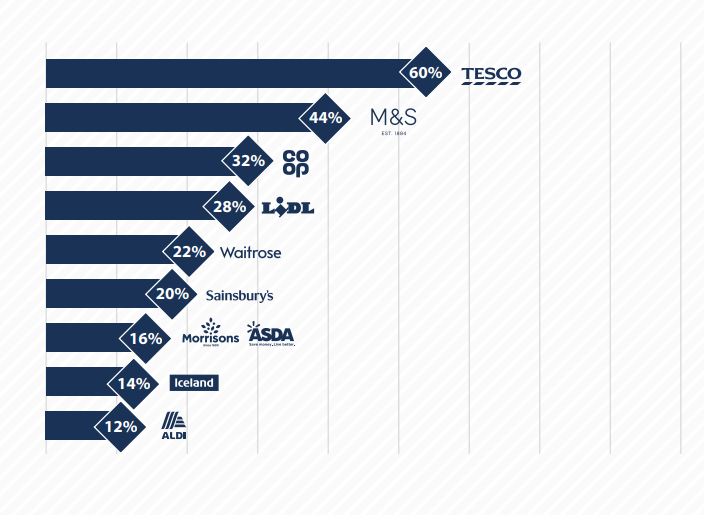
Together with the Changing Markets Foundation we have ranked the top 10 UK supermarkets on their efforts to tackle the use of wild fish in their aquaculture supply chains. The report shows that UK supermarkets are failing in their responsibility to protect our oceans, as seven out of the ten supermarkets received less than 30% on the fish feed sustainability scorecard, with ALDI finishing bottom of the list on 12%, Waitrose receiving just 22% and only Tesco achieving a score over 50%.
The report also found that UK shoppers indirectly and unknowingly consumed 177,000 tonnes of wild fish in 2019 by eating the top six farmed fish species including salmon and prawns, which are fed on fishmeal and fish oil. That equates to a ‘hidden’ 172g of wild fish consumed for every 100g of farmed fish eaten, most all of which could have been eaten directly by people.
This report ranks the top ten UK retailers against a set of criteria designed to assess how effectively they are addressing the ocean sustainability implications of the farmed seafood they sell. We ranked the retailers as follows:
Click here to listen to an audio recording of this blog
Foodrise made it to the semi-final of the prestigious Food System Vision Prize with our Alchemic Kitchen Project. We are in the top 6% of applications, placing in the top 79 out of 1,319 applicants. Find out more about our vision:
My name’s Lucy, and I was born and raised in Liverpool, a city in England’s North West. Before joining Foodrise, I worked on sustainable food and environment-focused projects for 20 years. I’m passionate about the North and its people, and I’m excited to tell you a bit about my project, the Alchemic Kitchen, and how it fits into our wider vision for a regional food economy in Merseyside.
But first, a bit of context:
Liverpool city region is densely populated (1,518,000 pop.) and wonderfully distinct, dotted with rural agriculture, industrial towns and busy cities. We have the legacy of past glories found in the beautiful architecture, many cultural institutions and wonderfully diverse communities, we’re a shiny new tourism destination, with shopping, restaurants and bars attracting visitors from across the world keen to spend time and money in our city.
We also have the legacy of poor health and high levels of deprivation following decades of industry decline, generational unemployment and under investment. We have health inequalities resulting from poor diet, low income and funding cuts that continue to affect our most vulnerable citizens. We have a thriving independent business sector yet are facing the economic challenge of a £57M hole in our council’s running costs due to the inequality of devolved council income vs social care expenditure to support a more vulnerable citizenship through the austerity measures of the past decade.
We’re situated on the sea but have no regional fishing economies: During the 19th and 20th centuries, significant pollution from industry and the docks destroyed the oyster beds; while the water is now clean, with mussels and wild salmon to boot, the skills and businesses to catch these have been lost.
Moreover, despite a well-established agricultural base that produces brassicas, apples, dairy and beef, we grow little food in Liverpool city region. What’s more, high inequality and urban deprivation have led to parts of the region being classified as food deserts.
Survey this scene, I’ve been asking myself and working with other Foodrise colleagues on an important question: The food system clearly isn’t working for people or the environment in Liverpool and Merseyside. What could work instead? From this question, the Alchemic Kitchen was born.
Alchemic Kitchen draws on important visions: realising the true value of food and the true value of people. We do this via a programme of workshops, outings and trainings adapted and inspired by demand from local community orgs, such as a veterans’ organisation, centres for people recovering from addictions and groups helping low-income families with children facing holiday hunger. In tandem, we gather surplus food arising in the region (from retail supply chains & farms) and, from this, make delicious, zero-waste preserves, chutneys and jams, which we sell to raise awareness of food waste issues and help fund our community work. Alchemic Kitchen forms the baseline and inspiration for my Vision for Liverpool city region. Since founding this project, I’ve been joined by two local employees to help make the Alchemic Kitchen a success.

A major problem with our current food system is the emphasis it places on cheap, ‘fast’ food, which is negatively impacting our health. But, I know that this is just the tip of the iceberg: with rising housing costs and other bills, the food budget takes much of the strain of low and falling incomes.
Counter-intuitively, food is simply too cheap. Prices don’t reflect production/processing; those growing, preparing, serving and selling food are among the lowest paid in the region. To deliver low-cost food, production’s been de-regionalised: Food production, retail and manufacture are largely controlled by corporations. While some of these may be HQ’d in the region, they’re largely divorced from local values and value chains, majorly financially benefiting shareholders. Low access to varied, locally grown food, combined with high food poverty has led to communities having little awareness of how food is produced, its nutritional benefits or how it can be most deliciously and healthily enjoyed: We’ve lost the true value of food.
I wanted the Alchemic Kitchen to help local community members not only increase their knowledge of our food and nutrition, but also help to create a system that makes attaining fruit and veg more accessible. I want to help people realise their strength as food citizens instead of food consumers and create stronger community bonds and improve wellbeing, particularly by making sure we continue involving and creating opportunities for people who may be socially isolated or often excluded. Through social events like Disco Chops and training sessions, the Alchemic Kitchen is providing a fun and easy way for community members to come together and to gain knowledge and skills regarding food, nutrition, and cooking.
The last key aspect of the Alchemic Kitchen is how it can contribute to driving Liverpool city region’s economy. From repurposing food that would formerly have been regarded as waste, from surplus produce on farms to spent beer grain, and creating new, tasty products, we’re ensuring local produce and local money is kept locally. Moreover, I want to create opportunities for skills sharing and development that would empower local community members to open their own regional food enterprise and explore new markets for regionally produced food.
Our Vision is of a patchwork of similar locally and regionally owned enterprises, alongside community institutions catalysed by anchor institutions such as hospitals, local authorities and universities. We see opportunities in the development of locally controlled new food sectors, including foods which will provide micronutrient alternatives to high meat and dairy consumption – likely to become particularly important as the region shifts away from dairy and red meat production.
My hope for my beloved North is a more food-confident, happy, healthy and empowered citizen base, stronger local economies, and a more sustainable planet – I’m certain we can get there with a little alchemy, a kitchen, and a strong community.
Growing skills, connection, and resilience through food and farming
See the issue
Foodrise, along with other campaign groups, is calling on the European Commission to develop, as part of the Farm to Fork Strategy, a dedicated action plan towards less and better consumption and production of meat, dairy and eggs in the EU, to shift away from industrial farming.
Given the urgency of the climate and ecological crisis and growing health concerns, changes to our food system cannot be left to consumer choice alone. The industrialisation of animal farming has been supported by policies and incentives – and politicians have the responsibility to reverse this trend.
Read the full letter here.
I’ve struggled to write this blog. Every time I sit down with the task of writing it, I am met with a strange, unsettling feeling – a collision of hope and defeat. I’ve been involved in divestment campaigning for almost three years now and yet none of the institutions for which I have campaigned have divested from fossil fuels nor arms companies. When I think back to June 8th 2018, the day our university decided to reject fossil fuel divestment after a lengthy process of reviewing the case, when I think of the university’s decision to employ bailiffs to forcibly evict students occupying its central offices in the days running up to the decision, when I think of fossil fuel divestment, I feel deflated. Yet, three years later, I am still campaigning for it. This time it’s for the end of Big Livestock.
That’s not to say that campaigning for divestment hasn’t been successful or effective. The thing about divestment is that, well, it’s not entirely about divesting.
At first glance the way it works seems simple: get institutions to remove their investments from multinational, planet-destroying corporations (historically this has targeted fossil fuels, the arms trade, and South Africa’s system of apartheid). In many cases, the value of divestment is large enough to affect financial strain on these companies. When the world’s largest sovereign wealth fund, Norway’s $1.1 trillion Government Pension Fund, announced its plans to divest from oil and gas last year, 134 companies experienced a plunge of £130m from their combined stock market value. In others where the value of fossil fuel investments is smaller, the act is more symbolic – a signal of solidarity with those on the front lines of climate breakdown. Currently, 79 UK Universities, many with smaller endowments, have announced plans to divest from fossil fuels in some form. Disassociating ourselves from these destructive companies stigmatises them and consequently, BP, ExxonMobil, and Shell have become known as villains.
This is the end goal, but divestment campaigning is more than the process of divesting alone. Especially when, in many scenarios, including my own, the ‘win’ sometimes seems so far away, divestment facilitates a different kind of movement building.
My experiences with Cambridge Zero Carbon Society helped me to engage with issues far beyond the reach of an aggregate of individuals. Zero Carbon, which began in 2007 and re-launched in 2015, has seen hundreds of students involved with the campaign. I spent most of my second and third year of university plotting direct actions, writing press statements, and coordinating campaigners. Targeting the CEOs of the world’s worst corporate polluters now seemed tangible. In protesting events, blockading offices, and occupying our university’s central offices, we were fighting something bigger than us. Fossil fuel divestment has helped shift the narrative away from choices made by individuals and towards the consequences of corporate power. The burden of climate anxiety no longer isolated me but was uprooted collectively.
But the issue of industrial agriculture has lagged. The impact of meat and dairy consumption on the environment is framed as a ‘lifestyle’ issue. We are constantly being bombarded with messages to eat less meat, buy more vegetables, or go vegan and while these can be empowering choices and a step in the right direction, they are not always in our own hands. These are choices overshadowed by the structural issues and corporate powers that monopolise the industry – from systemic racism in access to nourishing food, to the wild success of meat and dairy lobbyists. We’ve moved beyond the conversations about switching off lights and cycling to work, so when it comes to an industry that’s producing 7.14 Gt of emissions each year, why do we continue to emphasise individual consumption? Divesting from Big Livestock will not only cause financial damage to some of the world’s worst polluters, but it will also open up new ways of thinking and talking about food.
By looking beyond our dinner plates and questioning who funds the meat that is on them, we begin to unpack the power structures that prop up this potent industry. Campaigning for divestment exposes the institutions complicit in Amazonian deforestation, the universities that fund slave labour conditions in meatpacking plants, and the museums and galleries that enable land grabbing from indigenous territories. Divestment is effective because it makes tangible the structural issues at play. It forms cross-campaign solidarity so that campaigners can stand with those on the front lines of climate breakdown.
Without sounding like the ‘maybe the real treasure is the friends we made along the way’ meme, the value of divestment campaigns isn’t only in the investments, the bonds, or the billions held in Shell, but the communities of solidarity, we foster in the process.
Image credit – Graham CopeKoga
We use cookies where necessary to allow us to understand how people interact with our website and content, so that we can continue to improve our service.
We only ever receive anonymous information, and cannot track you across other websites.
