
Donate
Support us in the fight for a better food system.
From Foodrise’s Food Citizens in Buckinghamshire project, we bring you a programme of exciting and unusual events exploring our relationship with food, from foraging berries in the outdoors, to waste-saving tips and recipes, to a deep dive into how we can work together to protect nature and our planet. We will be hearing from local experts and enthusiasts on growing food, understanding how what you eat affects your health and well-being; as well as discussing the pitfalls of food waste and how to avoid them at home – there is even a food themed story-time session for kids! Our highlight is an online screening of David Attenborough’s new documentary ‘A Life on Our Planet’. The film provides an opportunity for us all to respond and create change in the world for our future generation: topped off with an open invite to our Q&A panel session to do just that after the screening. We are grateful to all those helping the Food Citizens project to deliver this event and we are excited about seeing you there!
All events are free, online, and you do not need to be a resident of Buckinghamshire to attend, though many of the events will have a local Bucks flavour.
 Saturday 21 November
10.00-11.00am
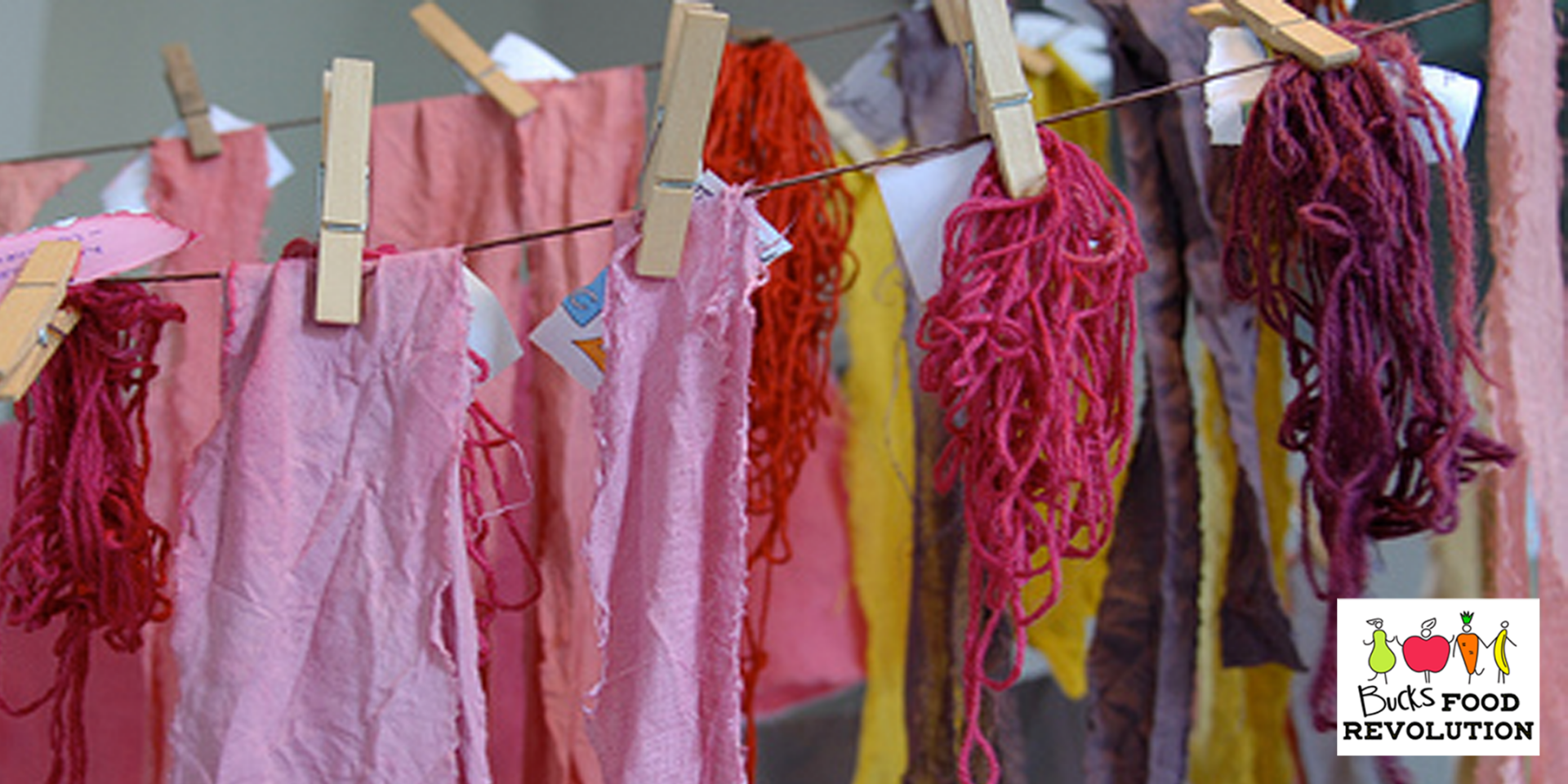
Join Rachel Jones, an artist, gardener, researcher, and foraging enthusiast as she takes us on an engaging and informative journey into her dye garden! Be inspired to grow a seasonal palette of colour that looks as fabulous in garden, vase or on the plate as it does on cloth, wood, and other materials. Rachel will also give an insight into how the plants around you can also be used as dye; as well as creating a wealth of preserves and liquids. Sign up to join online.
 Saturday 21 November
11.30am-12.40pm
It is no great secret that eating food as close as we can to its natural source gives us the best nutritional value; as well as it using up less energy and resources. Agricultural crops have been developed for many years for taste, colour, pest resistance, uniformity, and – most significantly – high production numbers! The nutrition levels are rarely high on the tick list. On the other hand, plants growing in nature have motivation to accumulate as many nutrients as possible, give back into the soil around them and they still taste good too! Eating with Nature gives you an insight in how you can approach food production differently, how you can engage with practices that support a better food system and encourage sustainable diets. The session also includes a preserving demonstration. Sign up to join online.
1.00-2.00pm
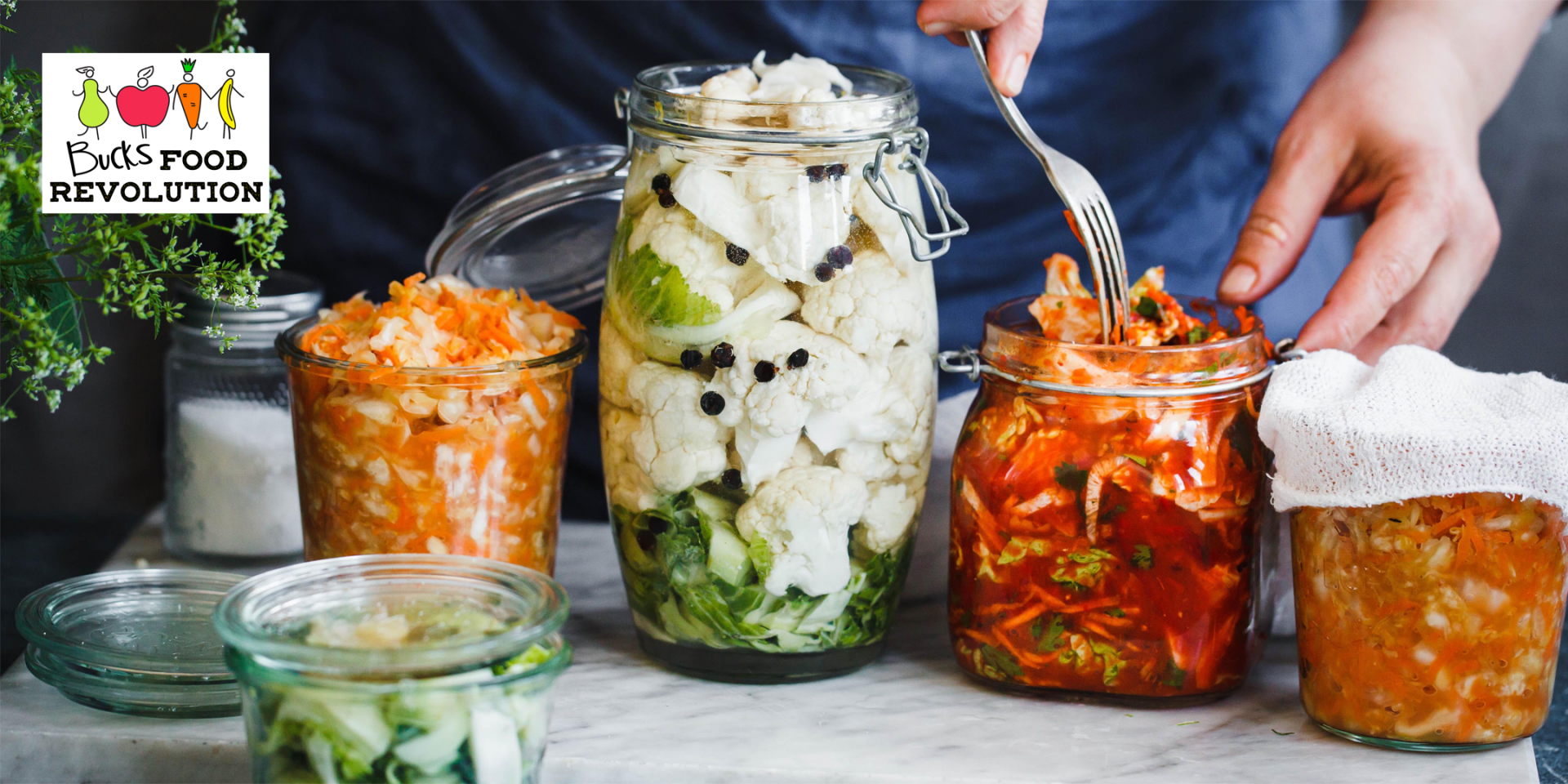
Join Hubbub chef Mark Breen for a make-your-own food waste fighting Christmas gift with food courtesy of the Bucks community fridges. We guarantee you’ll leave with 3 ‘simple-to-source’ homemade gift ideas along with some simple ways to cut your own waste over the festive period. Sign up to join online.
3.00-4.30pm
Calling all children and families to join this fantastic feast of foodie tales to celebrate Bucks Food Revolution. How many stories can you think of that include food? Charlie and the Chocolate Factory, Hansel and Gretel or James and the Giant Peach…..when you think about it there is a lot!
Lead by storyteller Terrie Howey (Red Phoenix), this food themed storytelling workshop for those primarily 6-12 years old explores scrumptious stories and culinary capers encouraging participants think about their connection with food and create their own foodie fables to share. Sign up to join online.

6.00-8.30pm
David Attenborough’s Netflix documentary, ‘A Life on Our Planet’ covers many environmental themes, with a specific focus on agriculture, deforestation, energy and marine conservation. The film not only presents how all of these issues are currently contributing to climate change and biodiversity loss, but also offers solutions based around each of these issues to ensuring a safe and sustainable future for our planet and its people. The film provides an opportunity for us all to respond and create change in the world for our future generation. Join us to watch this award winning film then for a discussion with our expert panel afterwards. Sign up to join online.
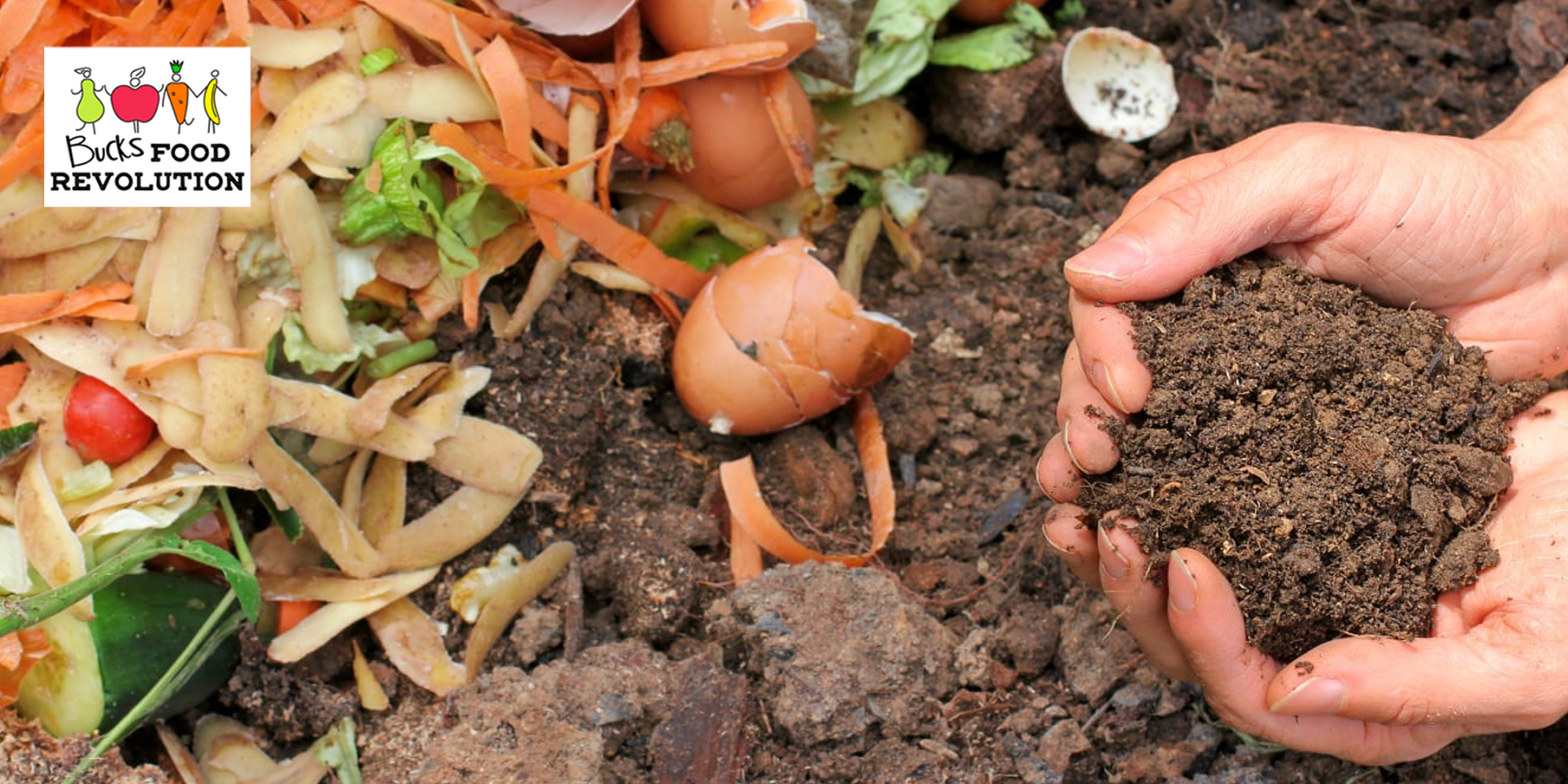
10.00-11.00am
Exploring what happens with the food that isn’t eaten and how we can adapt our home life for better environmental impact. Did you know it costs more than £430,000 to dispose of food waste in Buckinghamshire each year? In this session, we will be exploring what happens with the food that isn’t eaten in the home. Sign up to join online.
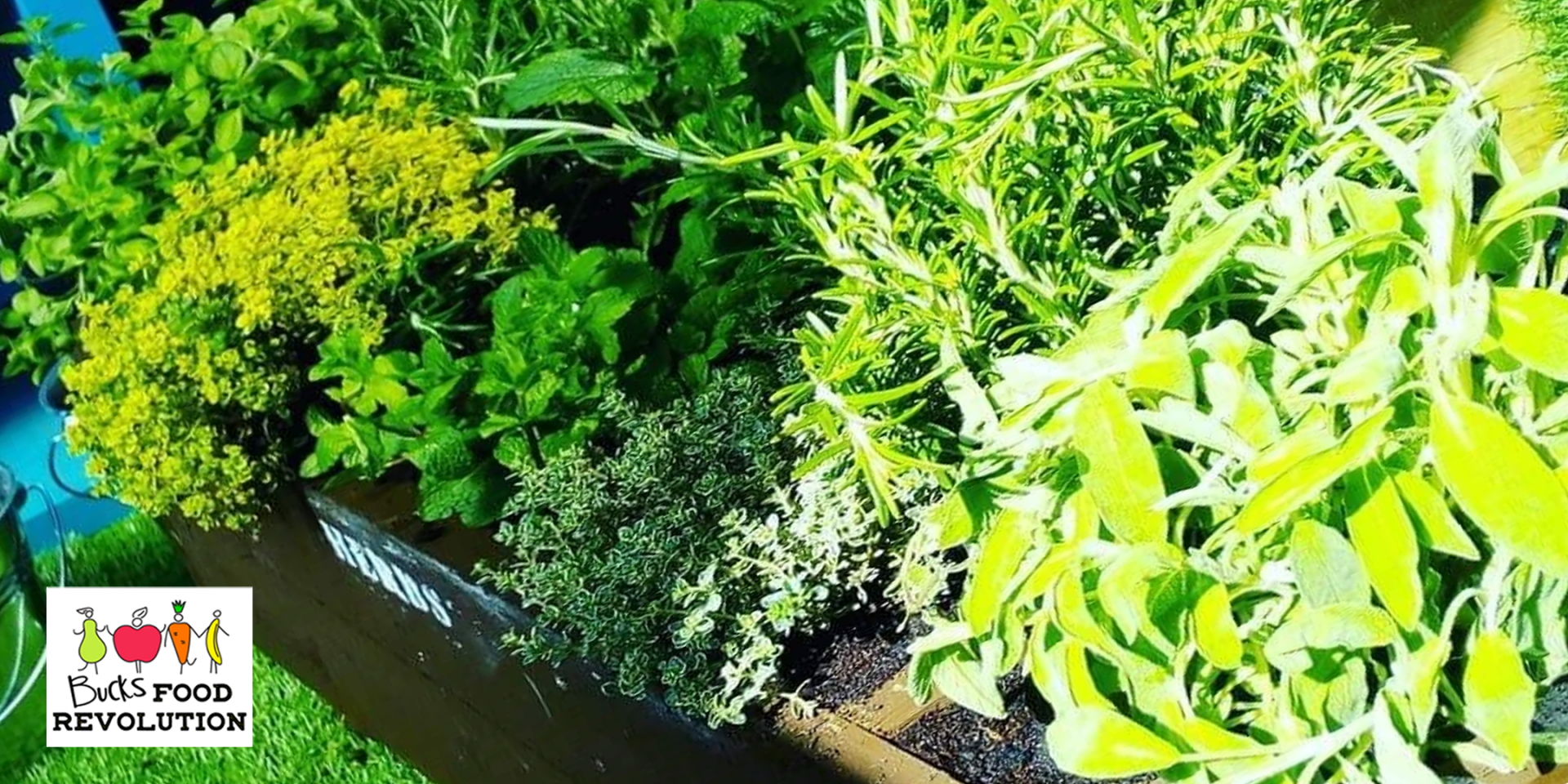
11.30am-12.30pm
Tending your garden provides the added benefits of physical exercise and mental relaxation: with the added bonus of eating fresh, seasonal and healthy food.
However, not everyone has the available space, confidence and resources to have their own garden. This is where the demand for community gardens and growing projects have risen over the last 6 months, with more people realising the inadequacies of the UK food system and the passion to become more self- sustainable.
Community gardening can bring a wide range of benefits- from connecting people with each other, to growing fresh food to enjoy. There are many schemes and projects across Bucks that welcome new visitors and Growing in the Community hopes to highlight key place that offer people a place to relax, a way to engage with nature, meet others and get active outdoors. Sign up to join online.
1.30-2.30pm
Food, whether we acknowledge it or not, has a strong connection with how we navigate our own behaviours, habits, and emotional well-being. So many things drive us to eat — it’s midday and that means lunchtime, it’s midnight and that means snack time, we’re happy, we’re anxious, we’d rather not bring home leftovers, we’re too polite to say no, we’re bored, and …. hang on has someone brought in cake! Rude not to! However, food is not just a commodity, it is also a key ingredient in how we as humans can make small changes to help support the recovery of the climate crisis.
This webinar highlights the need to adapt our mind-set to create a better relationship with the food we eat, where it comes from and how our choices as a food citizen can make an impact on a better food system for the future generations to come. Sign up to join online.
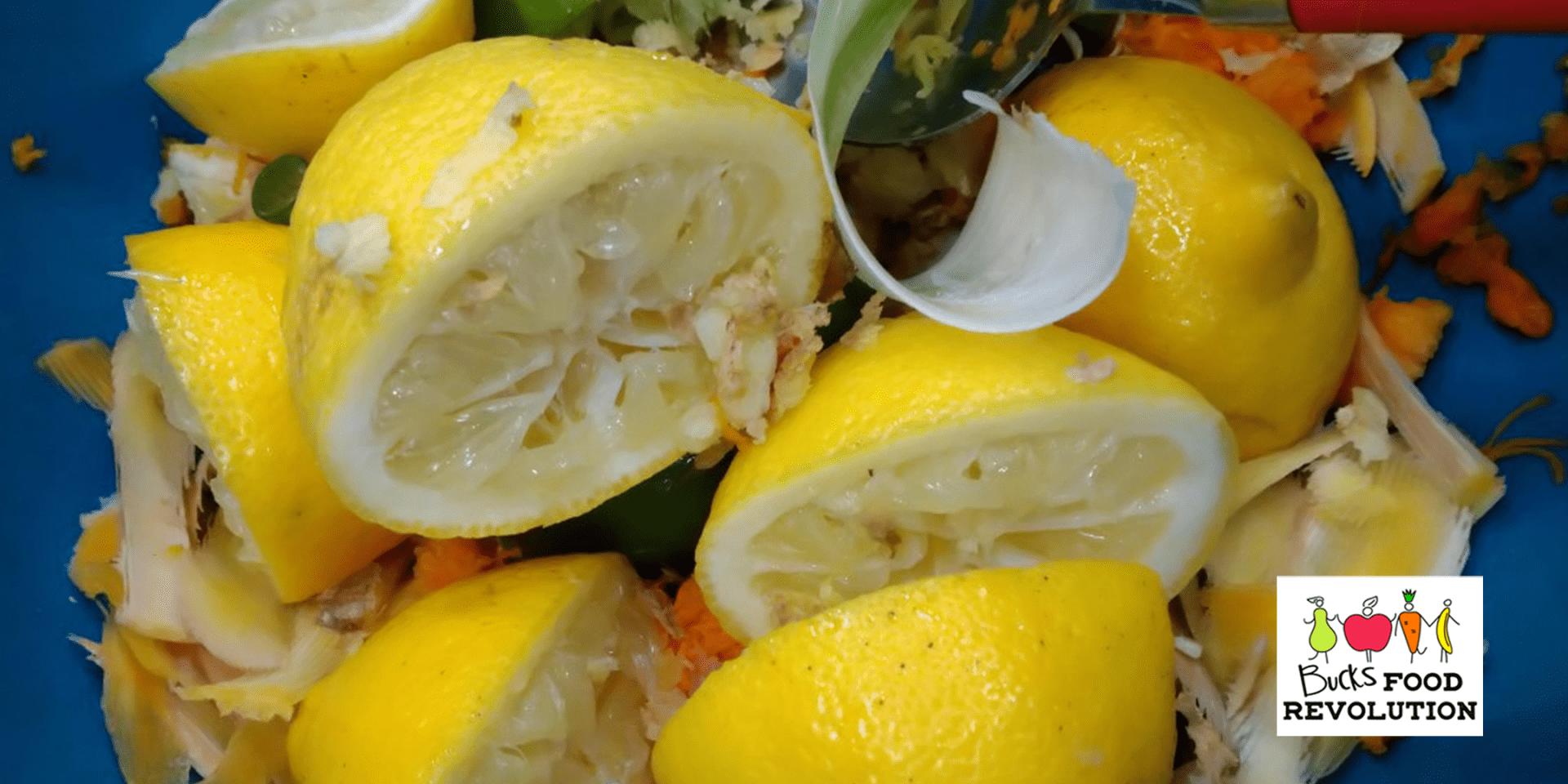
4.00-5.00pm
At a time when environmental issues are quickly climbing the national agenda, it’s sobering to be reminded that 7.1 million tonnes of food is wasted every year in UK homes. That’s not only a massive waste of the Earth’s resources, but a waste of money too – about £230 per person annually in the UK! We will be looking at ‘Bad Habits in the Kitchen’, where the common pitfalls occur and how can we prevent further waste through a few easy practices. We will be looking at how food storage can change the shelf life of your food, date labels and what they mean along with a few freezing hacks. Sign up to join online.
6.00-7.00pm
Join us for a Sunday evening get-together for an open forum to discuss how 2020 has impacted on your gardens and plots. Many of us have missed chatting over our crops or a chance to ask advice or share success stories; so we thought we would celebrate all things growing related over a slice of cake and a cuppa. (refreshments unfortunately can not be supplied)
Feel free to bring photos, jars of preserved goodies or ‘show and tell’ garden objects.
Hosted by Sheila Bees. Sign up to join online.

Growing skills, connection, and resilience through food and farming
See the issueFoodrise’s policy brief, When there’s no waste, there’s a way (to net zero), was published today.
It is hardly controversial to say that we should address food waste: in fact, this is a rare environmental issue where there seems to be resounding agreement from politicians, the public and the food industry. However, this consensus has not translated into meaningful action – and to tackle Climate Change this needs to happen.
Food waste represents a significant climate and environmental burden – both in terms of direct greenhouse gas emissions generated from growing, processing or disposing of food that is wasted, and in terms of the land use opportunity cost. Globally, growing food that is ultimately wasted uses up to 28% of the world’s agricultural area. In a world that is increasingly land-hungry, as our agricultural frontiers expand and demand grows for space for rewilding and afforestation, food waste is quite simply a waste of space. Based on a recent Life Cycle Assessment, Foodrise calculated that if we halved UK food waste and reforested liberated domestic grassland, we could deliver around 4% of the UK’s emissions cuts to reach net zero. Compared to more controversial measures, such as reducing meat consumption, food waste would seem a no brainer.
But we are not taking full advantage of this climate opportunity, by a long shot. At a corporate level, voluntary business-led action has led to a measurement and management-oriented approach, in which progress has been slow – as we explain in our new policy brief, retail food waste has reduced by around 0.5% per year since 2009, and while manufacturing waste has fallen much faster, waste in the hospitality and food service sector is estimated to have increased by nearly 20%. Government has largely ceded the food waste space to both corporates, who are lauded (and even publicly funded) for new schemes to give away their surplus, and civil society, who redistribute vast quantities of food to those in need, effectively providing a free disposal service for industry surplus. Food surplus and food poverty are seen as two sides of the same coin with little attention to the entirely separate root causes of both problems, even as a debate on poverty and food access reignites around the English government’s failure to provide Free School Meals during the half-term holidays.
It’s time for more evidence of what drives this problem and what works to solve it. Food waste is first and foremost not a moral or social issue, but an environmental one. While less effective at mitigating greenhouse gas emissions than switching to more sustainable diets, food waste is one of the major levers available to high-income countries to reduce their climate burdens. Yet no higher income countries, including the UK, which prides itself on international leadership on food waste, has included this issue as a part of a systematic food system mitigation policy, or included it in their Nationally Determined Contribution – the pledge each country makes to bring down emissions to levels required to meet the goals of the Paris Agreement. With COP26 being hosted in Glasgow next year there has never been a better opportunity for for food waste to step out of the wings and make its debut on the climate action stage.
In Foodrise’s policy brief, we diagnose some of the reasons for slow progress so far, including:
A serious policy framework to address waste is needed, and crucially, this must incorporate an ambitious regulatory approach. Voluntary business action has got us so far, but to realise the true potential of food waste reduction for climate mitigation, we now need a more comprehensive approach, one that can only be delivered by government, through waste, farming and food policy. Below we set out a summary of our recommendations.
We face an important moment of opportunity: the UK plans to release its Nationally Determined Contribution later this year – our plan for reaching our net zero national target and our flag in the sand inspiring other countries to reach for greater ambition ahead of COP26 in Glasgow in 2021. We urge the UK government to take this opportunity to be the first higher income country to integrate comprehensive food systems policy, including a serious plan to address food waste, into our national climate policy. At COP26, food systems must be on the agenda, and no better place to start than with food waste.

This is the second in a series of blog posts exploring the findings of our new report Bad Energy.
The UK’s food security has never been a higher priority – with Brexit looming, the question of how we’ll ensure we become less reliant on imports for what we eat has become a key question. The climate and biodiversity crises means we urgently need to reverse decades of deforestation and start restoring woodlands and habitats to draw down carbon from the atmosphere and create space for nature to regenerate – but whilst also ensuring everyone is fed. In this context, it seems mad to use valuable land to grow crops to burn them for energy. Anaerobic digestion (AD) – the process of producing “biogas” from organic matter like crops and wastes – has presented itself as the silver bullet to everything from producing green gas for heating and transport, to producing fertiliser for our crops. In this second part of our series on AD, we turn to the purpose-grown “bioenergy” crops which are grown especially for AD, and show that they have no role to play in a sustainable future.
 Bioenergy crops, like maize and grass, are currently the most controversial feedstock processed by AD plants. The Soil Association has previously highlighted that 75% of sites with late harvested maize used for AD showed high or severe levels of soil erosion – concluding that maize has a “singularly harmful impact” on soils. Nearly a third of maize grown in England is grown as a bioenergy crop for AD. Our report shows that there are far better uses of land than bioenergy crops from almost every perspective. From the perspective of energy generation, we found that solar PV generates 12–18 times more energy per hectare than maize or grass grown for AD.
The AD industry aims to expand bioenergy crops to cover 282,900 hectares – this land could instead be used to grow enough peas to feed 1 million people per year. Grown in rotation, planting vining peas would be much better for soils than maize. Growing peas would also contribute to the UK’s vital shift away from meat intensive diets to eating more plant-based proteins. So from the perspective of food security and soil health, it makes more sense to use valuable cropland to grow food to feed people. The AD industry claims that land spared by preventing food waste could be freed up for bioenergy crops – but this would be a disaster, since this land too would be better used for planting trees, growing plant-based proteins, or for solar PV energy generation.

Growing grass as a bioenergy crop is particularly bad use of land – generating very little energy per hectare, and covering a large area resulting in indirect land use change. Grasses used for AD are often monocrop grasses grown on land which usually requires lots of synthetic fertiliser. Grass leys can increase soil carbon in depleted soils, although long-rotation perennial crops and forests do this more effectively. We found that planting trees saves 11.5 times more emissions per hectare than growing grass as a bioenergy crop, even in today’s context where energy from AD displaces some fossil fuels. In a net zero context, where we have transitioned to more renewables in our energy mix, using grass to feed AD plants actually causes net positive (extra) emissions, not savings:


You can also see from the above that growing maize for AD results in very low emissions savings per tonne by the net zero context. Since we will need to urgently shift to other renewable energy sources like wind and solar to avoid climate crisis, we will need to shift to this net zero context as soon as possible. Subsidies to AD would, therefore, be far better spent on alternatives. From every perspective – energy generation, food production or emissions mitigation – there are better alternative to bioenergy crops. Rather than locking in green gas, we need to focus on faster electrification of heat and transport wherever possible. A recent report found that the UK’s Heavy Goods Vehicles could be completely electrified by the 2030s, at an affordable cost of £19.3 billion. Despite this, the UK government continues to subsidise bioenergy crops for AD – albeit at a lower rate than for wastes (like food waste and manure) – paying out millions of pounds a year to some AD plants. These subsidies are generally locked in for 20 years after they are accepted – the only way for most AD plants to remain financially viable. This is a huge problem, as it effectively locks in subsidies for bioenergy crops for decades, despite the fact that their effectiveness at emissions mitigation is likely to drop dramatically during that time as we decarbonise the economy, and is already far worse than other alternatives. Worryingly, it seems like the government are poised to announce a massive increase in support for biomethane from AD plants. It is essential that public money should not go to support bioenergy crops – the government should focus its money on accelerating tree planting, plant-based proteins and solar PV construction, so that we all have enough to eat in a world safe from climate crisis. A better future demands it.


Carlota Morais did a paid internship at Be Enriched as part of our EcoTalent project.
EcoTalent is one of 31 Our Bright Future projects across the UK. Each one is equipping 11-24 year olds to make a difference in their local community and for the environment. Our Bright Future is a £33 million programme funded by the National Lottery Community Fund.
In December 2019 Wuhan, capital of China’s Hubei province, was the heart of the Covid-19 outbreak that has since turned the world upside down, making us revisit our priorities and quickly adapt to a new normal. Reaching official pandemic status on the 11th of March 2020, countries around the world swiftly implemented measures in order to contain the spread of the virus, such as nationwide lockdowns.
In the United Kingdom specifically, lockdown was implemented on the 23rd of March, which led to the closure of all businesses that where not considered essential, social distancing was reinforced and people were advised to work from home. The only four justifiable reasons to go outside where for food shopping, medical needs, exercising once a day or to provide care to vulnerable people. Those who qualify as vulnerable are the elderly, anyone with an underlying health condition regardless of age and those who are pregnant. An exceptional category was created for the 1.5 million considered clinically extremely vulnerable who where advised to shield for at least 12 weeks. In short, all non-essential contact with others was to be avoided. Emergency state support packages were issued in order to support and protect people and businesses from the predictable negative impacts of the coronavirus pandemic. However, even these could not, and did not, address some pressing issues that bubbled up to the surface during lockdown, as it became evident that the pandemic was affecting people differently.
The subsequent socio-economic crisis associated with the coronavirus pandemic and national lockdown has amplified certain inequalities within society. In the UK structural violence persists, as it’s visible in the systematic ways in which some humans are hindered from equal access to goods, opportunities and services that enable the fulfilment of basic human needs. Some forms of structural violence are deeply embedded and lead to marginalisation and allow for discrimination that can be based on age, class, sex, race etc. For example, the virus has been disproportionally affecting not only the vulnerable and extremely vulnerable but also BAME communities, people with disabilities, homeless as well as those from low income households or employed in certain occupations, such as public-facing ones. Some reasons presented as explanations are all variants of structural violence: structural racism, existing health inequalities as well as housing conditions.
Nonetheless, beyond disproportionate confirmed cases and death rates, there is a huge issue that the pandemic and lockdown have exacerbated, but because its silent and rarely mentioned by the media, people are not as aware of it. The issue is loneliness and how it can take a huge toll on mental wellbeing. The aforementioned vulnerable or extremely vulnerable, as well as those who live alone, have been tremendously impacted by the sudden mutation of human contact into something abnormal, scary and ultimately to be avoided. By depriving people from the simplest of human interactions, such as thanking the cashier at the supermarket, saying hello to a bus driver, or walking to the corner shop to buy a newspaper, some where left without their only or main social interactions. Also, due to the fact that social gatherings where prohibited, friends and family could not fill in that gap.
Now that we are somewhat returning to business as usual and as restrictions lift, we need to remember that loneliness, as an invisible ramification of Covid, will linger. It is essential that we hold-on to the community spirit that sparked at the beginning of lockdown, remember the simple acts of kindness, fundraisers big and small and the clapping sessions on Thursday evenings to thank the NHS and essential workers. A sense of a tight-knit community can be maintained through 3 simple steps. First one being to make every single social interaction from now onwards meaningful. Appreciate every single one you get, for example, make sure to greet and thank every single essential worker that allows you to maintain a sense of normalcy, and if you are up for it, if you didn’t do it before, start greeting your neighbours. A second tip is to take the time to teach those within your circle how to properly use social media and technology such as smart phones, tablets and such, as it can be intimidating for some, especially the elderly. This way, they can be better connected with friends and family and reach out regularly. Additionally, take your time to make calls yourself, as something as small as a 5 minute check-in can make someone’s day. Finally, get involved in community engagement and outreach in order to strengthen your own community’s social fabric. This can be done by volunteering, pushing for the re-establishment of community centres and hubs, as well as Neighbour Schemes. Above all, it’s important that we remain mindful in order to safely and better reconnect with those around us and maintain our families and communities united.
I have a confession to make.
I’m a shareholder in Barclays Bank.
Earlier this year, alongside 130 other people, I bought one share in Barclays and signed ShareAction’s shareholder resolution calling for the bank to stop funding coal and tar sands. Barclays and its major backers, such as the investment behemoth Blackrock, did not listen.
Barclays has provided 85 billion to fossil fuel corporations over the past three years. Now is the time to act! It is time to divest and defund.
On Friday, I turned up at Barclay’s to make the point again. And this time a little bit louder – my small act of solidarity with those on the frontlines of the climate crisis. I had tagged along to a protest led by Animal Rebellion who – inspired by Foodrise’s research – were highlighting the finance behind another set of corporations with climate footprints that will, unchecked, rival the annual emissions of Big Oil: Big Meat and Big Dairy.
The focus was Barclay’s, because as well as it’s big investments in oil and gas infrastructure Barclays funds a who’s who of industrial agriculture:
over the past five years, Barclays provided $3.7 billion to the Brazilian butchers JBS – accused of destroying the Amazon, convicted of bribing politicians. It has funded WH Group to the tune $713 million, which at the height of the pandemic ramped up exports, and rather than addressing concerns about it’s handling of the Coronavirus pandemic – where a single slaughterhouse became America’s biggest outbreak, lashed out at reporters and ‘critics’ instead. Barclay’s has financed meat giant Tyson to the tune of $2 billion – a company whose lobbying enabled Big Meat to continue to operate during the pandemic as Trump classed meat processing as an ‘essential industry’, while the same employers treated their predominantly Black, Latino and Asian workers as expendable: “a choice made in pursuit of additional profit, not to ameliorate any domestic food supply issue”. As of writing there are over 40,000 cases of Coronavirus in US meat processing plants. And it has provided over $3.2 billion Cargill – the ‘worst company in the world’ – whose billionaire family owners paid themselves a record dividend. The list goes on. Barclay’s has even lent and invested over 90 million in Spam producer Hormel.
Animal Rebellion’s protest was outside a temporarily closed high-street bank: but as our Executive Director Carina Millstone pointed out in her speech, Barclay’s branch managers, cashiers and customers have little to do with this. Like you and me they are caught up in a system. A system that prioritises shareholder dividends over our environment and over human and animal lives. Barclays, HSBC, Santander… barely any of the UK’s high street banks are not tied up in financing factory farming corporations.
But just like Big Oil there is no sustainable future for Big Meat and Big Dairy. It’s time to divest and defund.
I am far from an enthusiastic supporter of Extinction and Animal Rebellion, and while we may not agree on everything regarding the future of the food-system and how to get there, surely we all can agree on this: There is no version of climate and ecological justice that involves factory farming.
The Big Livestock industry is causing global heating and destruction of biodiversity. This needs to stop. Will you help us by making a donation to support our independent campaigning?
Biogas has been presented as a silver bullet for the climate crisis – but it is often a sticking plaster obscuring the need for more fundamental change. This is the first in a series of blog posts exploring the findings of our new report Bad Energy (you can read the Executive Summary here).
You could be forgiven for never having heard of anaerobic digestion – it’s a far less well known form of renewable energy than wind or solar. Whereas big strides have been made to turn our electricity green, shifting the gas supply is more challenging. Anaerobic digestion (AD) – the process of producing “biogas” from organic matter like crops and wastes – has presented itself as the silver bullet to this conundrum. It promises to do everything from produce green gas for heating, to deal with food waste and manure, to produce fertiliser for our crops, to product biofuels for transport. A recent AD industry gathering was boldly entitled ‘There’s No Net Zero Without Biogas’. On the surface, what’s not to like?
New research from Foodrise shows the picture is not as simple as it appears. The truth is that AD only looks good when it is compared with terrible alternatives – like food left to rot in landfill, manures left in lagoons belching methane, and coal and oil burnt for fuel.
None of those things should be part of a healthy, sustainable energy or food system – in fact, it is clear that only the highest ambition will save us from the climate crisis. To avoid climate disaster, we need to imagine the most ambitious path we can to a better future and throw everything we have at making this a reality, using the best available evidence as our guide. And we do not have the luxury of settling for second best – even when it would suit some investors’ profit margins.
In this light, Foodrise set out a year ago to investigate what role AD has in an optimal sustainable future, collaborating with researchers at Bangor University. Today, we launch the report of our findings: Bad Energy: Defining the true role of biogas in a net zero future. We found that, at best, AD is a sub-optimal sticking plaster solution, and at worst, it is sometimes actually perpetuating the problems it claims to solve. There is undoubtedly a limited role for AD in a sustainable future, but it must be kept to a “sustainable niche” so that it does not crowd out better solutions. It’s a complex tale – AD can be used to convert everything from household food scraps to livestock manure and purpose-grown crops like maize into biogas – so in this blog, we’ll start by looking at food waste.
The study found that preventing food waste results in direct emissions savings over 9 times higher than sending food waste to AD – and about 40 times higher when trees are planted on the spared grassland. And 3 times more emissions are saved by sending food waste to animal feed than to AD. This isn’t a surprise: Foodrise have been using the food use hierarchy for years to demonstrate that by far the best thing to do about food waste is to prevent it happening in the first place. But public policy hasn’t always followed this ideal.
Currently millions in public money is poured into subsidising AD plants, while addressing food waste are neglected and left to voluntary action by businesses. This risks perfectly edible food being diverted to AD from these better options.
Our most stunning finding came when we scaled this up to national level. We found that halving UK food waste through ambitious regulation, and planting trees on the 3 million hectares of grassland that would be spared by this, would save and offset the equivalent of 11% of the UK’s total emissions. That is more than the emissions of the UK’s entire domestic agriculture sector – a sector usually considered difficult to decarbonise.
In addition, halving UK food waste would save 800,000 hectares of cropland, enough to grow potatoes and peas to feed 28% of the UK population. At a time when UK food security will be tested by a pandemic and potential no deal Brexit, it is vital to cultivate local sustainable production.
Currently, most food businesses in the UK are keeping their food waste figures hidden, and have done for years, so it’s hard to properly track progress and hold malingerers to account. We still don’t have reliable figures for the UK’s on-farm food waste at all, due to lack of government funding. We can and must do better than this, but now the government must step up.
And for that, we need regulation. We’ve relied for too long on purely voluntary action. By now, the industry leaders who will take action without regulation have emerged – leaving the rest of the industry is firmly committed to business as usual. Before the pandemic, the government promised a consultation this year on whether to make it a legal obligation for large businesses to measure and report their food waste. It’s now time to deliver on this. But we need to go beyond measurement to action. We also need to make it compulsory for these large businesses to sign up to food waste agreements, to level the playing field so free riders and businesses dragging their feet do not slow everyone down. And then the government must make these companies act – by setting binding legal targets for the UK to halve UK food waste by 2030, from 2015 levels.
Want to see action? Call on the government to step up its action on food waste.
Watch out for more articles about Bad Energy coming up, including on bioenergy crops and the livestock industry.
During April and May, as the Covid-19 pandemic gripped the US meatpacking industry, the four biggest US meat companies – Tyson, WH Group, JBS and Hormel – announced bumper pay-outs to their shareholders. These three corporations alone paid dividends that took their annual pay-outs to shareholders to over $1 billion (Table 1). They did so against a grim picture.
At the time of writing, almost 40,000 meatpacking workers – many at Tyson, Smithfield (WH Group) and JBS factories – have caught Covid-19. 184 workers have lost their lives. Tyson and JBS face a lawsuit claiming that their actions during the pandemic amounted to racial discrimination against their predominantly black, Latino and Asian workers – who experienced 87% of the Covid-19 cases in meat-processing plants. And a Senate investigation is scrutinising Tyson Foods, JBS, Cargill, & Smithfield Foods (WH Group) who “exported massive amounts of pork and other meats to China while threatening the American public with impending shortages”.
Less than a fortnight after taking out full-page adverts in the New York Times and Washington Post warning that ‘The food supply chain is breaking’, Tyson announced a quarterly dividend to take its annual pay-outs to shareholders of over $600 million. Days after closing the South Dakota factory that had become ‘America’s Biggest Outbreak’, Smithfield’s parent company, WH Group announced a record dividend for its shareholders – a payout that at HK$0.265 per share – totalled around $500 million.
And it is not only the public companies paying out record sums to their shareholders. The private meat and grain giant Cargill in July this year paid out $1.13 billion to its billionaire family owners. The secretive National Beef – often considered as one of the ‘Big 4’ US meatpackers – will also be paying dividends according to its biggest shareholder, the Brazilian beef giant Marfrig. National Beef and Marfrig, together with their public counterparts Tyson, WH Group, JBS and Hormel control two-thirds of US meat production.
Colossal shareholder payouts during the pandemic were rife among Big Ag. GRAIN a civil-society organisation that works to support small farmers and social movements in their struggles for community-controlled and biodiversity-based food systems has documented record payouts to Nestle, Bayer and others – companies using their powerful connections to advance ‘Agro-imperialism in the time of Covid-19’.
So who profited from these payouts? It’s not just Cargill’s family billionaires and investment giants like Blackrock. Around a third of these shares are held by pension funds, more still by insurance companies. So depending on your pension fund – if you are lucky enough to have one through your employer – it could be you and me too. I don’t know about you, but I’d rather retire into a world without industrial animal agriculture and one where worker’s lives aren’t put on the line in a global pandemic so we can continue to consume vast quantities of factory-farmed bacon. It’s time we stopped Butchering the Planet.
Table 1 – The dividends of the largest publicly-listed US meat companies
| Company | Dividend |
| Tyson | $600 million |
| WH Group (Smithfield) | $500 million |
| JBS | $275 million |
| Hormel | $125 million |
Payments either final dividends or annualised for the 2020 fiscal year. All announced in April or May 2020. Either sourced from company announcements to shareholders or calculated as the number of shares * dividend per share = Total dividend.
The Big Livestock industry is causing global heating and destruction of biodiversity. This needs to stop. Will you help us by making a donation to support our independent campaigning?
These pieces cover our areas of work ranging from Big Livestock to farmed fish and envisioning a better food system. If you want to take a deep dive – check out these books written by Foodrise staff.
We are also continually trying to make our content more accessible – for some of these blogs you can listen to an audio recording.
Why growing food is not the same as making cars (audio available)
It’s Big Livestock versus The Planet: Whose side are we on?
Can thinking regionally can transform the food system? (audio available)
What does Covid19 mean for the UK food system?
What food campaigners can learn from fossil fuel divestment
The dark truth about sugar beet
Households alone can’t fix the food waste problem (audio available)
Ugly produce and food waste on farms (audio available)
Farmed Scottish salmon: can we have our fish and eat it?
Apocalypse cow and techno saviours? Time we thought about people and planet not products
One small step for Foodrise, one giant leap for the Gleaning Network
Why industrial agriculture is next divestment target
Hannah White did a paid internship on Sutton Community Farm as part of our EcoTalent project.
EcoTalent is one of 31 Our Bright Future projects across the UK. Each one is equipping 11-24 year olds to make a difference in their local community and for the environment. Our Bright Future is a £33 million programme funded by the National Lottery Community Fund.
Read Hannah’s reflections on working through the ‘Hungry Gap’.
The months of April through July on the farm have proved challenging and certainly action-packed. The dynamic shift from winter into the spring/summer season was framed by the great turnaround of crops in the fields and tunnels; swapping out spinach and pak choi for fresh courgettes and juicy tomatoes. However, with the excitement of planting new life and new crops comes the great dip in harvestable produce and thus the onset of the ‘hungry gap’.
Having worked through this time (and to come out relieved on the other side) I have seen the effects this period has, the work that goes into transitioning production throughout, and the methods used to deal with the challenges this time brings for a small farm. One consequence that appears most prevalent throughout this ‘dry spell’ is an increase in the level of food waste created. Old produce, apparently deemed ‘unfit’ for retailers and consumers, is cleared out to make way for new season crops, leaving it, along with all resources, time and money involved, to go to waste. A slapdash system which is ultimately leading to severe environmental consequences.
 Throughout this internship we have learnt and discussed the biggest impacts of climate change today, with food waste being one of the significant leading causes. Not only is this due to the physical GHG emissions released through poor food waste management but also because all those resources used, from growing processes through to transporting food, also go to waste as well. The UN Food and Agricultural Organisation (FAO) estimates that over 1.3 billion tonnes of food are wasted each year, equating to around a third of all food and in turn an area of land wasted equivalent to the size of China! This is consequently directly associated with increasing food shortages, water stress, biodiversity loss and increased greenhouse gas emissions. This hungry gap therefore poses a serious environmental threat.
However, despite these scary realities, food waste has also been identified as one of the most effective areas, and arguably one of the easiest, to target to reduce emissions contributing towards global warming and climate change, both at an individual and industrial level. In fact, it was listed by Project Drawdown as the 3rd most effective action we can take to reduce global emissions. Targeting these impacts throughout the hungry gap would make a significant impact on reducing the pressure on our environment.
During my internship, I have been impressed with the lengths that Sutton Community Farm go to combat food waste in their environment. Their  most impactful initiative, the treasured ‘Elf-Shelf’, allows volunteers and the community to take home free surplus or otherwise deemed unsuitable produce, harvested from the farm and external suppliers, which would ultimately have gone to waste. The creativity of the community with this ‘food waste’ never ceased to amaze me; whether it was making 20 jars of kimchi from leftover pak choi, birthdays cakes from excess beetroot or dying clothes from an abundance of onion skins – there’s definitely a big leaf which we should be taking out of their book! Where some food waste and loss is inevitable however, this small farm is ready to combat it with its home-grown compost teaming with an abundance of life to sustainably break it down ready to feed the produce grown throughout the following year. There’s no escaping, this farm had food waste covered!
Overall, this internship has taught me that a time of great transition like the hungry gap can have detrimental effects for food waste and the environment but when managed effectively and conscientiously, businesses and communities can thrive and succeed through it. It has also promoted the importance of taking responsibility in limiting our food waste where we can – shop locally and sustainably – never underestimate our power as a consumer!
You can listen to an audio recording of this blog here
In these weird times, I have been turning to my kitchen for comfort. It seems that I am not alone, more than 19 million people saying that they are cooking more from scratch. The recent National Food Strategy report highlighted that around 26% of people surveyed were eating more with their families. It is clear that the Covid-19 crisis has impacted how we buy, cook and consume food. At Foodrise, we have been reflecting on how our cooking habits have changed during this time.
Just add time
For me personally, I found I finally had time to make some of the things on my ever expanding to-cook list. A combination of working from home and crossing out social events in my day planner led me to my kitchen. I along with many others acquired a sourdough starter (Keith and I are still very happy together) and I spent many weekend afternoons with my housemate making delicious feasts for us to share.
 The highlight was Samin Nosrat’s tahdig – something I had been meaning to make since watching her make it with her mom on Salt Fat Acid Heat and despite my housemate owning the cookbook and our best intentions we had never found time to make it. This dish is for me what the best recipes are – a combination of simple ingredients to make something greater than the sum of its parts. It’s just rice, butter and yoghurt but you need to really wash the rice and take your time with the cooking – but when you flip it and see that golden crust *chef’s kiss*.
“Cooking shows us over and over again that we can make things happen, we can make change happen, with just our own hands. Food is metaphor personified and within that there is reaffirmation of what we can accomplish.” Julia Turshen, Feed the Resistance
Cooking has reminded me in these difficult times that things can change. For me, the power of cooking extends beyond producing good food. It itself presents a form of activism – it reminds me that I have agency and control. That even when it feels like the world is falling apart, I can still make bread rise (most of the time). Cooking provides me with a perspective that change is possible, that with some imagination I can transform simple ingredients into a nourishing meal. If there ever has been a time for transformative thinking it is now.
 I’m a baker. Every week I make a sourdough loaf, using a starter gifted to me by Vanessa Kimbell (queen of sourdough) that I’ve kept going since 2013. Cake is my way to show love and get things done (did someone say bribery?). When the Covid-19 restrictions kicked in, along with the extra stocking up, the first thing to disappear from the shelves of supermarkets was flour. In all its forms. Twitter was full of frantic appeals from regular bakers suddenly unable to source flour. Without wishing to sound too Soprano, I have connections. And used them to bulk buy flour from Shipton Mill and other catering suppliers. 16 kilo sacks of flour came to the house. I parcelled them up into kilo boxes, and passed it out to my neighbours and friends whilst maintaining strict social distancing parameters and precautionary gloves. Yeast had also disappeared from the shops, so I kept making more sourdough starter and passing that out as well. I continued to bake, and enjoyed connecting IRL with Twitter friends – dropping by to pick up the “white gold” and have a socially distanced shout across the garden fence. It reminded me of the way that food is a connector, a way to break down social barriers and a source of comfort in difficult times. I shared hot cross buns at Easter with my neighbours, and got Easter eggs in return. We have become friends.
“Good bread is the most fundamentally satisfying of all foods; and good bread with fresh butter, the greatest of feasts.” – James Beard
A sense of familiarity
Other Foodrise staff members have commented that they found themselves making familiar food such as vegan chilli in the slow cooker. Familiar meals can provide comfort in unusual times – the sound of my dal dancing on the stove always makes me feel a little better.
Simple pleasures
People also noted that they appreciated simple pleasures again such as a trip to their local chippy. Food is nostalgic – the tantalising smell of salt and vinegar can transport you to the beach, even when you are in lockdown in London. Gelato on sunny days has reminded me of trips to Italy and reminded me that life exists beyond the isolation of lockdown.
Finding solace in cooking – Mia Watanable, Big Livestock campaigner
The kitchen has been a place of respite for me. It has taken me away from my worries about the wider world and towards the intricacies of baking bread, pickling veg and cooking with more resourceful ingredients. Like therapy, my kitchen has kept me grounded in my physical presence and helped stop me from getting caught up in my anxieties. Through kneading dough and mixing batter, I’ve discovered a physical outlet for all that adrenaline that’s been filling me with dread. When everything outside the kitchen was tough, it was the stuff that was inside the kitchen that gave me a sense of comfort and control.
I would love to hear from you – what have you been cooking?


Last month Foodrise published ‘Butchering the Planet’, showing for the first time the banks, pension funds and asset managers providing financial fodder to the world’s biggest factory farming corporations.
Today, we are sharing the underlying dataset. Compiled through meticulous research by the Dutch not-for-profit Profundo from a range of financial databases,the data documents the money pouring into the world’s thirty-five biggest meat and dairy companies.
These aren’t Devonshire dairy farms, or smallholders in Somaliland with a few chickens. These are the Brazilian butchers linked again and again to Amazon deforestation and the US meatpacking giants, facing racial discrimination claims for the suffering and death of their workers made in pursuit of profit.
And we need your help in tracing their financial fodder.Whether you’re a journalist, campaigner or activist – there is a wealth of information to help you uncover the pensions telling porkies about their sustainability policies, the investors who think factory farming will be a long-termcash-cow, and the piggy banks getting greedy for industrial meat.
Find the data here and reach out at hello@foodrise.org.uk, if you’d like help in using it!
The Big Livestock industry is causing global heating and destruction of biodiversity. This needs to stop. Will you help us by making a donation to support our independent campaigning?
Foodrise welcomes part one of the National Food Strategy report, by Henry Dimbleby, published yesterday. In our evidence submitted to the National Food Strategy team we argued that, fundamentally, we now need to reorient our food production around a new understanding of productivity, one that includes human health and the wellbeing of our planet and ecosystems. We looked at the interactions between what we grow and what we eat, and the health of our climate and biodiversity. The separation within policy-making between environmental and planetary health on the one hand, and human health on the other, creates a false dichotomy which prevents us addressing obvious absurdities in our food system. One glaring example, in the face of obesity-driven deaths from Covid-19, are agricultural subsidies to grow sugar beet on an area of land roughly equivalent to that used to grow vegetables, in direct contradiction to a levy on sugary drinks designed to reduce consumption. Bringing considerations of supply and demand together is more likely to result in holistic and effective policy-making.
Henry Dimbleby faces the formidable task of doing this across the UK’s food system. However, in this first report, Dimbleby responds to the impact of the Covid-19 pandemic on the food system, alongside the impending end to the UK’s transition period for leaving the EU, two events with fundamental implications for how we grow, access and consume food.
We welcome the report’s focus, during a window of opportunity that is fast disappearing, on the potential to recover from Covid-19 in a way that leaves us with a better food system: broadly, we would argue, one which is fair, resilient and inclusive, that delivers delivers good food with maximum health and nutrition, minimum environmental impact, and that guarantees good livelihoods. We need recipes for recovery which take a pinch from multiple priorities to cook up a flavourful and nourishing dish: better rights for food workers (some of the worst hit groups by both pandemic job losses and Covid-19 itself), a resilient supply chain which delivers what local areas need rather than what generates the greatest corporate profit; and access to delicious, healthy food for everyone, including those most marginalised and most impacted by the pandemic and its fallout.
We share the report’s concerns that, on top of existing high-levels of inequality-driven ill-health caused by poor diets, the UK faces a surge in poverty driven by the economic impacts of the pandemic, and the government’s priorities in protecting business and society. We welcome the focus on poverty and lack of access to good food, and on the practical proposal to support families which are needed to address these issues. We hope the government, which only begrudgingly extended the Free School Meal voucher scheme over the summer, heeds the call to draw far more children into the scheme and to greatly increase the capacity of summer holiday programmes to meet children’s nutritional needs while school is out.
The Strategy, rightly, has much to say about the different impacts the pandemic crisis has had on people working in different parts of our food system. Many working in food were already among the lowest paid workers in the UK: most workers in hospitality and food service have been furloughed, and their sector faces an uncertain future; supermarket workers have been on the frontline of the pandemic. Meanwhile, corporate retailers, the reigning superpowers in our food system, have further increased their already formidable market share. To a large extent this power imbalance is the result of policy decisions, both historic and recent. The government mustn’t fail to take advantage of an opportunity to help the UK strengthen more diverse and resilient supply chains, rather than continue to reinforce existing market power imbalances. Similarly, the Strategy appears to miss an opportunity to tie its recommendations to protect the most vulnerable together with its findings on the impact of the pandemic on power in the supply chain. For example, who supplies new holiday food schemes, and where can Free School Meal vouchers and healthy start vouchers be spent? Restricting the spending of this public money to big retailers, rather than including markets and smaller shops, is a missed opportunity to support and enhance regional supply chains, and the jobs to go with them.
Regarding Brexit and our future trading relationships, despite the positive noises on the negative impacts of unfettered agricultural trade deals, the strategy falls short on trade recommendations. The proposed ‘dual tariff’ scheme will allow meat and other products currently banned here, to be sold in UK stores and the backing of the UK’s newly formed Trade and Agriculture Commission to define and uphold UK ‘core food standards’ is a completely inadequate substitute for upholding them in legislation – in particular given the commission’s exclusion of environmental groups. More will be needed to protect standards and to drive them further towards regenerative and health-led approach to agriculture which prioritises the highest nutritional output for the least environmental impact.
All eyes now turn to the next – and fuller – strategy, due in early 2021. While the tight focus on pragmatic recommendations to mitigate some of the impacts of the coronavirus pandemic and Brexit is understandable, it feels that Dimbleby has pulled his punches on the environmental costs – and opportunities – offered by the present moment. As newspapers report the UK falling behind our European neighbours on funding a green recovery, it is a missed opportunity to fail to make concrete recommendations targeting the environmental co-benefits of building a better food system. This strategy, against the backdrop of our urgent climate and biodiversity crisis driven to a great extent by the food system, will need to articulate a radical vision for change. Part 1 feels like a tentative step forward. Part 2 needs to be a leap.
Nearly 11 years ago, Foodrise was founded by Tristram Stuart and Niki Charalampopoulou to challenge the scandal of global food waste and to catalyse action on the massive climate mitigation potential of meeting SDG 12.3 to halve food waste by 2030. After working on this issue for over a decade, we could not be prouder to announce that we are 2020 Laureates of the prestigious Keeling Curve Prize for our seminal work. We’re very humbled and grateful to be recognised in this way.
Our work on food waste remains as critical now as it was a decade ago.
Food waste represents an ecological catastrophe of staggering proportions: The UN estimates that 1/3 of all food produced goes to waste, generating 3.3 billion tonnes of greenhouse gases per year. Growing this wasted food gobbles up 1.4 billion hectares of land, equivalent to 28% of the world’s agricultural area.
It’s clear that reducing waste is a significant opportunity to mitigate climate change. Indeed, Project Drawdown ranks reducing food waste by 50% by 2030 as the most effective way to tackle climate change.
Business action has bloomed over the past ten years, often focused on redistributing ‘surplus’ food that arises under their current business model. However, the most effective way to mitigate the environmental and climate impacts of food waste is to prevent this waste from occurring in the first place. For example, biodiversity loss is primarily driven by the expansion of the agricultural frontier; reducing food waste could liberate significant land to reverse biodiversity loss and restore ecosystems and/or increase afforestation to sequester significant volumes of carbon.
While the UK has made progress over the past decade, this progress has not been sufficient to meet the scale of the challenge. Over the past few years, business-level food waste has reduced by a mere 1% a year. Voluntary industry agreements on tackling food waste have resulted in inadequate results, including low rates of business participation, a lack of transparent food waste reporting, unambitious targets to reduce food waste by only 21% between 2015 and 2030, and the total exclusion of primary production food waste from national targets.
Unless we take serious, immediate measures to reduce our food waste, we risk not meeting our SDG 12.3 target and further exacerbating climate change, as well as hamstringing the UK’s ability to reach net zero.
We have been campaigning for demand-side food system policy since COP24. Now, COP26 is one of our most critical, not-so-distant next-steps to ensure the UK commits to binding food waste targets as part of the national strategy to reach net zero and to ensure the Nationally Determined Contributions include bold, ambitious and binding statutory targets and regulatory action to reduce food waste by 50% by 2030 across the whole supply chain, from farm to fork.
Will you join us, by calling for the UK government to make it the law for all large food business to be transparent about how much food they waste?
In response to Foodrise’s recent report, Brazilian butcher JBS said “it takes a zero-tolerance approach to deforestation in its supply chain”. But a new investigation by The Bureau of Investigative Journalism and Reporter Do Brasil provides compelling new evidence that it does not.
Photos from a JBS employee, show a JBS truck being used to move cattle between a farm fined for deforestation of rainforest and still under official embargo, to a “clean” farm, that sells cattle onto JBS. The Brazilian beef giant has long claimed that they cannot monitor indirect supplies and disputes the allegations.
Investors have argued that to improve practices (like illegal deforestation linked to cattle ranching) it is better to engage with companies, than to cut them adrift. Yet despite years of engagement with JBS around deforestation, corporate governance, and human rights issues – little has changed.
Engagement is failing. JBS is the canary in the coalmine. Industrial meat and dairy corporations are incapable of changing and are incompatible with deforestation, climate and food system goals.
This investigation is also compelling evidence that major financial providers will be in direct violation of their own deforestation policies if they continue their financial relationship with JBS. Foodrise’s research suggests that investors and banks who are potentially in violation of their own policies include HSBC, Credit Suisse, Santander, BNP Paribas, Rabobank, UBS, Northern Trust, Banco Do Brazil, Janus Henderson. Find the top ten creditors and investors in JBS below – Foodrise will this week be sharing a full list of investors as part of our trailblazing commitment to open data campaigning.
HSBC, for example, “will not knowingly provide financial services to customers involved directly in or sourcing from suppliers involved in[…] deforestation”. In response to our recent report, Butchering the Planet, a HSBC spokesperson told the Guardian that “the bank took its “agricultural commodities policy very seriously” and regularly assessed clients “for commitment to sustainable business practices”. The UK’s largest investor in JBS, Prudential, claimed last month it was actively engaging with Amazon fire and deforestation issues and provided The Guardian with a document explaining specific strategies with Marfrig and Minerva Foods – failing to mention JBS.
Today the focus is on JBS, tomorrow there will be new horrors in the supply chains of these corporations that pay little regard for people or planet. Investors are becoming more vocal, but it is time for the positive words to lead to decisive action. It is time to divest and defund industrial meat and dairy.
| Parent | Investor Parent Country | Loans | Underwriting | Grand Total |
| Barclays | United Kingdom | 2,786 | 920 | 3,706 |
| Royal Bank of Canada | Canada | 1,711 | 495 | 2,205 |
| Rabobank | Netherlands | 1,065 | 186 | 1,251 |
| BMO Financial Group | Canada | 729 | 495 | 1,224 |
| Truist Financial | United States | 591 | 186 | 777 |
| JPMorgan Chase | United States | 751 | 751 | |
| US Bancorp | United States | 491 | 186 | 678 |
| Santander | Spain | 60 | 607 | 667 |
| Banco do Brasil | Brazil | 507 | 507 | |
| BTG Pactual | Brazil | 457 | 457 |
| Sum of Per Investor Value (in mln US$) | Type of financing | |||
| Investor Parent | Investor Parent Country | Bondholding | Shareholding | Grand Total |
| BNDES | Brazil | 3,734 | 3,734 | |
| Fidelity Investments | United States | 443 | 144 | 587 |
| BlackRock | United States | 256 | 237 | 493 |
| Grupo J&F | Brazil | 222 | 222 | |
| Waddell & Reed Financial | United States | 159 | 159 | |
| JPMorgan Chase | United States | 152 | 3 | 155 |
| Northwestern Mutual Life Insurance | United States | 146 | 146 | |
| Itaú Unibanco | Brazil | 143 | 143 | |
| Vanguard | United States | 1 | 141 | 142 |
| APG Group | Netherlands | 135 | 135 |
The Big Livestock industry is causing global heating and destruction of biodiversity. This needs to stop. Will you help us by making a donation to support our independent campaigning?
At the end of June, WRAP – the UK’s waste and resources charity which coordinates industry commitments and action to reduce waste across different sectors – published a new vision from some of the biggest players in the UK meat industry. ‘Meat in a Net Zero World’ sets out a plan to make the UK meat industry a “world-leading example of efficient and sustainable meat production and supply” and focuses on four areas: meat waste in households, business-level meat waste in processing, retailer and hospitality, livestock feed, and productivity improvements in the supply chain.
The signatories, including major players like the big retailers, producers and processors such as Two Sisters, Moy Park and Avara Foods, and a smaller number of hospitality and foodservice businesses, commit to sustainably producing food, acknowledging the time is critical to face global heating and profligate resource use.
So far, so good. We can all agree that if we produce food, and especially meat products which are much more land, water and greenhouse gas intensive to produce than plant-based foods, we should then waste as little of them as possible. Wasting 380k tonnes of meat a year is no one’s idea of a good plan.
And yet, there’s something rather meaty missing from this document – something which, until acknowledged, will continue to scupper any industry efforts to become compatible with decarbonisation and protecting our planet. That something is a word you don’t often hear in corporate documents – less.
We need less meat. We need to waste less, of course, but we also need less overall – less meat production, less served in hospitality and foodservice, less meat on the shelves in supermarkets. And less in our fridges and on our plates at home. A good deal less, in fact – the Eating Better alliance has adopted a target of 50% meat reduction by 2030. Even as a body focused on resource use and waste, WRAP and the wider industry must acknowledge this central brick in the road forwards.
Reducing meat production and consumption are particularly urgent for the same reasons that making sure we waste less of the stuff is urgent – meat is a very resource-intensive way to produce food. It’s also inherently wasteful: we use land and resources like labour, capital and the capacity of ecosystems to absorb pollution, to produce feed to raise intensively farmed animals. It would be a better use of resources, in many cases, to produce food that can be eaten directly by people. Currently 36% of the world’s crops are used to feed livestock, and animal-based foods only deliver 12% of the world’s calories.
Growth-oriented businesses, unsurprisingly, have blinkers on when it comes to ‘less’, and it would surely be convenient if we could chart a path out of our current catastrophic climate trajectory purely through ‘efficiency savings’. But there’s no evidence to show this will be possible – a rather more radical response will be needed if the industry wants to meet its self-avowed goal to become ‘sustainable’.
Here are some other pieces of the agreement that worried us:
A big slice of the ‘sustainable meat’ debate comes down to what the animals are fed – but industrial livestock farming (as opposed to say, animal farming as part of small, mixed farming) is generally highly reliant on imported feeds such as wheat and soya – in the case of soya, often grown on land that should have been left as highly diverse, carbon-sucking rainforest or Cerrado (not to mention, land which belongs to indigenous peoples, not corporate land-grabbers). Industry likes to promote a view that it’s possible to grow soya sustainably, but there’s not much evidence that is the case – it’s a complicated tale, but see here for why. Short version: committing to only source soya that doesn’t add to deforestation may not be as meaningful as it sounds. A more real climate commitment would be to no soya-fed meat, full stop.
As often when it comes to the corporate take on food waste, we have a vision here in which benevolent food businesses need to help profligate citizens to waste less of the meat they buy – primarily through techno-fixes like extensions to ‘use by’ date labels, or better packaging. Those things are important (indeed, we’ve argued that many date labels serve no purpose other than encouraging us to buy more than we need). But there’s another uncomfortable truth here that is being ignored: when people waste meat regularly it is because we are buying more than we need. About half of food waste in the home is reported as being due to not using food in time. The reason we buy too much? It could be to do with the very effective marketing and pricing model developed by retailers and corporate meat producers which frames meat, particularly chicken (the most wasted meat in households) as a cheap staple rather than a highly valuable resource. There are questions here about food prices (see, for example, the Sustainable Food Trust’s True Cost of Food research), but also about the way food is marketed to us.
Efficiency sounds like a good thing, especially in the context of growing demand for food (a bigger and in some cases richer global population) and finite planetary boundaries. But as Tara Garnett, Elin Roos and Dave Little point out, efficiency is all relative – a highly efficient system may still be a very damaging one if production grows faster than efficiency improves, so an absolute limit needs to specified when we’re talking of keeping within finite natural boundaries (i.e. we only have so much land, or so much Greenhouse Gas emissions budget before we head towards dangerous warming). And the industrial livestock complex is predicted to eat up to 80% of the global emissions budget by 2050 if it continues along business as usual lines – efficiency gains will only do a small amount to mitigate what is ultimately a highly damaging and extractive industry. There’s a famous paradox to efficiency – the more efficiently you produce something, the more demand for that something increases. Garnett et al. give the example of chicken production in Sweden – emissions per kg of chicken fell by 22% between 1990 and 2005. But demand rose by 180% – so emissions still increased, by a whopping 150%. Read our report Big Livestock Versus the Planet for more on this.
Foodrise has always been dubious about the capacity of voluntary industry initiatives to get to where they’re going quickly enough. Even if we agree about the direction of travel (halving food waste by 2030), how fast we get there matters a lot – reducing emissions from the food industry is crucial to create space and time for other sectors to decarbonise. A highly comprehensive study of over 150 voluntary business environmental schemes found that the “majority of schemes set unambitious targets”, many missed these targets and many “were undermined by low rates of private sector participation”. They found no evidence that voluntary approaches can be an effective alternative to regulation. What voluntary agreements can do, however, is give governments some reassurance that where industry goes, they can follow. We’ve seen this with food waste and the UK government’s shift towards regulating for all large food businesses to report on how much they waste publicly. Even the now ex-CEO of Tesco, Dave Lewis, no doubt exasperated after years of Tesco leading the way on food waste transparency, last year called for regulation to bring their recalcitrant competitors into line.
None of this denigrates the overall goal to reduce meat waste – this is vital – nor WRAP’s sterling work bringing together companies from across the supply chain (albeit lacking a strong showing from the food service sector). But we must acknowledge the bigger picture on runaway climate change and the role the meat industry is playing in fuelling this fire. What we’d like to see instead? Cross-industry commitments to halving meat and dairy production and consumption by 2030, on a path to a decarbonised food sector which relies on reductions in absolute emissions rather than dubious off-setting and carbon capture schemes. For more on how retailers can lead the way on reducing meat consumption, see our Meat Us Halfway supermarket scorecard.
EcoTalent is one of 31 Our Bright Future projects across the UK. Each one is equipping 11-24 year olds to make a difference in their local community and for the environment. Our Bright Future is a £33 million programme funded by the National Lottery Community Fund.
After learning about food systems and their relationship to the environmental crisis at University and through online courses, articles etc – I decided what I personally thought were the ideal practices and concepts that our current food system should work towards. Now halfway through my EcoTalent internship with Foodrise I almost can’t believe my luck that the farm I’m working on just so happens to embody so many of these ideals – what a result! If someone were to ask me how we might improve our food systems and agricultural practices, I would say the way we grow food should be organically done incorporating biodiversity and working within complex ecosystems. This should happen on a smaller and more localised level that is community-led, environmentally sustainable (with focus on soil health and seasonality of produce) and happening more in urban spaces. To have the opportunity then to work at Sutton Community Farm that essentially practices all of these things has been such a wonderful experience.
Generally speaking, life on the farm happens at a slow pace (for the growers anyway, I’m sure the veg box team would have something to say about that). The type of growing the farm practices is very skill and labour intensive so there is always a lot that needs doing, however regardless of the slow-paced nature of the farm everything does get done in the end and seems to always work out as if by some magic agreement between the growers and the crops. I was honestly shocked at the scale of the farms production when I first started, that a community farm of 7 acres delivers over 600 veg boxes a week across South London and has 11 polytunnels, 11! I was even more shocked to find out that this was mainly done by a handful of people. It soon became evident though that this could only happen because of the vast amounts of knowledge and care that goes into the growing at the farm. If I end up with even a fraction of the knowledge that the growers at the farm have at the end of the internship, I’ll be a farming whizz.
With the exception of Hannah who had already been at the farm for 6 weeks, us EcoTalent interns started our placement on the farm during the annual ‘hunger gap’ where the winter crops have ended but the new seasons crops are not yet ready for harvest. This meant our tasks in the beginning involved everything except harvesting. Bed preparation, plant maintenance, irrigation, planting out and sewing seeds were how we spent most of our time. As already mentioned this is an extremely skill intensive form of farming, so seeing the amount work that goes into getting crops ready for harvest and learning how to do all of these tasks was extremely educational. It’s also worth mentioning the ridiculously hot weather we were experiencing at that time which made plant maintenance all that more important.
The end of the hunger gap in early June also brought with it the rain and with that, raucous celebrations by the growers at the farm. Ever since then it has been ‘harvest, harvest, harvest’ which I have thoroughly enjoyed, even the afternoon Libby and I spent harvesting 150kg of broad beans in the rain. There really is something very rewarding about harvesting crops that you have had a hand in growing, this is even more rewarding when you’re the one eating it. Besides the hundreds of kilos of broad beans, other harvesting highlights include tomatoes, aubergines and discovering what ‘aztec broccoli’ is. A quite regal looking plant that looks nothing like broccoli but tastes absolutely delicious! Whilst harvesting has brought with it more physically demanding tasks which my back and knees are probably not thankful for, for me it’s got to be my favourite aspect of the work on the farm.
Being totally immersed in food is something else that I really enjoy about being on the farm. Aside from the fact that food is actually everywhere on the farm, it’s also usually the main topic of conversation at the farm too. Whether it’s people sharing their own stories of growing at home, discussing their favourite foods or swapping recipes with each other, everyone at the farm is passionate about food and for someone who loves talking about food as much as I do I really can’t complain. This as well as the lovely volunteers at the farm who really are the beating heart of it, make it such an enjoyable working environment and one that I genuinely look forward to going into every day.
Bring on the next 7 weeks!
Read our report: Butchering the Planet: The big-name financiers bankrolling livestock corporations and climate change.
Do the names ‘Tyson’, ‘Smithfield’, or ‘Cargill’ ring a bell? You might have seen these names in the news over the past weeks – recently their meatpacking plants have emerged as some of the world’s largest COVID-19 hotspots, along with prisons. But unless you work for these corporations, live near their industrial farms, or the polluted lagoons they leave behind you’ve likely never heard of them. But despite their relative anonymity, the five largest livestock industry players – JBS, Tyson, Cargill, Dairy Farmers of America, and Fonterra – together emit more greenhouse gases than ExxonMobil. What’s more, industrial meat and dairy corporations, or ‘Big Livestock’, receive billions in backing every year from financiers all over the world. Big Livestock is Big Money, and we’ve got the data to prove it.
Today, Foodrise exposes the world’s investors funding total climate breakdown through industrial meat and dairy corporations.
Between 2015 and 2020, global meat and dairy companies received over $478 billion in backing by over 2,500 investment firms, banks, and pension funds headquartered around the globe. High street banks such as Barclays and HSBC provide billions in loans to the firms behind US chlorinated chicken. Prestigious universities which have banned beef on campus continue to fund controversial Brazilian butchers through their endowments. And pensions, savings, and investment companies such as Prudential, Standard Life Aberdeen and Legal & General invest in companies such as JBS and Marfrig, who have been linked again and again to deforestation.
Financing Big Livestock is no small deal. Livestock production is already a leading cause of climate breakdown, and business-as-usual growth scenarios for this industry project that, within ten years, the livestock sector will account for almost half (49%) of the world’s emissions budget to keep global temperatures at 1.5°C by 2030. Big Livestock is carbon-intense and extractive at its core; much of the land cleared for growing feed and cattle ranching occurs in the global South, as illustrated by rising deforestation rates in Amazon and other vital ecosystems. This, in turn, is exacerbating existing inequalities as Indigenous peoples and local communities face displacement, criminalization and violence.

Banks and investors that wear with pride their commitments to end deforestation and combat climate change are deeply implicated in the financial support offered to this ecologically destructive and socially toxic industry.
Barclays boast of backing UK farming, yet invest billions in destructive US agribusinesses. HSBC appear to be funding Brazilian beef linked to deforestation and forest fires, despite their own ethical investment policies forbidding them to do so. The investor Marshall Wace, which features their support during COVID-19 for local communities on the front page of their website, continues to invest in Tyson Foods, in whose factories 8500 workers have tested positive for COVID-19 (more than double any other meatpacker) and tragically, over 25 employees have died.
Foodrise’s investigation exposes the sheer scale of the global financial fodder behind meat and dairy corporations and reveals how high street banks, global investors and pension funds are bankrolling destructive livestock corporations. Our argument is simple: engagement is failing. Damage is already being done to local communities, workers, the planet and investors’ money. Banks and investors need to defund, and to divest from, Big Livestock.
The Big Livestock industry is causing global heating and destruction of biodiversity. This needs to stop. Will you help us by making a donation to support our independent campaigning?
Spent grain makes up around 80% of the waste from commercial breweries in the UK. It arrives at the brewery dried and raw before being boiled to extract sugars before the sugar water (wort) carries on in the process that results in beer; but what about the physical grain left behind? A lot of breweries have found ways to ethically dispose of grain, with much of it going to animal feed and in some cases to green energy plants. That is a great outcome for a waste product, as the reality is that breweries use so much grain that it is sometimes easier to pay a waste contract to dispose of it at landfill. Easier does not always mean better though, particularly not when trying to tackle shortages of food and reduce food waste.
In January 2019 I ran a food service with Sprawl Kitchen to mark Burns Night in collaboration with a local brewery and bar, Handyman Brewery and Pub. As a part of the event I brewed a Scotch Ale with them, a dark beer made using roasted chocolate malt and in this case oats and lager malt. As we dug out the mash (literally digging the boiled grain out of the mash tun- the vessel in which it is boiled) it occurred to me that it is a real shame for it to go to waste. Surely it was edible? It provided the beer with some of its flavour, so what flavour was left in the now cooked grain? I am not the first person to use spent grain to make food, it is not my original idea, but it is something that as consumers we can easily plead ignorance towards, as it is not a visual part of the finished product. Nor is it a particularly desirable product, with it being a mulch of boiled grain and all. Therefore it is not used in food production as widely as it should be.
I decided to take some of the grain away (around two kilograms, wet) and use it on the menu at the pop-up event. We ended up serving a very loose version of cranachan, using blackberries instead of raspberries, making a syllabub with the aforementioned Scotch Ale. The malt was baked in the oven to dry out, to make a granola that would provide a crunch to an otherwise wet, soft dessert. I mixed the dried grain with local honey, hazelnuts, dried currants and baked it. The result was brilliant, the malt was transformed into a sweet, biscuity granola that tasted like honey, coffee and dark chocolate (because of the chocolate malt in the mash.) It was a success on the night and everybody (including ourselves) patted us on the back at how clever we had been in taking a product that would usually end up in a bin and putting it onto a menu. Of course it was edible, it is untreated grain that has only been boiled to extract (some of) its sugar.
Despite the success of the dish, and the event overall, my mind quite quickly turned to the scale in which we had achieved this success. I only took around two kilograms, wet. We roasted it to remove the moisture, therefore the dried product was probably around a third of that weight. We left behind so much more grain to go to waste. The worst thing about that is that as we are a pop-up kitchen, we do not have the capacity or facility to use more. We can only take so much per brew for specific events.
Soon after I started working with Alchemic Kitchen, Lucy (the AK project manager) and I were talking food waste issues and we landed on the topic of spent grain from breweries. The ethos of Alchemic Kitchen is to take food that would otherwise go to waste and revalue it, make something delicious out of something that others see as spent and spent malt typifies that pretty much perfectly. We chatted about using the dried malt milled down as flour, about baking with wet malt (which resulted in some delicious recipe testing- particularly a very fudgy chocolate cake made using wet grain, made by Lucy). We tried fermenting the malt to make vinegar- with varying degrees of success. However, the thing that stuck in my mind was the spent malt granola. I carried on thinking about and developing a recipe that is nut free and made the most of other surplus produce (unfortunately the delicious local honey I used previously does not fall into that category.) I landed on pumpkins, as we had an abundance of perfectly good ones donated to us after Halloween, that had been stocked for their decorative value, rather than for sustenance. I used the flesh to make a pumpkin caramel, toasted the seeds and added candied orange peel for its sweet and gelatinous qualities. At the Liverpool City Region Mayoral Green Summit last year, we served a zero-waste lunch and we included our spent grain granola bars, made with grain from Neptune Brewery. After receiving plenty of feedback on the bars, and tasting them ourselves, we decided we would be best served going back to making the granola as a loose product. I tweaked the recipe for the pumpkin caramel, roasting the flesh first before cooking with sugar, water and spices which resulted in a much richer and decadent granola. We also decided it would be best to make the granola with a malt bill designed for dark beers, as the flavour in the roasted chocolate malt offered so much to the finished product. The candied peels, made from surplus citrus fruits, made the cut and remain in the product to date.
Subsequently, as a team we have decided to make the granola a part of the Alchemic Kitchen product range and will be making it in larger batches with the intention of selling it on a consistent basis. We are working with our neighbours Melwood Beer Co. to take their used grain and dry it out ready to make the next batch in the coming weeks. We will have to navigate the lack of pumpkins at market at present but it is very much in line with Alchemic Kitchen ethos to use seasonal produce, therefore we will use something else in their absence. We will wait for the next glut, the next abundance of produce that needs rescuing from being wasted. Although I am pleased that we have found a way to work with the grain on a larger scale than before, I still think that it is important to consider the volume of spent malt that we will not be able to salvage (even just from Melwood Beer Co.) There are thousands of breweries across the country, varying massively in scale, that virtually all use grain to produce beer. We will continue to work with spent malt as an ingredient and attempt to develop other products too, as there is an untapped potential in using it as a means to feed people, at a time when people are going hungry. We are hoping to have an opportunity to work with the Danish social enterprise Circular Food Technology who have developed a way to reuse brewers grain at scale and are considering the Alchemic Kitchen as a partner for a pilot in the UK.
It has been a challenging time for a lot of people throughout Covid-19 and we have been busy responding by making fresh, hearty soup for some of the most vulnerable people in our community. The work we have been doing is so gratifying but it does feel great to be planning a visit to a brewery to get spent malt and make granola again. Keep an eye out on our social media channels to see when it is ready and available.
We use cookies where necessary to allow us to understand how people interact with our website and content, so that we can continue to improve our service.
We only ever receive anonymous information, and cannot track you across other websites.
