
Donate
Support us in the fight for a better food system.
FOR IMMEDIATE RELEASE
Government’s attempted block on environmental justice over its UK-Australia trade deal to be heard in court
The Government is attempting to block an environmental legal challenge to its much-feted UK-Australia trade deal by appealing the £10,000 cost cap on legal fees granted to environmental campaigning charity Feedback.
The appeal will be heard on Friday 7 March at the Royal Courts of Justice, with the decision crucial in determining whether the environmental group can proceed with its challenge. While the ruling could also have a significant impact on the future of access to environmental justice and scrutiny in the UK.
Feedback has raised serious concerns about the trade deal’s environmental impact saying its environmental assessment was deeply flawed. This includes overlooking the global emissions consequences of increased imports of meat and dairy from Australia. Now it says the Government’s appeal shows it is “hellbent on suppressing access to environmental justice”.
The trade deal was signed by the Conservative Government, which also contested the charity’s legal challenge. It was expected that the new Labour Government would drop the attempted block on environmental scrutiny – but this hasn’t happened. Despite its criticism of the Conservatives’ trade policies while in opposition, including the impact on British farmers.
The cost cap was put in place when the High Court confirmed in June 2024 that the legal case met the definition of an Aarhus Convention claim and access to environmental justice by ensuring litigation is not prohibitively expensive.
The charity argues it could risk reducing the scope of the Aarhus Convention in other cases if the Government’s appeal is upheld, as well as potentially hampering future environmental challenges.
While the government says that Feedback’s judicial review claim should not be covered by the £10,000 costs cap on environmental cases for NGOs on the basis that the claim is not a challenge relating to the environment.
Leading environmental charity WWF has been granted permission to intervene in the appeal in support of Feedback’s challenge. WWF’s submissions draw on its prior experience in international processes concerning issues around access to justice in environmental matters.
Carina Millstone, Executive Director at Feedback, said: “It’s deeply worrying that the new Government is persisting with its predecessor’s attempt to block our scrutiny of the UK-Australia trade deal on environmental grounds. This is a huge waste of time, energy and money, and a clear sign that the Government has no intention of breaking with the damaging policies of the last Conservative government when it comes to the environment and climate.
“If we lose and the cost cap is removed, it’s very unlikely we will be able to move forward with our judicial review despite its importance and validity. It’s disappointing that we’re having to fight this in court and that the new Government is hellbent on supressing access to environmental justice.”
Jake White, Head of Legal Advocacy at WWF, said: “Trade is vital for our economy. But the government is in danger of sleepwalking into poorly designed and unscrutinised trade agreements that will drive environmental destruction overseas and undermine British farmers.
“Public consultation and Parliamentary engagement should be a minimum requirement to ensure a fairer, more sustainable approach to trade deals that protect our planet and provide a better and greener path to growth for the UK.”
Liz Webster from Save British Farming, said: “With an India trade deal now on the table, this legal challenge is crucial to ensure future deals are subject to proper parliamentary oversight and comply with international law. The Australian trade deal, in particular, never underwent the necessary impact assessment required under the Paris climate accord.”
Leigh Day environment solicitor Carol Day said: “The result of this appeal is not only relevant for Feedback’s case, but could also have an impact on future environment cases seeking costs cap protection under the Aarhus Convention. These caps were brought in to support the public’s access to environmental justice, stopping funding from becoming a prohibitive factor in bringing forward a claim. Our client is concerned that the government’s appeal over costs on this case could have wider ramifications by potentially reducing the scope for environmental claims to be protected by the costs cap.”
ENDS
For more information please contact Fraser Wilson, Media Manager at Feedback, on fraser@foodrise.org.uk or 07931783084.
About Feedback
Feedback is an environmental campaign group working for food that is good for the planet and its people. To do this it challenges power, catalyses action and empowers people to achieve positive change. For more information visit www.foodrise.org.uk.

Lawmakers in the EU reached a provisional agreement that could help prevent millions of tonnes of food from ending up in the bin, marking the introduction of its first legally binding food waste reduction targets.
Take a walk round your local supermarket and you may think that we have salmon in abundance. The shelves are flooded with salmon fillets, smoked salmon or sushi. You may even find a salmon sandwich in your meal deal.
But the reality is wild salmon are facing an existential crisis.
At the end of January, Feedback was lucky enough to attend Wild Salmon Connections – hosted by the Missing Salmon Alliance at Fishmongers’ Hall to learn more about wild salmon conservation and how sustainable and just food systems can play their part.
At the event we heard from a range of voices including children, Indigenous peoples, scientists, activists, politicians, artists, businesses: the list goes on. All confirmed the undeniably critical state our wild salmon populations and the importance of us taking action to protect them.
90% of salmon populations in England are at risk of collapse and in the last 25 years the number of salmon that have returned to Britain’s rivers has decreased by around 70%. These heartbreaking stats point to the reality that we could be facing the extinction of wild salmon in the UK in our lifetime.
But how come we have so much salmon available in our supermarkets, I hear you ask?
The majority of this salmon produced around the world is farmed. The salmon you find in your supermarket has lived a life far removed from its wild counterpart, condemned to spend its days swimming around in an open-net pen in the sea rather than thousands of miles through open water. But this way of producing salmon is also a key driver for the decline in wild salmon populations.
Excess food, faeces and chemicals used on farmed salmon seep out of these open net pens polluting local waterways. Diseases and parasites such as sea lice infect farmed salmon and pass onto wild salmon as they undertake their natural migrations. Farmed salmon escapees get loose into our oceans and rivers, breeding with wild populations and weakening their genetics as a result. Combine this with the increase in sea temperatures due to climate breakdown and the fate of wild salmon becomes increasingly challenging.
But we can change this.
If we end salmon farming, then pollution, disease and escapee risk will all decrease, improving wild salmon’s chances of survival.
During the conference there was lots of talk about creating ‘closed containment’ salmon farms to prevent pollution from seeping into our seas. However, this tech solution does not solve the systemic issues baked into salmon farming.
The animal welfare implications of these systems are grave, and technological issues have brought about devastating mass mortality events where thousands of fish die. For example, Sustainable Blue, the ‘poster child’ Canadian company, supposedly leading the charge on land-based aquaculture, announced that it is facing financial difficulties and entering receivership following the death of almost 100,000 market-ready salmon worth CAD $5 million due to a disastrous equipment failure.
Plus, these systems do not solve the ‘food-feed’ competition inherent in farming salmon. Research published in 2024 has shown it takes up to 6 kilograms of wild fish to produce just 1 kilogram of farmed salmon. Even if closed containment systems did improve pollution, they would still be perpetuating a deeply inefficient food production system, driving the extraction of wild fish around the world which could be eaten by people directly.
At Feedback we are continuously challenging the salmon farming industry which is driving the extraction of wild fish from around the world and damaging wild salmon populations. By calling out their greenwash, wasteful practices and social injustices, we are protecting our oceans and creating food systems that are good for people and the planet.
Fawn Sharp, former President of the National Congress of American Indians, reminded us at the conference that salmon cannot get out of the rivers to defend themselves. It’s now over to us all to raise our voices and protect these precious species.
You can learn more about the Wild Salmon Connections event here.

Industrial-scale livestock farms across East Anglia have breached environmental regulations more than 700 times in the past seven years, freedom of information (FoI) data has revealed.
Industrial-scale livestock farms across East Anglia breached environmental rules hundreds of times in recent years, internal government records released by environmental groups reveal.
This comes as King’s Lynn and West Norfolk Borough Council considers its decision on the expansion of a climate-wrecking, US-style megafarm in Norfolk following last week’s closure of a public consultation which attracted thousands of objections.
The documents – copies of inspection and enforcement reports obtained by the investigative group AGtivist following Freedom of Information (FOI) requests to the Environment Agency [1] and released today by environmental campaign groups Foodrise and Sustain – show how intensive poultry and pig farms across Norfolk and Suffolk, as well as elsewhere in East Anglia, have violated environmental regulations at least 776 times since 2017 [2].
This means breaches occurred at least twice a week or nearly ten times a month, on average, during the period (2017-2024) [3].
Among the breaches documented by inspectors were water, ground and air pollution incidents, including waterways being contaminated with slurry and excessive odours, dead animal carcasses being left outside rather than in sealed containers, farms being overstocked with more livestock than allowed, and irregularities relating to the transport and disposal of farm waste.
The shocking new data comes just a week after Chancellor Rachel Reeves called for watchdog bosses to ‘tear down regulatory barriers that hold back growth’ – despite evidence that companies cannot be trusted within the current system.
Many of the violations related to the management of intensive farms, record keeping, the condition of livestock buildings and other infrastructure, as well as ammonia emissions.
The findings raise fresh concerns about standards on factory farms – and the negative environmental impacts of such units – and come as planning officials consider proposals from industrial meat producer Cranswick PLC for a controversial megafarm in Norfolk that would rear over six million chickens and 56,000 pigs a year.
Under current regulations, intensive livestock farms above a certain size threshold – 40,000 poultry birds or 2,000 fattening pigs or 750 breeding pigs – must hold a permit to operate, issued by the Environment Agency. Farms holding a permit are inspected to assess livestock housing, slurry and manure storage, and drainage systems. They are also inspected to check farm records relating to animal numbers, feed, energy and water use, and waste disposal.
In a joint submission to the Borough Council’s consultation, Foodrise and Sustain objected to the megafarm application on a number of grounds, including that a lack of information on greenhouse gas emissions in the application means it is not legally compliant.
The development could increase emissions by more than 120,000 tonnes of CO2-equivalent annually, contrary to the Council’s climate strategy and the UK’s legally-binding commitment to achieve net zero by 2050.
Natasha Hurley, Campaigns Director at Foodrise, said: “The finding that industrial farms in East Anglia are committing the equivalent of two environmental breaches every single week starkly underlines why King’s Lynn and West Norfolk Borough Council must firmly reject the current proposal for a climate-wrecking megafarm near Methwold.
“This newly revealed data clearly shows this kind of US-style industrial farming is absolutely no way to rear livestock, as it leads to a litany of consequences from water, ground and air pollution through to animal welfare issues and foul odours. This is all in addition to factory farming’s colossal climate impact, which jeopardises both local and national climate targets. What more proof does the Borough Council need that expanding emissions-intensive factory farming as the climate crisis intensifies is total madness?”
Lily O’Mara, Climate Justice Fellow at Sustain, said “Time and again, big agri-businesses claim to care about sustainability while routinely failing to meet even the most basic regulations. The government should strengthen enforcement on vital safeguards for our soils, rivers and air and not weaken planning policy where there is mounting evidence of environmental violations and unsustainable practices.
“The Chancellor and Environment Secretary should recognise that rural communities paying the price while corporate agribusinesses reap the rewards is not the kind of economic growth the country needs. The government must commit to a just transition out of the exploitative and damaging system of intensive livestock farming to a sustainable, fair and nature-friendly food model.”
ENDS
For more information contact Fraser Wilson, Communications Manager at Foodrise on fraser@foodrise.org.uk or 07931783084.
Notes to editors
References
[1] Records were obtained from the EA via two separate Freedom of Information requests spanning 2017-2022, and 2022-2024 (the most recent records available).
[2] Farms are officially classified by the EA as intensive if they house more than 40,000 poultry or 2,000 fattening pigs or 750 breeding pigs, under current regulations.
[3] At least 776 breaches were recorded across 2017 to 2024 (exact timespan Monday 24 April 2017 to Friday 26 April 2024). 776 divided into 84 months or 365.5 weeks or 7 years 2 days (7 years) = 9.2 (almost 10) breaches a month, on average or 2.1 (2) breaches a week, on average or 110.8 (110) breaches a year, on average.
Environmental campaigners are urging King’s Lynn and West Norfolk Borough Council to reject controversial plans for a US-style ‘megafarm,’ saying a lack of greenhouse gas emissions information in the application is not legally compliant.
The proposed development – which would produce over six million chickens and 56,000 pigs a year – could increase borough-wide emissions by a huge 6%. This would jeopardise both local and national climate targets.
In a joint submission to the planning application made today (24 January, 2025), environmental campaign group Foodrise and Sustain, the alliance for better food and farming, detail serious flaws in the application. This comes on the final day of the consultation, which has generated thousands of objections on a range of grounds including waste, odour, traffic, water and air quality, and climate harm.
The campaign groups’ objections include the absence of an assessment in the application of the direct and indirect greenhouse gas emissions the site would generate, as is required by law in planning decisions for major developments following a Supreme Court ruling last year.
The development could increase emissions by more than 120,000 tonnes of CO2-equivalent annually, contrary to the Council’s climate strategy and the UK’s legally-binding commitment to achieve net zero by 2050.
The groups’ objections relate to the following seven areas:
The application for the Methwold megafarm has drawn widespread opposition as demonstrated by the thousands of objections submitted during the consultation period. Cranswick Plc, the applicant and one of the UK’s largest livestock producers, has faced complaints and enforcement actions over ammonia emissions and river pollution in the past.[1]
Feedback and Sustain have received legal advice on Cranswick’s planning application indicating that the direct and indirect climate impacts of industrial livestock units must be considered by councils when deciding on factory farm planning applications.
Council’s climate commitments at risk
King’s Lynn and West Norfolk Borough Council declared a climate emergency in 2021 and adopted a strategy aimed at reducing emissions across transport, industry and housing. Approving the Methwold megafarm would directly contravene these commitments.
In addition, the UK Government’s net zero commitment is enshrined in law, and national planning policy for England includes an objective to move to a low-carbon economy. The Methwold application would threaten the delivery of both policies. To meet national climate change targets, the Committee on Climate Change recommends a 20-50% reduction in meat consumption by 2050.
Natasha Hurley, campaigns director at Foodrise, said: “The stakes couldn’t be higher. This megafarm would lock in emissions increases for years at a time when urgent action is needed to reduce them. Local councils have a responsibility to lead the way on climate action and that is why King’s Lynn and West Norfolk Borough Council must listen to the huge opposition by firmly rejecting this application which would be an environmental disaster.”
Lily O’Mara, climate justice officer at Sustain, said: “Allowing this megafarm to proceed without properly assessing its climate impact would be deeply irresponsible and fly in the face of the Council’s declared climate emergency. Approving this application would cancel out the Council’s entire emissions reduction efforts since 2009. What we really need to see is both local and national government investing in healthy and sustainable food.”
After the public consultation for the application closes at midnight on 24 January 2025, the Council will then consider all information submitted before reaching a decision on whether or not to grant planning permission in spring.
ENDS
For more information or to arrange an interview please contact:
Lily O’Mara, Climate Justice Officer– Sustain lily@sustainweb.org
Fraser Wilson, Communications Manager – Feedback fraser@foodrise.org.uk 07931 783084
Notes to editors:
[1] https://www.bbc.co.uk/news/uk-england-norfolk-66375309; https://elflaw.org/past-cases/cranswick-pig-finishing-unit-causing-ammonia-and-dust-pollution-in-norfolk/ ; https://www.edp24.co.uk/news/crime/22654554.norfolk-food-firm-fined-75-000-releasing-polluted-liquid-brook/
Foodrise, Dale Vince OBE, Chris Packham, Greenpeace, Plant-Based Health Professionals and more join forces to call for action.
A letter signed by more than 40 environmental, health, dietary and animal protection organisations and campaigners has been sent to the Government today, calling for an end to the “Let’s Eat Balanced” meat marketing campaign by the Agriculture and Horticulture Development Board (AHDB). Instead, the Government should be investing in and promoting the consumption of fruit, veg and healthy plant-based foods.
The letter reveals new research which has found that only 29% of respondents in a representative nationwide poll could correctly identify the daily limit of 70g of red and processed meat recommended in official dietary guidance, the Eatwell Guide. Of those who said they understood the guidance, only 35% correctly identified the 70g limit.
Campaigners note that an estimated 38,500 deaths were associated with excessive meat consumption in the UK in 2021, while the government’s official advisory body on Net Zero, the Climate Change Committee, has called for a 20% cut in meat and dairy consumption in the UK by 2030 and identified the AHDB campaign as inconsistent with those goals.
Liam Lysaght, campaigner at Foodrise, said: “Ludicrously, current government policy involves spending millions promoting meat on TV and social media, without taking any action to reduce meat and dairy consumption 20 per cent by 2030. This clearly shows the government has its priorities completely the wrong way round and why it must urgently halt its multi-million pound campaigns promoting meat and dairy. With a new food strategy incoming, the government has a pressing opportunity to take diet change seriously – it must take it or lose the trust of the environmental movement.”
Chris Packham, environmentalist and Springwatch presenter, said: “The AHDB has become little more than an advertising company for the meat and dairy industry – despite retaining the word ‘horticulture’ in its name. The government should be supporting the farmers who are growing the nutritious pulses, fruits and veg that we should all be eating more of, instead of ignoring the expert scientific advice that says if we want to cut emissions we need less meat on our plates. Countries such as Denmark already have strategies to help people to eat more of these foods. Why don’t we?”
Environmentalist Dale Vince, who has signed the letter, said: “This new research shows clearly that most people don’t understand the dangers of eating meat. So, it seems pretty crazy for a government-sponsored body to be promoting meat and dairy when actually the country needs to be informed of the risks and encouraged to eat plant based foods instead. This is a serious breach of the government responsibility to give proper health advice when it comes to food – rather than allowing an official agency to advertise foods that we urgently need to reduce consumption of for the health of people and planet. Our new government should step into the information gap on food, health and sustainability, and tell the people of Britain what the science says about our food choices.”
The Agriculture and Horticulture Development Board (AHDB) is an arms-length, government-sponsored body of the Department for the Environment, Food and Rural Affairs, which signed off its multi-million pound “Let’s Eat Balanced” promotional campaign. Television and social media advertisements forming part of the campaign previously have not made reference to the recommendations on limiting meat consumption.
Dr Shireen Kassam, an NHS consultant and director of Plant-Based Health Professionals said: “Neither red meat nor dairy provide essential nutrients. It is abundantly clear from decades of research that getting protein from plant sources is better for health resulting in a reduced risk of cardiovascular disease, type 2 diabetes, certain cancers and dementia. The government has announced it intends to develop a food strategy this year. That strategy must embrace the science and promote plant-based diets.”
Other letter signatories include Caroline Lucas, Dr Amir Khan, the UK Health Alliance on Climate Change, Compassion in World Farming and Professor Hugh Montgomery, Co-chair of the Lancet Countdown on Health and Climate Change.
Full text of the letter is available here.
What does an anti-fascist farming movement look like? That’s the over-arching question for our panel at this year’s Oxford Real Farming Conference, as speakers grapple with the disquiet and difficult questions raised by our food and farming movement’s entanglement with fascism and the far right.
Difficult questions like what are the implications of how the organic movement was formed a hundred years ago for people and organisations in the food and farming sector today? How might we handle the dreams we have inherited from the pioneers of organicism, some of whom were also advocates of white supremacy, authoritarianism and even fascism? And how can we sharpen our thinking in order that we can envision more just pathways towards planetary repair?
These are urgent questions which we need to get a tight grip on and answer. This starts by addressing the reformist culture of doing things slowly and in moderation, which often pervades discussions around these issues. As it enters the second century of its existence, the UK organic movement appears to have failed to find a convenient season to tackle an elephant in the room.
Organicism and fascism in the UK
We take you on a whistlestop tour of organicism and fascism in the UK in A Little Book of Legacies. Including the threads connecting 1924’s organic evangelists with the UK riots of 2024; how organicism fed into and drew strength from nationalist fear of imperial decline; and key players linking organicism and fascism like Oswald Mosley, Rudolf Steiner and Jorian Jenks.
The organic movement, and more recently grassroots movement for agroecology and food sovereignty, have been trying to dream of a way of producing food that is an alternative to industrial agriculture. But, for almost a century, the apparent inertia of the UK organic movement has made it hard to build visions that do not assume the continuation of white supremacy and patriarchy being at the core of the food and farming system.
But how long is this going to take us? Yes, the discussions involved may prompt uncomfortable emotions. They are not always easy to speak or write about. They might offend some. But it’s important to resist the urge to take immediate action to throw off feelings of anger, rejection, blame, guilt, shame or complicity.
What needs to happen
It is now our collective responsibility to work out who benefits from the current system and therefore has the resources and responsibility to change it. The rising power of overtly pro-fascist billionaires makes our task all the more urgent.
Even in the unlikely event that the far-right withers in the coming years, our movements will face the continued mass migration of people to Europe from the Global South in the face of ever-more extreme farming conditions caused by climate change. How will we develop a strategy to combat the narratives of hate levelled against people fleeing for their lives?
Unless many movements – many who are represented at the Oxford Real Farming Conference – quickly start working together to form a broad front against the far right, we could succeed in creating a slightly better food and farming system while we see our basic rights increasingly being trampled.
For reparations to take place, we don’t need white saviours. But we do need people who are able to develop the skills to work together across differences and finally embed justice in our movements.
Much to discuss. Even more to do.
Our session What Does an Anti-Fascist Farming Movement Look Like? is on Thursday 9 January at Oxford Real Farming Conference and available to stream online. Speakers are Alex Heffron, Sagari R Ramdas and Seeding Reparations’ Tom Wakeford, alongside chair Sophia Doyle.
Check out Seeding Reparation’s linktree to find out more and get involved.

The UK Food Security Report 2024 reads like an intriguing story, full of plot twists highlighting the incoherence of the UK food system. And there is one bad guy in this story who is associated with every key risk to our food security named in the report: geopolitical shocks, food price hikes, soil degradation, river pollution and climate change. This character is hidden in plain sight – the most dangerous type. The villain’s name? Fertiliser.
It’s there lurking in the shadows when the report outlines the three key risks for domestic food production, it’s there propping up our reliance on unreliable global supply chains and it’s there entrenching our damaging relationship with fossil fuels.
What are the risks?
Fertiliser features in the story of risks to food security through negative impact on soil health and our reliance on inputs sourced from global supply chains. The intensification of agriculture and the corresponding overuse of fertiliser can lead to nutrient imbalances in soil, with wider implications for soil degradation and productivity.
The UK is totally dependent on imports for nitrogen fertiliser. Fertiliser prices follow energy prices closely, as natural gas is the key ingredient in producing ammonia. In the past few years, with geopolitical tensions including Russia’s invasion of Ukraine, fertiliser prices have fluctuated dramatically. Fertiliser costs for UK farms rose from £1.5 billion in 2021 to £2.0 billion in 2022 and were £1.4 billion in 2023 – and higher fertiliser costs means higher food costs.
And what food do we produce with this fertiliser?
The UK’s ‘food production to supply ratio’ (which in non-technical terms means what food is available in the UK) is a fine example of policy incoherence. What we produce in the UK does not align with dietary guidelines. We overproduce meat and dairy and underproduce vegetables and fruit.
In 2023, the UK produced most of the meat, dairy and eggs that it consumed, as well as cereals, which were predominantly used for animal feed. In the same year it produced a significantly lower proportion of vegetables (53% were produced domestically) and fruits (a mere16%).
We know that availability of fresh produce in the UK is an important part of food security and supports human health. The Eatwell Guide indicates that just over a third of all food consumed every day should be a variety of fruits and vegetables, a minimum of five portions. These are good sources of micronutrients, but we are currently highly dependent on imports to meet demand and many of the countries the UK imports from are also subject to their own climate and sustainability risks.
The science is clear: the food we grow is an important lever in addressing the climate emergency, biodiversity destruction, the public health crisis and animal suffering.
If we move away from industrialised meat and dairy, and shift towards plant-based diets, we could afford to reduce nitrogen-based fertilisers and produce food more efficiently. In other words, we could grow more food in the UK which is good for us, good for the planet and good for animals, while using less fertiliser. Why? Because plant-based foods have higher nitrogen use efficiency than animal agriculture. Diets that are predominantly plant-based also correlate with lower nitrogen footprints, reduced greenhouse gas emissions and positive health outcomes. They would also reduce energy dependency and increase resilience in the food system.
One of the fascinating plot lines in the UK food system story is that, although fertiliser is a complex villain, by shining a light on the role it plays we can set about resolving these urgent challenges. We can write a new chapter about a sustainable food and energy transition. With a shift in diets, and coherent choices around how we produce food, we have the potential to see gains across a range of environmental, health and climate outcomes.
In 2025, Foodrise will be rewriting the story of fertiliser and food.
Watch this space.

Following our research and campaigning highlighting the supply of fish oil sourced from FAO 34 — the Major Fishing Area located off the coast of Northwest Africa — to the European feed industry, Foodrise is issuing this statement in response to the industry’s response, including:
We are pleased that the industry has responded to the overwhelming evidence on the damaging impact of sourcing from this region.
We remain extremely concerned about the ‘food-feed competition’ which is being driven by the global aquaculture industry in regions around the world as high-impact activities such as salmon and seabass farming continue to expand to serve high-income consumers in Europe, North America and Asia.
We therefore reiterate our call to companies throughout the supply chain (feed ingredient and compound feed producers, farmed salmon companies, retailers and food service companies) to provide full transparency on their sourcing practices and to comply with the following set of demands:
On World Fisheries Day, call for Wagamama to take farmed salmon off its menu to help relieve the pressure on wild fish populations around the world.
Join our call by commenting ‘Hey @wagamama_uk, #DropFarmedSalmon’ on @wagamama_uk Instagram to make some social media noise they can’t ignore!
Around the world, fisheries are in a deep crisis.
A recent FAO report reveals a startling reality: only 62% of fish are being caught at ‘biologically sustainable levels’ —a sharp decline from 90% in 1974. This means a number of fish populations are being depleted, threatening the fragile web of ocean ecosystems. This increasing plunder of our oceans should sound alarm bells across the world. Overfishing degrades delicate ocean ecosystems, endangers wildlife, threatens global food security and the health of our planet.
Many communities rely on fish as their primary source of protein and vital micronutrients – but industrialised fish extraction means that this is under threat.
How does overfishing link to industrial fish farming?
You may have heard that industrial aquaculture is supposed to relieve the pressure on our overfished oceans. However, many of the most economically valuable farmed species such as salmon, sea bass and prawns are carnivores with a rapacious appetite for wild fish. So, what we are seeing is wild fish – including anchovies, herring and sardines – which could be eaten by people, are instead being ground down into feed for corporate-owned carnivorous fish production around the world.
Highlighting the absurdity of this practice, shocking new research has shown that it takes up to 6 kilograms of wild fish to produce just 1 kilogram of farmed salmon. Far from easing the burden on ocean ecosystems, the aquaculture industry’s inefficient and wasteful business model is intensifying it. This is placing even more pressure on global fish populations and damaging the very oceans they say they want to protect.
That’s why on World Fisheries Day, we are ramping up our calls for Wagamama to take farmed salmon off its menu, to help relieve the pressure on wild fish populations around the world, and to finally live up to their claim to ‘tread softly’ on the earth.
We are making waves at Wagamama!
Thanks to the incredible support so far, our petition calling on Wagamama to remove farmed salmon has received over a staggering 100,000 signatures. We’ve received public support from Chris Packham and even made national headlines.
The pressure is paying off: Wagamama has now publicly stated that they will stop serving Norwegian salmon and only serve Scottish salmon in 2025, ensuring that they do not serve salmon that is fed wild fish from West Africa.
Whilst this is a step in the right direction, there is still more to do.
Scottish farmed salmon remains highly problematic and unsustainable. Whilst succeeding in marketing itself as a heathy, responsible protein source, this couldn’t be further from the truth. Beneath the surface, the reality of this industry is a much more troubling tale.
Scottish salmon production remains dependent on wild fish caught all over the world to feed it – every year, the industry uses around 460,000 tonnes of wild fish to produce 179,000 tonnes of farmed salmon. Worse, in the process, millions of farmed salmon die every year before harvest, often because of disease. This means not only the pointless and callous waste of farmed salmon, but also of the wild fish which were caught to feed them.
Recent news coverage exposed a mass mortality event at a Mowi Scotland salmon farm where more than 1 million salmon died. This distressing level of mortality demonstrates appalling negligence from the industry. However, unfortunately, the true scale of this mortality extends beyond the pens as the lives of wild-caught fish, in the form of feed, are wasted too.
Putting the reality of Scottish farmed salmon on Wagamama’s menu
To mark World Fisheries day, we interviewed Don Staniford, an activist who’s seen the realities of fish farming first hand. You can watch our video here.
Once again, Wagamama’s reluctance to take meaningful action has proven that we need to keep raising our voices. Until they commit to removing farmed salmon, industrial aquaculture will continue putting intense pressure on world fisheries by consuming vast amounts of wild fish, further depleting already struggling fish populations.
What can you do?
Join us and take action! Comment ‘Hey @wagamama_uk, #DropFarmedSalmon’ on Wagamama’s Instagram posts to get involved in some social media activism.


Nearly 15,000 people object to ‘outrageous’ plans for Norfolk ‘mega-farm’ housing 870,000 chickens and 14,000 pigs
Campaigners urge council to reject Cranswick’s ‘US-style megafarm’ – FarmingUK News
Campaigners call on King’s Lynn and West Norfolk Council to reject plans for US-style industrial megafarm, say Council breaking the law by not considering climate impacts
Campaigners have today issued an urgent call to the Borough Council of King’s Lynn and West Norfolk to reject plans to build a US-style ‘megafarm’ in Liz Truss’s former constituency in rural Norfolk on the grounds that it would jeopardise local and national climate change commitments.
Campaigning group Feedback and Sustain, the UK’s alliance for better food and farming, have also warned the Council that it is breaking the law by inexplicably leaving greenhouse gas emissions out of scope in the planning application produced by the developer of the site, industrial meat producer Cranswick Plc.
Greenhouse gas emissions from the proposed facility – which could produce up to 6 million chickens and 56,000 pigs a year in Methwold, Norfolk – are expected to be substantial. Legal challenges may be forthcoming if this application were to be approved, in light of significant deficiencies in the application.
In the wake of a Supreme Court’s judgment earlier this year – the Finch ruling – Feedback and Sustain’s legal advisers have indicated that the direct and indirect climate impacts of industrial livestock units must be considered by Councils when deciding on factory farm planning applications. Methwold is widely seen as a test case for similar planning applications by industrial livestock producers in other parts of the UK.
Cranswick Plc is one of the UK’s largest producers of pigs and chickens and has been the subject of complaints and enforcement action regarding extreme ammonia emissions and river pollution. It reported revenues of £2.3 billion for the year ending in March 2024 and supplies both the UK and export markets, including China.
There is significant local resistance to the extension of the Methwold factory farm: to date, the Council has received an unprecedented 10,000 letters objecting to the proposal.
If King’s Lynn and West Norfolk Borough Council decides to grant planning permission, it would be in contravention of its climate strategy: the Council declared a climate emergency in 2021, and its climate strategy contains targets to reduce the Council’s own emissions as well as the wider emissions from local industry, transport, and domestic homes ‘as and when opportunities arise’.
The UK Government’s net zero commitment is enshrined in law, and national planning policy for England includes an objective to move to a low-carbon economy. The Methwold application would threaten the delivery of both policies. To meet national climate change targets, the Committee on Climate Change recommends a 20-50% reduction in meat consumption by 2050.
Natasha Hurley, Director of Campaigns at Feedback said, “Expanding emissions-intensive factory farming as the climate crisis intensifies is madness. This megafarm must be stopped, and we believe the law is on our side. We urge West Norfolk Borough Council in the strongest possible terms to reject this planning application.”
Ruth Westcott, Campaign Manager at Sustain said, “Industrial megafarms like this are completely unnecessary. As well as the unacceptable impact on the climate, family farmers say these kind of supply chains impose prices, trading terms, and insecurity that they can’t survive. Sustainable farming is the real path to creating good jobs, local food security and decent returns for farmers.”
King’s Lynn and West Norfolk Borough Council is currently conducting a 30-day public consultation following the publication of an environmental statement by Cranswick on 31st October. This will be followed by a review, with the Council expected to issue a decision on the planning application in early 2025.
The government is currently undertaking a review of the National Planning Policy Framework. Sustain and Feedback have both called for climate change to be made a material planning consideration for industrial livestock units in submissions to the government. They are also calling for a national presumption against new and expanded intensive livestock units in polluted catchments.
Notes to editors:
Contacts:
Recently the government committed a small act of sanity by deciding not to go ahead with granting the UK’s only sugar cane importer, Tate & Lyle, an extra tariff-free quota of sugar cane. Effectively, this would have given Tate & Lyle a tax break to increase the UK’s sugar supply even further. The UK already has far too much sugar on the market – more than 2.5 times the amount needed to give everyone their recommended allowance.
How the government props up Big Sugar
A very brief history of sugar production reveals that sugar production has long been entwined with state support, with enormous impacts on the lives of people across the globe. Described as ‘White Gold’, sugar acted as the economic vehicle of hundreds of years of oppression and murder of enslaved Africans and Afro-Caribbeans.
The UK sugar industry has a long and ignoble history of state-supported exploitation, racism and colonialism, which continues to this day. Back in the 17th century, the British Crown applied protectionist taxation policies to support imports of semi-processed sugar grown by enslaved Africans in plantations in the Caribbean. Slavery – the backbone of the early sugar industry – was underwritten by state support from the very beginning. This stretches to the present day – it was only in 2015 that British taxpayers finished ‘paying off’ a massive debt incurred by the government to compensate slave owners when slavery was abolished in 1835. Meanwhile, reparations and compensation to those who were enslaved remain firmly off the state’s agenda.
Plantation sugar was historically refined by many small refineries around the UK. Today the UK has only two sugar producers: Tate & Lyle Sugars (owned by American company ASR), which refines imported sugar cane; and British Sugar, which refines domestically grown sugar beet. This extraordinary duopoly has, and continues to, enjoy special treatment from the state – Tate & Lyle has access to tariff-free imports of sugar cane, and British Sugar, which received 11 years of subsidy in the 1930s and 1940s before eventually being nationalised, continues as a private corporation to benefit from agricultural subsidy of the production of beet.
One reason often given for ongoing subsidy of sugar imports in particular is that the UK has a historic responsibility to Caribbean sugar-producing nations to support this industry – an implicit and perhaps unconscious acknowledgement of the deep and abiding harm to not only the people brought to the Caribbean to work on sugar plantations, but also the land and economies of sugar-producing former colonies. Sugar plantations displaced Indigenous people, and destroyed the ecosystems upon which they depended. Today, this guilt-laced and ineffective logic no longer stands up – since Brexit liberalised our trade regime, the majority of UK sugar cane imports now come from Brazil, which is seen by ASR as offering ‘higher environmental and ethical standards’.
The reality is that sugar has always been monopolised to produce profits for the few and harms for the many. These harms disproportionately affect people of colour.
Sugar continues to damage black bodies today. Black people and people of colour are more likely to suffer from diet-related health impacts linked to overconsumption of highly sweetened foods, including Type 2 Diabetes. Childhood tooth decay, one of the biggest health impacts of overconsumption of sugar, is highest in Asian, Black and Mixed race children.
Colonialism and corporate greed – a recipe for our sugar addiction
In 1999, Harvard historian Walter Johnson wrote: “Much of the Atlantic trade was triangular: enslaved people from Africa; sugar from the West Indies and Brazil; money and manufactures from Europe… People were traded along the bottom of the triangle; profits would stick at the top.”
The same holds true today. As climate change drives fluctuations in sugar production and prices rise, neither farmers growing sugar beet in the UK, nor Black communities, benefit from the vast proceeds of this so-called ‘White Gold’. Associated British Foods, the holding company for British Sugar, brought in £162 million in profits in 2021/2022 from its worldwide sugar business. Meanwhile, Tate & Lyle’s UK sugar operations are now owned by American Sugar Refining Group, whose profits in Europe 2022 were EUR29.8 million. The sums are vast, and they continue to be made on the back of exploitation, whilst inaccurate narratives around guilt prevent us from pursuing justice: Money flows up the corporate pile, and the damage is left on the millions of bodies affected by this dangerous industry.
The history of ‘White Gold’ is a reminder that even the mundane things in our kitchen cupboards, snuck into our food, and passing through the tedious stages of government quota consultations, are deeply tied up in the threads of exploitation that run throughout our food system – those of the past and the ones we’re still untangling today.

More than 20 scientific experts and 78 environmental groups have written to the UN Food and Agriculture Organization (FAO) expressing shock at its failure to revise or withdraw a livestock emissions report that two of its cited academics have said contained “multiple and egregious errors”.
Over 100 scientific experts and environmental groups have written to the FAO expressing shock at its failure to revise a livestock emissions report.
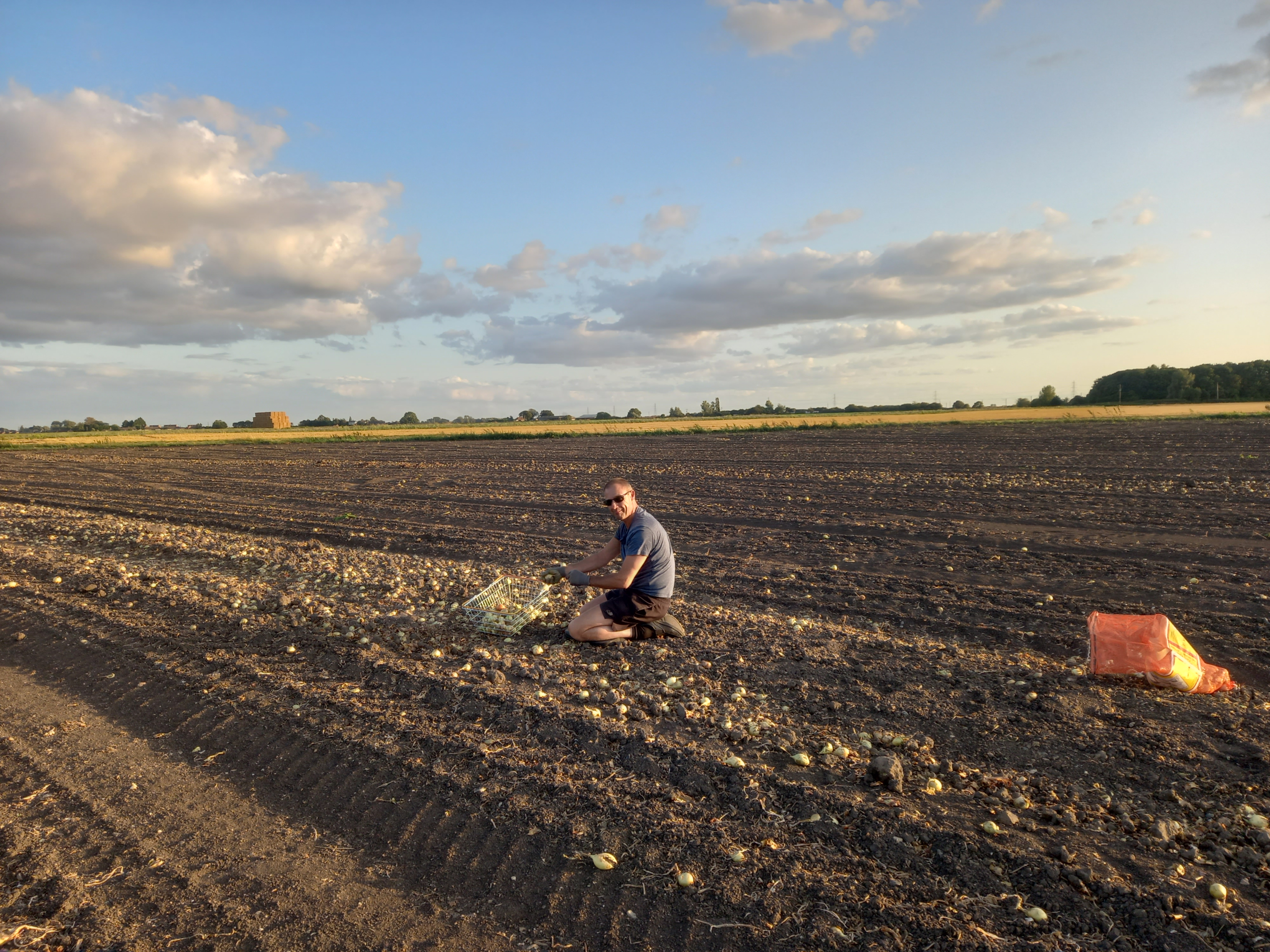
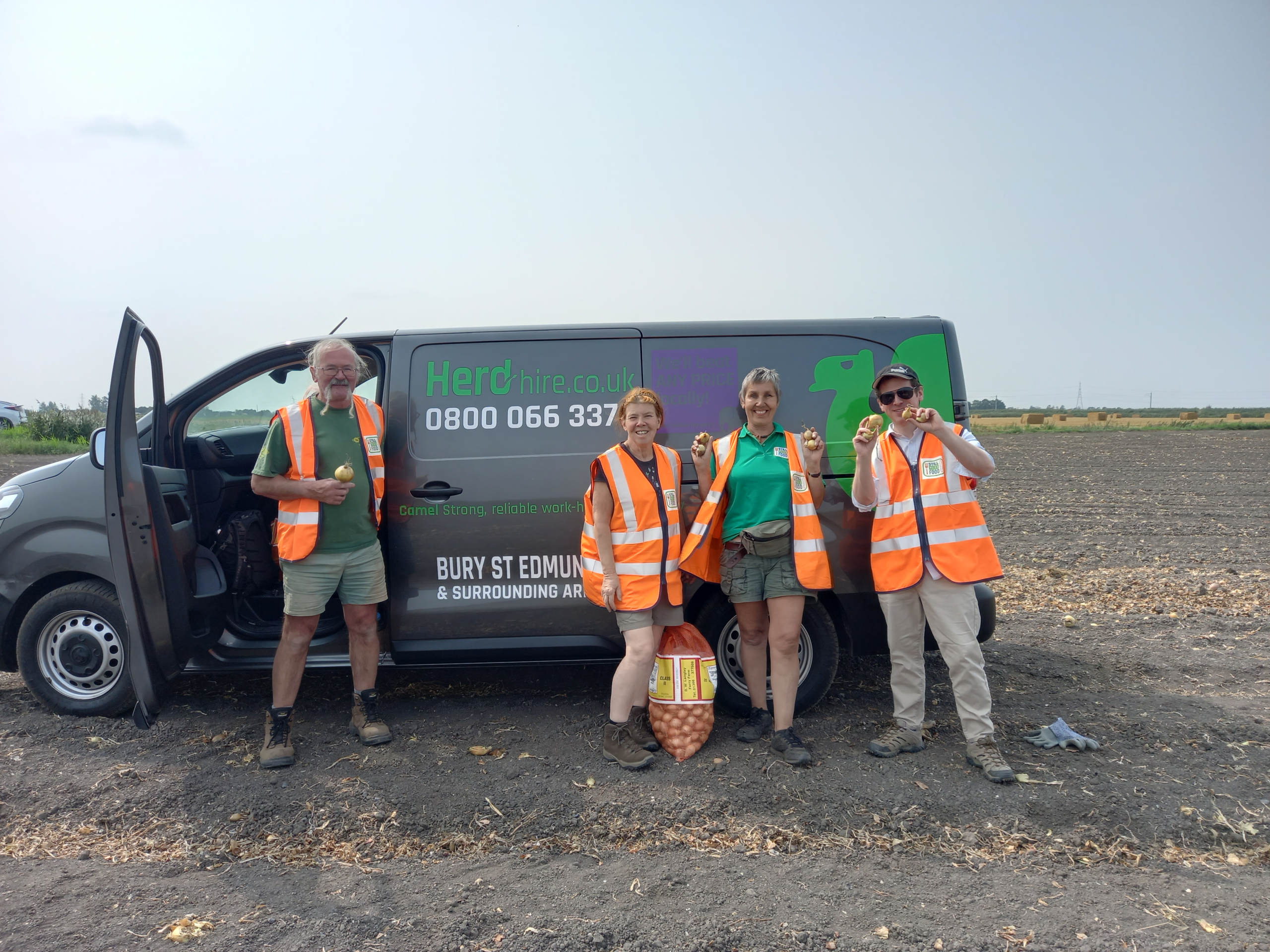
This is our fourth year Gleaning at SGF! We are based in Bury St Edmunds, Suffolk and we set our project up in 2017.
We are an environmental project and work with supermarkets via FareShare, redistributing food that is approaching or past its ‘Best Before’ date (not ‘Use By’).
We are based in the heart of an agricultural region. The area is largely arable growing sugar beet, cereals, potatoes, onions, leeks, brassica and fruits.
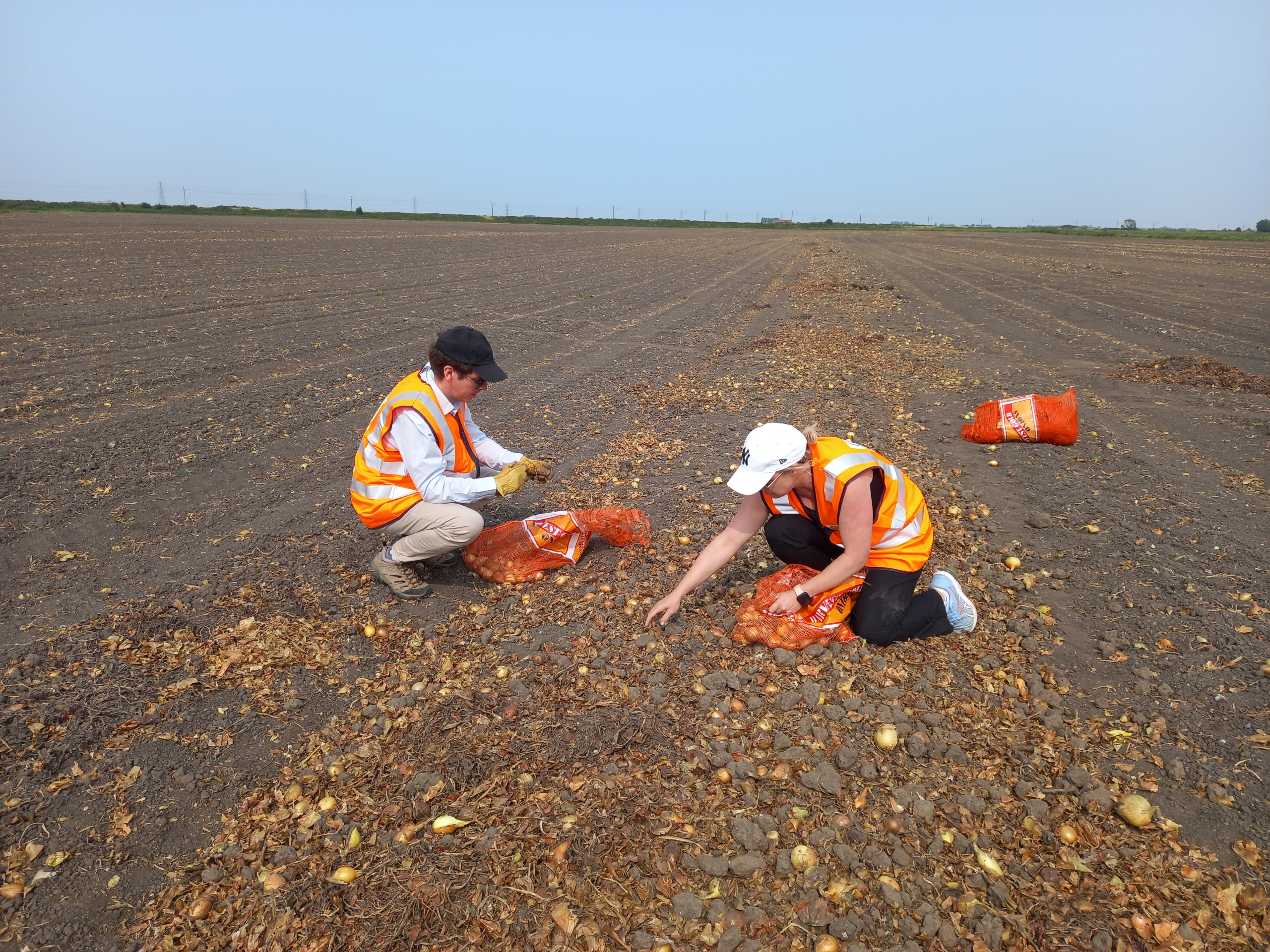
We work with five commercial farms, three fruit farms (apples and pears), and two arable where we have gleaned onions, potatoes, cabbage, kale and leeks.
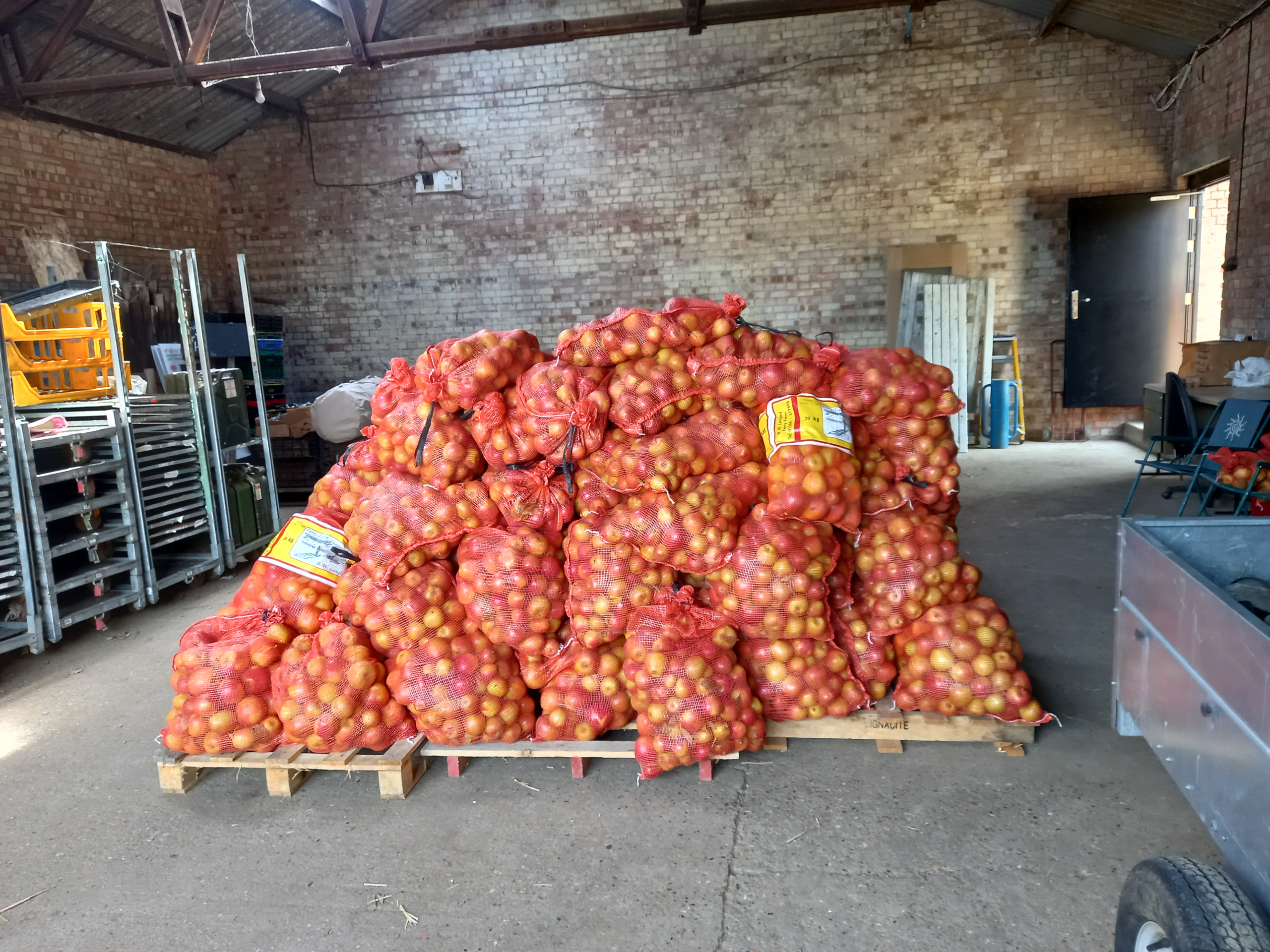
To date, we have gleaned just over 30 tonnes of farm fresh produce that would never have left the farm, mainly due to the “Cosmetic Criteria” set by supermarkets.
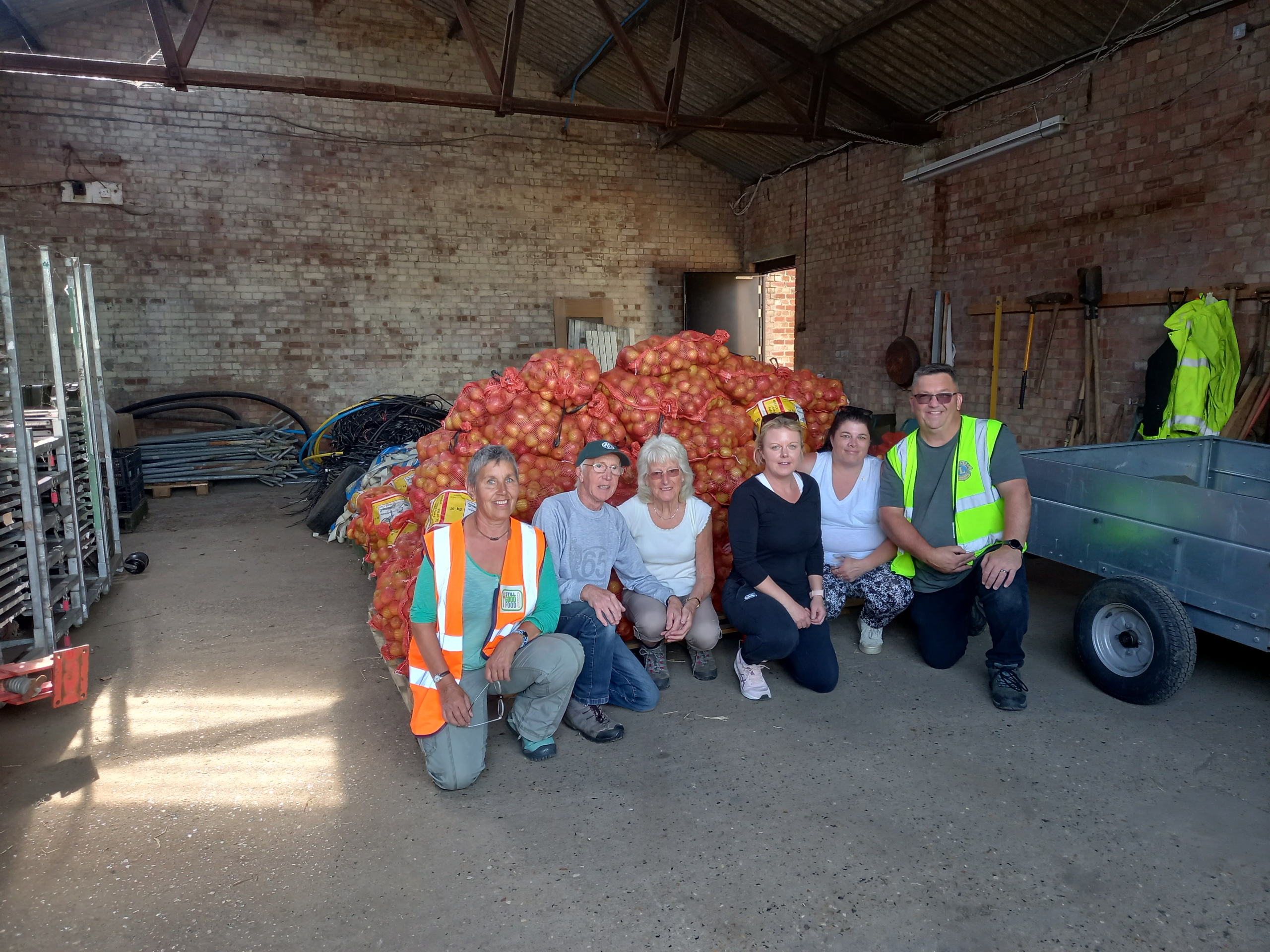
All gleaned produce goes through our two shops for a small “donation”. It also goes to local schools, food banks, projects that support hostels/homeless people and church projects. We are also now sending a tonne of beautiful “Cox le Vera” apples to City Harvest in London.
We have a team of over 35 volunteers who are passionate and dedicated and it would be impossible to do this work without them. We also work have great volunteers from the Lions club at Felixstowe and the New Century Lions, Cambridgeshire. We get free van hire here.
And, of course, the farmers who support us are very happy to see the fruits of their labour (and money) used for such a good cause. Farmers are now contacting us – which is a great indication of the success of our work.
Gleaning is also great fun, social and a really worthwhile way to spend couple of hours or so!
Fancy joining a glean? Email roz@stillgoodfood.org
We use cookies where necessary to allow us to understand how people interact with our website and content, so that we can continue to improve our service.
We only ever receive anonymous information, and cannot track you across other websites.
