
Donate
Support us in the fight for a better food system.
Organic food delivery service Abel & Cole is misleading its customers with claims that a switch to salmon produced in land-based tanks is a guilt-free way to enjoy fish, according to the experts at charity Foodrise as they urge the business to tell the truth over environmental harms.
Abel & Cole has now stopped selling salmon reared in marine cages due to “increasing welfare and environment risks”. But its shift to salmon produced in land-based factory farms – which it calls a “trailblazing alternative” and “an even better solution than organic” – carries a fresh wave of environmental and ethical harms .
Land-based salmon farms are opening up a new front in the industry’s aggressive expansion, which is fuelling the continued extraction of wild fish used in feed, harming biodiversity and taking food from coastal communities. There are also issues with technology failures leading to major mortality events where thousands of fish die.
Contact Abel & Cole asking them to tell the truth and stop supporting factory fish farming.
Abel & Cole is being urged to tell the truth to its customers and develop a transition plan away from selling all farmed salmon. The charity believes Abel & Cole’s greenwashing justification for selling salmon produced on land will open the floodgates for other companies to follow suit – resulting in exponential growth of this new frontier of factory farming.
Foodrise has written to Abel & Cole raising its concerns but has yet to receive a response. It has also published a briefing Fish out of water: Pulling the plug on land-based salmon farms outlining the environmental and ethical impacts. The briefing was published jointly with French campaign group Seastemik and endorsed by 22 organisations including Greenpeace Africa, Green Britain Foundation, Communities Against Factory Farming and World Animal Protection.
This comes as the UK’s first land-based industrial salmon farm was given the greenlight in Cleethorpes last year. While a decision on a further factory in land-locked Wiltshire is currently being considered by the local council.
There has been significant local push back against these plans with hundreds of objections lodged against the industrial scale factory farms in the local councils’ consultation periods.
Abel & Cole’s website claims land-based salmon is ‘responsibly farmed’ and ‘limits environmental harm and increases welfare’. But the reality is that salmon produced on land in tanks is an ethical and environmental problem driving the extraction of wild caught fish, often taken from food insecure regions like West Africa, for feed and shocking animal welfare conditions.
Misled customers
The company’s website is full of examples of customers being completely misled by Abel & Cole’s claims, including “we’ve not eaten salmon for 5 years now thankfully this responsibly farmed salmon, juicy and very tasty” and “reassuring to know that these salmon are not damaging the wild fish population”.
Customers shop with Abel & Cole because of its commitment to sustainability and ethical sourcing – but this isn’t the reality for its land-based salmon.
Natasha Hurley, Deputy Director at Foodrise, said: “Abel & Cole is failing its customers by selling them salmon farmed on land. We are deeply concerned that this move will open the floodgates on demand for land-based salmon. The reality is that this form of industrial salmon farming is fuelling devastation to wild fish populations, continued food colonialism and has profound impacts on animal welfare.
“Customers shop with Abel & Cole because it is a sustainable business which purports to care about people and planet. That’s why Abel & Cole must act to remove the greenwashing claims from its website and urgently develop a transition plan away from selling farmed salmon.”
Denise Long, an Abel & Cole customer from Southampton, said: “I regularly shop with Abel & Cole and I’m utterly appalled that they would seek to profit from such awful factory farming. The consequences for the welfare of thousands of fish and the environmental impacts don’t bear thinking about. If a product can’t be sourced ethically and sustainably, then a company such as Abel & Cole should stop selling it altogether. If they continue to sell salmon produced in this way, then I will have no choice but to withdraw my custom.”
Contact Abel & Cole directly
Write to Abel & Cole using our email template asking them to tell the truth and stop supporting factory fish farming.
The government must amend the National Planning Policy Framework (NPPF) to halt the expansion of factory farming, according to a letter signed by Communities Against Factory Farming, and green energy industrialist Dale Vince [1].
In another blow to the under-fire Labour government, 19 prominent environmental, public health and animal welfare groups, including The Vegan Society, Foodrise and Plant-Based Health Professionals UK, today [10/03/26] urged the government to rethink its flagship planning policy reform.
In the letter, the campaigners warn that the current draft NPPF “risks embedding decades of industrial livestock land use in rural and Green Belt locations without adequate scrutiny.” Instead, the government should “amend the NPPF to reflect the need for a just transition towards a sustainable, predominantly plant-rich food system”, the letter urges.
The letter comes in response to the Ministry for Housing, Communities, and Local Government’s consultation on a revised version of the National Planning Policy Framework that closed on Tuesday. If implemented, the new NPPF would facilitate the rapid expansion of factory farming by limiting local governments’ power to challenge the national framework.
Maya Pardo, Legal Strategy Coordinator at Communities Against Factory Farming (CAFF), and a signatory of the letter, said:
“The new NPPF would take power away from communities and allow conglomerates to build more factory farms without local democratic scrutiny. This reckless government is essentially proposing a national policy to encourage intensive livestock expansion.
“Stopping the expansion of harmful factory farming systems and prioritising growing crops for food instead of animal feed is crucial for food security, benefitting national health, and allowing ecosystems to recover. Rather than promoting the uncontrolled expansion of industrial livestock facilities, the government should create the legal environment for a plant-rich food system which protects communities and the planet.”
Communities Against Factory Farming has supported communities across the UK in challenging harmful intensive farming developments. In the past year alone, CAFF has helped overturn multiple planning applications for intensive farming units after legal challenges revealed failures in environmental assessment and planning procedure [2] [3].
Under the proposed changes, substantial weight should be given by decision makers to the economic benefits of “modernisation” of livestock, which refers to intensification. The intensification of the livestock industry has reduced Britain’s food security, with 40% of UK cropland now used for growing animal feed, and three million tons of soy imported every year to feed livestock [4].
A recent report by the Joint Intelligence Committee identified food security as a major risk to national security, explaining that ecosystem collapse around the world is likely to lead to food insecurity [5]. Policies that encourage more efficient and sustainable agriculture, such as arable farming, forestry, and horticulture, are required to make our food system more resilient. The report also noted that “food production is the most significant cause of terrestrial biodiversity loss” and that “the UK is unable to be food self-sufficient at present, based on current diets and prices”.
Instead, say campaigners, the NPPF should adopt a food-first policy of encouraging arable farming and horticulture for human consumption.
Labour is already facing accusations of abandoning its environmental ambitions. Last month, public figures including Vince signed a letter that accused the government of having “lost its way” on its environmental ambitions [6]
Promoting factory farming development on a national level would be a major deviation from Labour’s environmental pledges. Industrial livestock production is a leading cause of ammonia emissions, water pollution, greenhouse gas emissions and biodiversity loss. The livestock sector contributes approximately one-third of global anthropogenic methane (CH4) emissions and is responsible for up to 19.6% of greenhouse gas emissions measured in CO2 equivalent, while a transition to plant-based diets could reduce food related emissions by as much as 80%. The Climate Change Committee recommends a 25% cut in meat consumption by 2040, a 35% cut by 2050 (40% for beef and lamb), and a 20% reduction in dairy consumption by 2035.
Factory farm expansion does not align with the government’s other strategic priorities. A primary motivation for the NPPF reform is to help “tackle this country’s housing crisis”, yet industrial livestock production is directly responsible for blocking rural housebuilding: new homes cannot be built in many rural areas because water catchments are polluted by livestock manure and animal feed pesticides [7]. Research has also shown that pig and poultry farms impose over £1.2 billion annually in hidden costs on the public [8].
Natasha Hurley, Deputy Director of Foodrise, said: “The government’s proposed planning reforms would give environment-wrecking factory farms a green light to expand despite the damage they are already doing to communities, air quality, and rivers across the UK. We are urging politicians to act in the public interest and reform the planning system to support sustainable food production instead.”
References
[1] https://www.caff.org.uk/nppf-consultation-joint-response
[2]
[5]
[6] https://www.businessgreen.com/news/4525687/government-lost-green-step-calls-uk-nature-policy-reset
[7]

Foodrise’s Blue Empire: 2026 Summary Update provides a progress update on the impact of Norway’s enormous salmon farming industry on communities in West Africa two years on from the publication of our landmark report.
In it, we highlight key changes to corporate sourcing practices and policy developments.
What’s the problem?
The global salmon farming industry is creating a new type of food colonialism, extracting huge quantities of wild fish from the Global South, not to feed people, but to feed farmed salmon in the Global North.
Our Blue Empire report, published in 2024, exposed the role of the world’s biggest producer of farmed salmon, Norway, in this global chain of extraction.
For the first time, we quantified the huge volume of wild fish used by the Norwegian salmon farming giants and detailed how they were taking fish from communities in West Africa, who rely on it as both food and a source of income, to fuel corporate profits.
Key updates:
Policy recommendations:
We recommend that Norwegian government:
What the experts say:
Amelia Cookson, Campaigner at Foodrise, said:
‘The Norwegian salmon farming industry cannot be left to police itself. This enormous industry is continuing to hoover up huge quantities of wild fish in West Africa, harming communities to fuel corporate profits. They must stop now. Guinea-Bissau is leading the way in turning the tide on this destructive industry by banning the production of fishmeal and fish oil. It’s time for other countries to step up and regulate this harmful industry.’
Read the updated summary:


Nitrogen fertiliser corporations must become as well-known as the oil and gas industry’s BP and Shell for making billions while devastating public health, biodiversity and climate, according to a new report exposing the villains of the nitrogen crisis released by charity Foodrise (formerly Feedback) today.
Synthetic nitrogen fertilisers – made by multi-nationals like Yara, CF Industries and Nutrien – are used to promote plant growth. But their overuse is seriously harming the planet: surplus nitrogen, most of which comes from agriculture, is currently more than double what the planet can sustain. Nitrogen fertilisers also release nitrous oxide – an ozone-depleting substance and potent greenhouse gas that is 300 times more powerful than CO2 in trapping heat in the atmosphere over a 100-year period.
The new report – Exhausted Earth: How corporations broke the nitrogen cycle and how to fix it – investigates the harmful industry playbook used by nitrogen fertiliser corporations to profit from pollution. This includes spending millions of dollars lobbying governments to block regulation and insidious greenwashing tactics like funding research and sponsoring conferences which paint the industry favourably.
This follows the UK government announcing its partnership with Brazil to tackle nitrogen fertilisers’ “environmental impact and embrace their economic opportunities” at COP30. The Belém Declaration on Fertilisers urges for more to be done to “enhance nutrient use efficiency and reduce emissions from fertiliser production as a key pathway to delivering climate goals, protecting and restoring nature, and ensuring food security for all in an equitable and just manner”.
Based on the landmark EAT-Lancet report, Foodrise calculates surplus nitrogen must be halved – meaning agricultural nitrogen inputs need to be cut by more than a third (42%) by 2050.
But – instead of shrinking – nitrogen fertiliser production has surged by a fifth (20%) since the first planetary boundary assessment was published in 2009, when scientists first warned that Earth’s nitrogen boundary had been breached. Food systems are the single largest driver of environmental degradation and the leading cause of planetary boundaries transgressions.
This shows the urgent need to over-turn the corporate control of our food system, as profit-driven corporations will always put making money for shareholders above people and planet.
The top three nitrogen fertiliser companies – Yara, CF Industries and Nutrien – accounted for over one-third (34.6%) of global nitrogen fertiliser production in 2022, raking in nearly $40 billion from their sales of nitrogen fertilisers. While these companies have taglines like ‘Feeding the Future’ (Nutrien) or ‘responsibly feed[ing] the world’ (Yara), they have knowingly produced such vast amounts of surplus nitrogen as to transgress planetary boundaries, putting humanity beyond its safe operating space.
In addition, the nitrogen fertiliser lobby has also expanded its presence at the United Nations climate negotiations, with triple the number of delegates from major nitrogen producers attending COP30, compared with COP26.
Fossil fuels are used to make nitrogen fertilisers which are then used to grow feed for meat and dairy. These three interconnected industries are having a colossal impact on the environment and the corporations profiting from nitrogen pollution must be tackled decisively and quickly to build a food system with fewer animals being farmed, less nitrogen fertiliser required for animal feed and a reduced need for gas extraction for fertiliser manufacture.
Strong government action and regulation is needed to protect humanity and the planet. In the new report, Foodrise is calling for reduction targets for nitrogen production in line with the EAT-Lancet recommendations.
Carina Millstone, Executive Director at Foodrise, said: “Nitrogen fertiliser corporations must become as infamous and publicly shamed as the fossil fuel giants for reaping billions in profits at the expense of public health, biodiversity and the climate. These companies are pumping millions into greenwashing nitrogen fertilisers and claiming to help feed the world – when in reality they fail it.
“Food system transformation will require significant political leadership to tackle the greatest barrier to change: corporate control. It’s time for our political leaders to rein in, require redress from and begin shrinking the nitrogen fertiliser industry before the window of opportunity closes. The nitrogen cycle must be de-corporatised if humanity is to return within its safe operating space, with a life-supporting nitrogen cycle, rather than a destructive nitrogen surplus.”
Million Belay, General Coordinator at Alliance for Food Sovereignty in Africa (AFSA), said: “Synthetic nitrogen fertilisers are devastating Africa’s soils and waters, accelerating climate breakdown, and trapping farmers in a cycle of dependence and debt. Meanwhile, powerful corporations are flooding the continent with fertilisers to maximise profit, no matter the human or ecological cost. It is time to break this toxic model. Governments and public banks must stop bankrolling harmful fertiliser expansion and invest instead in farmer-led agroecology that restores our lands, strengthens our sovereignty, and safeguards our future.”
Recommendations
To reverse the damage caused by the nitrogen fertiliser industry, Foodrise’s report demands the following changes:

2025 sees us arrive at the 30th UN Climate Change Conference – or COP30.
Just weeks before the conference, the UN Environment Programme warned that the world is severely off track to limit global heating to 1.5C. Clearly, this is the perfect time for negotiators to double down on serious commitments that can urgently bring the target back into focus and finally put corporate control over our food systems in the spotlight.
But if the recent string of COP summits is anything to go by, this outcome is looking unlikely. For one thing, food systems have historically been low on COP agendas and largely absent from their final agreements.
This is a glaring omission, considering that food systems are responsible for one third of human-caused greenhouse gas emissions, and:
So why is food still missing from the COP table?
A small handful of corporations stand to make huge profits from delaying climate action. In the food industry, this includes some the world’s largest meat, dairy, fertiliser and pesticide companies, who are increasingly showing up at COPs to influence negotiations – and even participate directly.
Since COP26, DeSmog has tracked the attendance of ‘Big Agriculture’ delegates, finding that their presence more than doubled at COP27, and went on to triple at COP28, with over 340 representatives attending negotiations in Dubai.
Even more concerningly, industry representatives are being upgraded from ‘observer’ status to being included within country delegations – granting them more access and power to influence negotiations. DeSmog’s analysis has found that 40% of food industry lobbyists travelled to COP29 with country badges – an increase from 30% at COP28, and just 5% at COP27.
Meat giant JBS has attended via the delegation of Brazil for the past three years – the country which has consistently brought in the highest numbers of Big Ag lobbyists. With Brazil now being the host of COP30, we expect this shameful trend will continue.
This corporate capture threatens to stall progress on transforming food systems at COP, and gives these companies a license to further greenwash their destructive, exploitative practices. Research by Changing Markets has revealed extensive efforts by the meat industry to control narratives on agriculture in the lead up to COP30.
Meanwhile, those working towards just, resilient food systems – including small-scale farmers, Indigenous peoples and food justice activists – are frequently excluded from COPs. Attending COP is a significant expense, and it can be difficult to obtain a badge without existing political or industry connections. Research also shows that border and visa restrictions are increasingly barring the participation of people from the Global South.
There are initiatives working to change this, including the Global Alliance for the Future of Food, which supported a delegation of 42 community leaders – including small-scale farmers, fishers, and Indigenous peoples – to attend COP28. But without intervention to tackle the dominance of the Big Ag lobby, it threatens to drown out these much-needed perspectives.
Foodrise is not attending COP30 in person but will be keenly following its progress – in particular, uncovering evidence of corporate takeovers and calling out instances of Big Agriculture hijacking the negotiations.
Only by resisting corporate capture, and continuing to build food sovereignty movements beyond COP, will we enact real change.
Sunita Ramani is Campaign Manager at Foodrise.
Foodrise’s COP30 blog series exposes how corporate interests – from agribusiness to industrial meat and fish farming – dominate food discussions at COP, shaping climate policy to protect profits instead of people and the planet.
Through research and reporting, data analysis, and storytelling, each post reveals a different layer of the corporate capture of our food systems, connecting local struggles to global power dynamics.
Supermarkets now control more than 96% of British grocery sales [1]. But this near monopoly will cause the government’s food strategy to fail on its public health, cost of living and climate ambitions, according to new reports published today [30 September, 2025] by charity Foodrise revealing more than half (54%) of Brits favour a cooperative or employee-ownership model.
Despite their popularity and convenience, the actions of profit-driven supermarkets continue to harm the health of communities and livelihoods of British farmers – while contributing to food waste, climate breakdown, species extinction and jeopardising UK food security.
Foodrise is calling for major reform to the country’s food retail environment and government investment in alternative food networks. This includes government recognition that the current ownership structures of UK supermarkets cannot achieve the aims of its food strategy; and the urgent need to establish regional food hubs to supply shops, fruit and vegetable prescriptions, and business rate relief for independent sustainable food start ups.
Foodrise’s new YouGov polling shows widespread public support for member or employee-owned supermarkets, with more than half (54%) who think the best way for supermarkets to be run is by cooperatives rather than the state (3%) or private companies (16%).
While 65% think that a yearly salary of £1 million for the CEO of a large supermarket chain is too high, Tesco CEO Ken Murphy’s pay more than doubled in 2024 to £9.9million. Meanwhile, the survey also revealed more Brits prioritised saving money (33%) than buying healthy food (15%). This is in the context of rocketing food prices, with the Office for National Statistics’ latest inflation figures showing food and non-alcoholic drink prices rose by 5.1% in the year to August.
Published in July, the government’s food strategy – its plan to reshape the country’s food system – states that it is relying on industry and the private sector to drive the transition to a food system that will provide healthy, sustainable and affordable food for communities across Britain.
But the ownership structures of supermarkets make them structurally bound to maximise profit above customer health, the planet or food security. An example of this is the higher pricing found at “express” shops, mostly sited in low-income communities.
Additionally, there was some strong criticism of supermarkets as almost half (45%) of Brits think they do a bad job of both promoting local food products and helping people to cut down on food waste. Currently local food isn’t widely available with more than 80% of fruit and almost 50% of vegetables imported [2], while an estimated 40% of all food produced globally is wasted.
Carina Millstone, Executive Director at Foodrise, said: “Our food and farming is controlled by 10 profit-hungry supermarkets, with devastating consequence for public health, British farmers and for our planet. But our new data shows widespread public support for a different way forward courtesy of worker-owned food shops, which could help improve the nation’s health, while protecting the environment and making sure farmers get a better deal.
“We need to see urgent government action to fulfil the promises laid out in its food strategy by compelling supermarkets to change their practices, while working longer term to dismantle their control of the country’s food sector. Ministers are deluded if they think these big businesses are going to drive the change required for a healthy, sustainable food system without regulation forcing their hands.”
Supermarkets are bad for British farmers, health and climate
Supermarkets are also bad for British farmers. That’s why Foodrise is calling for proper regulation to stop supermarkets selling below cost and ensure farmers and suppliers are paid fairly. Shockingly, farmers earn three times more from alternative routes to market compared to selling to supermarkets.
But a better retail sector in the UK is already demonstrating what is possible with small and medium enterprises (SMEs), cooperative and community-owned grocery businesses working to create fairer and healthier food environments. For example, supermarket alternatives have been shown to improve diets by increasing fruit and veg uptake.
Yet this sector remains under-recognised and under-supported by national and local policy, despite the potential for independent food retail to deliver systemic change.
Julia Kirby-Smith, Executive Director at Better Food Traders, said: “The intersecting nature of food is both a challenge and a huge opportunity for the government. Rebuilding an independent food retail sector can help tackle multiple issues, including boosting our high streets and local jobs, building pride in our local communities, fair pay for farmers, access to healthier food, and a more sustainable food system.
“Collaboration between different parts of the food system offers a powerful way to achieve change across social, health and environmental issues. Too often, government support focuses on just the production side or just the public health side. We need to put a new emphasis on supporting independent food retail, building stronger local supply chains and unlocking better access to healthy, locally-grown food for all.”
References
[1] https://market.worldpanelbynumerator.com/grocery-market-share/great-britain
A policy paper has been published today that proposes ten policy measures the government can enact to increase production and consumption of plant-rich diets in the UK, in order to meet the goals outlined in the Good Food Cycle food strategy published by the Department for Environment, Food and Rural Affairs (Defra) in July 2025.
The call comes as the recent National Diet and Nutrition Survey (NDNS) revealed that just 9% of children and 17% of adults meet the ‘five-a-day’ recommendation for fruit and vegetables. [1]
The 10-Point Plan has been endorsed by leading organisations and businesses from the food, farming, health, sustainability and animal welfare sectors, including the Food Foundation, the British Growers Association, Doctors’ Association UK, UK Health Alliance on Climate Change, Oatly and Compassion in World Farming.
The plan has been submitted to new Secretary of State for Environment, Food and Rural Affairs, Emma Reynolds, and Defra Minister, Dame Angela Eagle, today.
“The government has highlighted the need to break the cycle of intensive animal agriculture in the UK, and produce a genuine Good Food Cycle,” says Liam Lysaght, Campaigns Officer at Foodrise.
“This paper shows widespread agreement from health, environment, and food professionals that we can achieve those goals with practical, integrated, policies to promote more plant-rich diets. It’s a perfect ‘cheat sheet’ for the new ministers at Defra.”
69% of respondents in a poll conducted by the organisations behind the plan said that the government should do more to help people eat fruit, vegetables and other plant-based foods. [2]
“The evidence is unequivocal that people in the UK are not eating enough plant-based foods – in particular, vegetables, pulses, legumes, fruit, nuts, seeds and wholegrains – and that public health will improve if we can secure a transition towards more plant-rich diets. That dietary transition can reduce the burden of disease and ease pressure on the NHS. The government has everything to gain by taking action,” says Dr Matthew Lee, Sustainability Lead from Doctors Association UK.
The plan also calls for more government support for the horticulture sector in order to improve food security and economic growth, more encouragement for food supply companies to focus on sales of plant-rich products and to make it easier and more affordable for people to access and eat healthy food.
“Only 53% of vegetables and 16% of fruit are home grown. The right support from the government could transform our horticulture sector from one where growers struggle to make a profit into a vibrant contributor to our rural economy and food security,” [3] says John Walgate, CEO of the British Growers Association.
70% of respondents in the poll agreed that the government should support animal farmers to transition to more sustainable practices, such as rewilding or plant-based crop production.
Plant-based foods can also help meet the government’s environmental goals. A 2023 study published in Nature Food concluded that “plant-based diets produce 75 percent less heat-trapping gas, generate 75 percent less water pollution and use 75 percent less land than meat-rich diets”. [4]
Caroline Reid, Sustainability Director at Oatly says: ‘If the government is committed to a food system that promotes health, supports farmer livelihoods, reduces climate emissions and ensures nature thrives, it needs to ensure support and a level playing field for the companies and products that make the transition to plant-rich diets easy. Plant-based products not only contribute to the reduction of greenhouse gas emissions, they also contribute to the public eating more fibre-rich, nutrient dense foods that come with a variety of health benefits including the prevention and treatment of certain diseases. It should be a no-brainer.” [5]
The Danish Government has already implemented a national action plan to promote plant-based foods and is seeking to use its current presidency of the Council of the European Union to introduce one across the EU. [6]
“Most importantly, our new polling shows that the vast majority of the public would like a healthier and more sustainable diet, they just need the government to set up the right conditions. With changes to procurement rules, supportive subsidy changes for farmers and a much-needed update to the Eatwell Guide, the government can use existing levers to meet its goals for the Food Strategy. In fact, it’s quite hard to see how they could ensure a resilient and sustainable food supply without doing so,” adds Liam Lysaght of Foodrise.
“We need to see the government commit to a change from the status quo and embrace these policies, to avoid the mistakes of the previous government’s Food Strategy.”
The paper is available at https://plantbasedhealthprofessionals.com/wp-content/uploads/2025/08/Joint-Position-Paper-Reaping-the-Benefits-of-Plant-rich-Diets-PBHP-Foodrise-TVS-et-al.pdf
Notes for editors
The Ten Points are:
References
[1] National Diet and Nutrition Survey 2021-2023,June 2025 https://www.gov.uk/government/statistics/national-diet-and-nutrition-survey-2019-to-2023/national-diet-and-nutrition-survey-2019-to-2023-report
[2] Survation survey of 1,091 UK adults, conducted 29-30 May 2025. Data were weighted to the profile of all adults in the UK aged 18+. Full results available on request.
[3] Department for Environment, Food and Rural Affairs, 2024, Horticulture statistics https://www.gov.uk/government/statistics/latest-horticulture-statistics/horticulture-statistics-2023
[4] Scarborough, P., Clark, M., Cobiac, L. et al. “Vegans, vegetarians, fish-eaters and meat-eaters in the UK show discrepant environmental impacts.” Nat Food 4, 565–574 (2023). https://doi.org/10.1038/s43016-023-00795-w https://www.nature.com/articles/s43016-023-00795-w
[5] Springmann, M., Wiebe, K., Mason-D’Croz, D., Sulser, T. B., Rayner, M., & Scarborough, P. (2018). Health and nutritional aspects of sustainable diet strategies and their association with environmental impacts: A global modelling analysis with country-level detail. The Lancet Planetary Health, 2(10), e451–e461. https://doi.org/10.1016/S2542-5196(18)30206-7.
[6] Government of Denmark, 2023, Action Plan on Plant-based Foods https://en.fvm.dk/news-and-contact/focus-on/action-plan-on-plant-based-foods ; Programme of the Danish Presidency https://danish-presidency.consilium.europa.eu/en/programme-for-the-danish-eu-presidency/programme-of-the-danish-eu-presidency/
Campaign group Foodrise (formerly Global Feedback Limited) has applied to the Supreme Court over the government’s bid to remove a cap on costs in its legal challenge to UK legislation implementing the free trade agreement with Australia.
Foodrise warns that if the cap is removed, the costs of the legal case would be prohibitively expensive.
The group says this risks there being no judicial scrutiny of the legislation, despite the High Court giving permission to bring the challenge and confirming it was arguable that the government had acted unlawfully, and risks creating a potential cost barrier for future environmental cases.
The costs cap is provided under the Aarhus Convention, which protects access to justice by ensuring environmental legal challenges are affordable. UK rules designed to implement the Convention limit an NGO’s costs liability if the case is unsuccessful to £10,000.
The government is arguing that Foodrise’s claim, challenging the legislation that brought in the 2023 UK-Australia Free Trade Agreement, should not be covered by the cap.
In the claim, Foodrise argues that the trade agreement will negatively impact the environment due to allegedly higher climate impact of meat production in Australia. There are also concerns that it will undercut British producers of beef, lamb, mutton and dairy.
Foodrise says there is a higher emissions intensity and a larger deforestation footprint for meat produced in Australia than in the UK. The group says the government failed to have regard for the UN Framework Convention for Climate Change when signing the trade agreement.
The claim was launched in 2023, with permission to bring the judicial review challenge with an Aarhus costs cap granted in June 2024. However, in July the government filed an appeal against the judge’s decision to grant costs protection, arguing that the cap should not apply to Foodrise’s claim.
In May 2025, the Court of Appeal ruled that the claim should not be covered by the Aarhus costs cap. Now, Foodrise is applying for permission to appeal to overturn this ruling in the Supreme Court.
The Aarhus Convention was brought into UK law in 2005 to enable the public to have better access to environmental justice, with the legal costs cap introduced in 2013. Foodrise says that if the decision the remove the cap is upheld, prohibitive costs could limit access to justice for environmental campaigners bringing similar cases like this.
Carina Millstone, Executive Director at Foodrise, said: “Our fears about Australian meat and dairy flooding into the UK have predictably come to pass, with British farmers, the environment and climate paying the cost of this catastrophic, unscrutinised trade deal. That’s why we have no choice but to take our appeal to the Supreme Court in the hope of retaining the cost cap on our legal fees and ensure proper environmental scrutiny of both this and future trade deals. We’re in a climate emergency and it’s high time we start putting people and planet over profit.”
Leigh Day solicitor Rowan Smith, who represents Foodrise, said: “The Aarhus costs cap is vital for ensuring that NGOs like Foodrise are able to challenge the government hold it to account over its laws and commitments to the environment. Our client fears that the Court of Appeal ruling in the government’s favour limits the scope of the cap applying in future cases and, as a result, unlawfully constrains access to environmental justice. In the face of these potential consequences, they are now applying to go to the Supreme Court to argue their case.”
NICE, FRANCE. 12 June 2025 – The devastation caused by fish farms in Scotland and Norway has been increasingly under fire, yet huge swathes of the Mediterranean have been quietly taken over by industrial-scale seabass and seabream farms – boosted by European Union and government funding. This is driving untold environmental destruction and depriving global communities of food and livelihoods.
This Mediterranean ‘takeover’ by seabass and seabream farms is revealed today [12 June, 2025] at the United Nations Ocean Conference (UNOC) in a new report Ocean Takeover from environmental charity Foodrise (formerly Feedback Global), Greek alliance Aktaia and Spain’s Associació Cultural Ecológista de Calp (ACEC).
The new research reveals the sheer scale of the ‘feed footprint’ of seabass and seabream farming with huge numbers of wild fish turned into fish oil to feed farmed seabass and seabream. The researchers found 300,000 tonnes of fish could be left in the ocean, or that over a quarter more people (28%) could be fed a weekly portion of 200g fish if it wasn’t used to feed farmed seabass and seabream.
This means that seabass and seabream farming has a negative impact on global food security, contrary to what the industry consistently claims.
The extraction of wild fish from countries in West Africa, including Senegal, Mauritania and Gambia to produce fish meal and fish oil (FMFO) for industrial aquaculture is contributing to the worsening food security crisis: in 2023, food insecurity in the region hit a 10-year high [1].
The latest data (2021) from EUMOFA underlines the scale of the problem, with 98% of the European seabass eaten coming from farms, while just 2% is from fisheries [2].
While Türkiye is the world’s biggest producer of farmed seabass and seabream (44%), Greece is the biggest in the European Union – with its industry growing 141% since the turn of the century [3]. This growth in Greece is fuelled partly by the extraction of vast amounts of wild fish from West and Southern Africa – enough to feed nearly one million people a year, according to the new research.
Despite this, the report reveals substantial support from national governments and the European Union, which collectively have channelled millions of euros into promoting the growth of intensive fish farming – to the detriment of critical Mediterranean ecosystems and coastal communities, as well as people across the globe.
For example, Under the European Maritime, Fisheries and Aquaculture Fund (EMFAF) 2021–2027, Greece will receive €91 million to support “sustainable aquaculture and processing” [4].
Meanwhile, changes to legislation in Greece have dramatically increased the permissible areas for intensive aquaculture – expanding them 24-fold. This effectively grants vast stretches of the country’s coastline to private companies from across the world for their exclusive use to make big profits – at the expense of the environment.
Natasha Hurley, Campaigns Director at Foodrise, said: “It’s high time we all knew where the seabass and seabream on our plates comes from – and the huge environmental cost of each bite. Our new research clearly shows the shocking takeover of the Mediterranean by profit-hungry corporations is driving environmental destruction and global food insecurity. What’s even more galling is that this is happening courtesy of funding from national governments and the European Union.
“Industrial aquaculture is increasingly touted as a solution to ecosystem collapse and food insecurity as our oceans’ wild fish populations come increasingly under threat, but this is a deeply misleading narrative, fuelled by vested corporate interests. Today’s findings powerfully demonstrate that intensive fish farming is a false solution, and shows why we need to see an urgent end to the rapid expansion of seabass and seabream farms in the Mediterranean.”
Mor Mbengue, President of the Cayar artisanal fisheries committee (Cayar, Senegal), said: “Before, the sea made us live. We caught enough to feed our families, and the women of the village processed the fish to sell to the inhabitants of the cities far from the Senegalese coast, thus providing 70% of their animal protein needs. Since the arrival of fishmeal factories, which target coastal pelagic species and fish for juveniles, everything has collapsed.
“The fish have disappeared, the air has become unbreathable, the water is polluted. Women have lost their jobs, young people no longer have a future here. Many take to the sea, no longer to fish, but to flee. The most revolting thing is that all this fish plundered here does not even feed human beings: it goes to Europe and Asia to fatten farmed fish or pigs. We sacrifice our lives to feed animals on the other side of the world. It’s an injustice that we can no longer bear.”
Fay Orfanidou, from Aktaia – The Greek Alliance for the Protection of the Marine Environment from Aquaculture, said: “We are aghast at the pillaging of wild fish populations off the coasts of Africa, Latin America and Asia to produce feed for the fish farms which are blighting our lives here in Greece and throughout the Mediterranean.
“This is not food security. It’s theft: taking fish from the hungry to feed a polluting export industry. We are the voice of the coastal communities, and we will not be silenced. Our seas are not for sale. Our fight is for the future of Greece – and we will not give up.”
Read the report: Ocean Takeover – How seabass and seabream farming in the Mediterranean is driving environmental destruction and food injustice.
References
[1] Alexandra Heal et al., “The Hidden Cost of Your Supermarket Salmon,” The Financial Times, January 31, 2024, https://ig.ft.com/supermarket-salmon.
[2] New study: Fresh European Seabass in the EU, European Market Observatory for
Fisheries and Aquaculture Products, New study: Fresh European Seabass in the EU
[3] Hellenic Aquaculture Producers Organization, “2024 Annual Report: Aquaculture in Greece,” 2024, https://fishfromgreece.com/wp-content/uploads/2024/10/HAPO_AR24_WEB_v5.f.
[4] European Commission, “Greece Will Receive €364 Million from the European Maritime, Fisheries and Aquaculture Fund 2021-2027,” December 1, 2022, https://oceans-and-fisheries.ec.europa.eu/news/greece-will-receive-eu364-million-european-maritime-fisheries-and-aquaculture-fund-2021-2027-2022-12-01_en.
Today the Department for Environment, Food and Rural Affairs (Defra) has announced the projects it’s funding to stop thousands of tonnes of nutritious food being wasted.
This includes funding for Foodrise’s Gleaning Network to deliver a partnership project with six existing gleaning groups across England who last year collectively shifted more than 70 tonnes of surplus produce from farms into the community for people to eat.
Foodrise will lead the gleaning project alongside Khepera in Buckinghamshire, Sussex Surplus in Brighton, Avon Gleaning Network based across Bristol and Bath, Deal With It who are part of Transition Deal in Kent, Still Good Food in Bury St Edmunds and Alchemic Kitchen in Merseyside.
Phil Holtam, Regional Programmes Manager at Foodrise, said: “We’re thrilled that our gleaning partnership has received this new funding. Gleaning is a brilliant example of environmental and social action – food waste is reduced, the complexity of food and farming is better understood, communities engage in social action, and marginalised communities are able to access healthy, nutritious food. We’re looking forward to getting going in partnership with six other brilliant organisations to tackle food waste and feed our communities.”


Our exciting move from Feedback to Foodrise has been a long time coming. It means we finally have a name that reflects who we are and what we stand for. We are a small but mighty team of audacious activists – taking often unlikely action in pursuit of exposing systemic issues within our food system right the way from farm to fork.
‘Food’ is our focus, and ‘rise’ reflects how we create change. Through bold action, community collaboration and systemic shifts. Foodrise reflects the wide scope of our world-changing work and move – almost a decade ago – from a single-issue charity focusing on the scourge of food waste to one tackling issues right across the food system.
We work at the grass roots and grass tips. Taking on the corporate control of our food system which normalises over-production and exposing its colonial legacy and need for reparations. While showing a better way is possible through our community projects in Merseyside, Sussex, Buckinghamshire, and in The Hague in the Netherlands.
We now – as Foodrise – have a name that is fit for purpose for our broad, audacious and ambitious work in the UK, EU and globally.
We held our first ever ‘Feeding the 5000’ event in London’s Trafalgar Square back in 2009. Thousands were introduced to the shocking levels of waste in our food system – while enjoying a delicious meal. A global movement was born leading to similar events all around Europe and resulting in long-lasting policy change on food waste.
Then we officially registered as a charity and became Feedback in 2013, founded by Tristram Stuart and Nikki Charalampopoulou to shine a light on food waste. Our founders’ impact was significant as they exposed the social scandal and environmental tragedy of food waste, and positioned it as an environment issue.
Following Carina Millstone’s appointment as Executive Director in 2017, and with Frank Mechielsen at the helm in the Netherlands since 2021, we have grown into so much more than a voice against food waste.
We are confronting the structural drivers of injustice in our food system — from exposing the financiers of the global livestock industry to advancing community-led alternatives across Liverpool and Knowsley. All with an unwavering commitment to equity, justice and anti-oppression.
From legal challenges and hard-hitting research to supporting movements on the ground, our work now spans the UK, Europe, and globally. Including the founding of Feedback EU in 2022 to broaden our impact in the European Union, and strengthen involvement with EU food policy development, civil society coalitions and create alternative local food environments in the Netherlands.
But we still needed a name that reflects the breadth of our expanded, turbo-charged mission. At this critical moment — as climate breakdown accelerates, nature collapses, and millions face hunger and poor health — Foodrise captures our readiness to rise to the challenge and our vision for a future that works for people and the planet.
We are at a moment of crisis and opportunity. We are seeing the impact of climate change being felt – the geopolitical implications on food security, records numbers of children living in poverty. The worst harvest in 40 years. The wettest 18 months on record followed by the hottest ever spring. The decline of nature.
Our shift to Foodrise is a pivotal moment — one that positions us to amplify our voice, grow our impact, and build momentum in the fight for a just food system. We want more and more people to know who we are and what we do.
We’re rising up with fresh energy and a deeper commitment to transform the food system. For climate, nature and justice. Thank you for rising with us.
Carina Millstone, Executive Director at Foodrise
Frank Mechielsen, Director at Foodrise in the EU
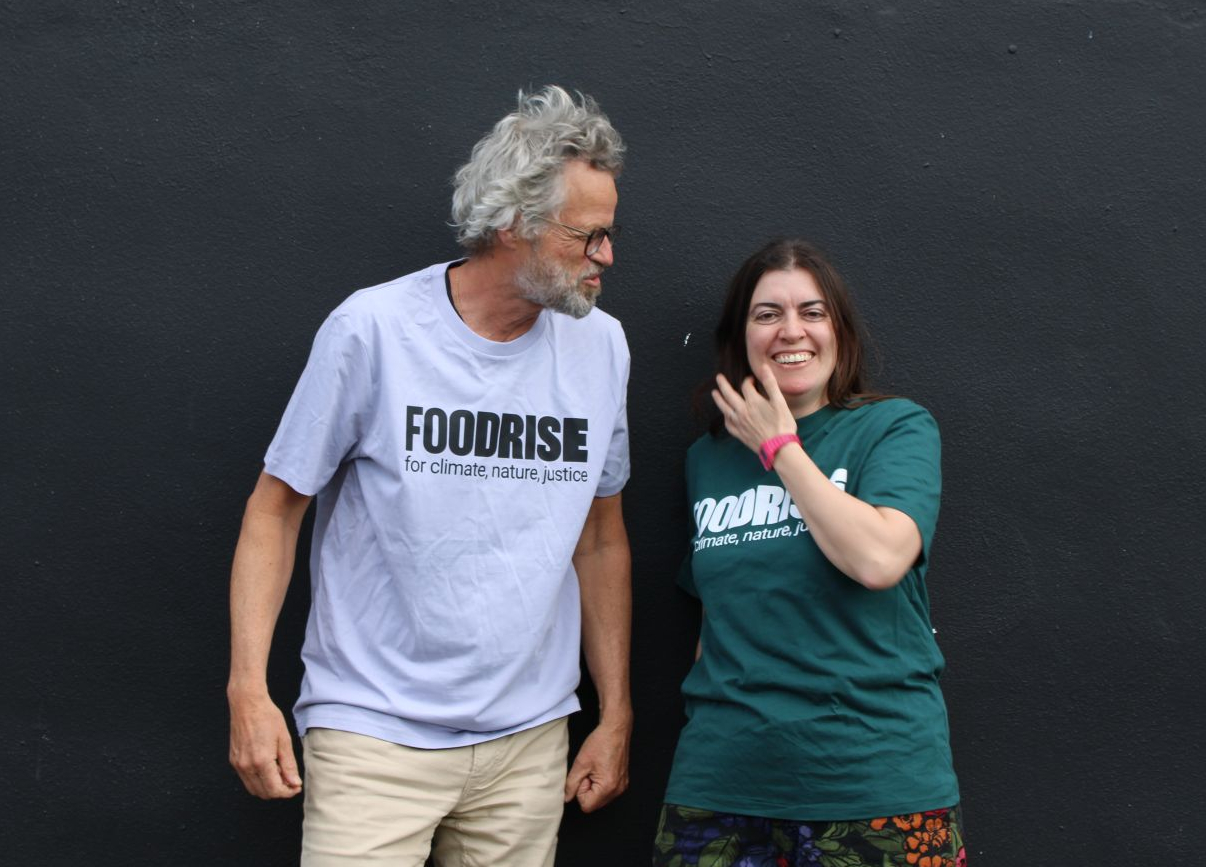
Carina Millstone is a lifelong environmental activist and campaigner. She is currently serving as executive director of campaigning group Foodrise.
We use cookies where necessary to allow us to understand how people interact with our website and content, so that we can continue to improve our service.
We only ever receive anonymous information, and cannot track you across other websites.
