
Donate
Support us in the fight for a better food system.
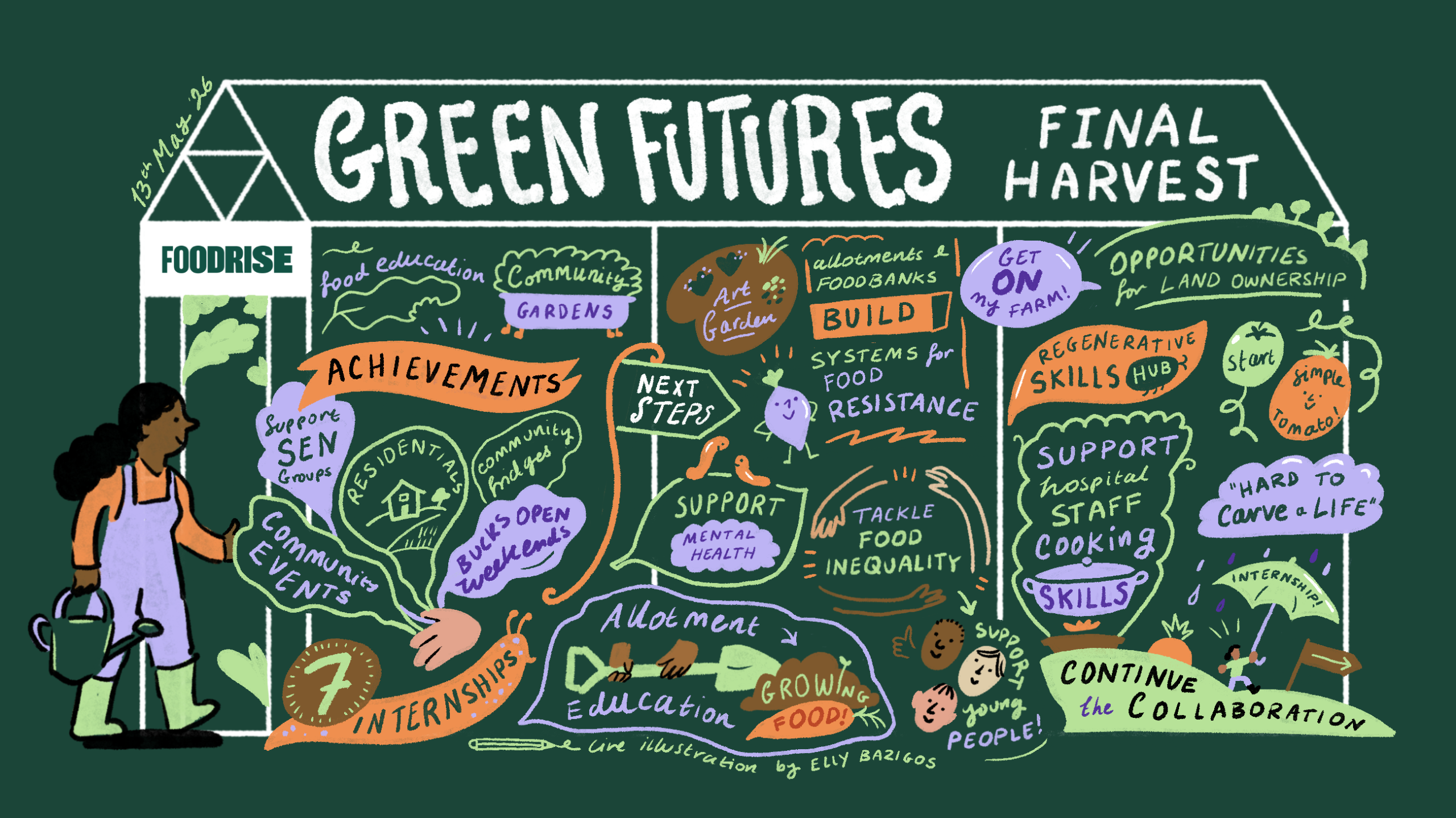
Over the last 8 years, we’ve worked across Buckinghamshire to improve health, wellbeing and skills within local communities through food education, skills development and collaboration. Now, with our projects coming to a close, we’re gleaning from our final harvest in the region.
From innovative partnership projects including Wellbeings (cooking and nutrition sessions for young people), Only Me (social cooking sessions for older adults) and Slo’ Plates (distributing slow cookers to those experiencing nutrition poverty), we’re proud to have shown how working with local communities, providers and producers can really make a difference to people’s lives and the local food economy.
Entering a new regional area as a national charity is not as simple as you might imagine. But being part of the food movement in Buckinghamshire emerging after COVID-19 gave us the unique platform to be a key member in progressing the local food economy and its integral link for the future opportunities of young people.
Food is central to people’s lives in a huge variety of ways, so bridging the gap between food, health and the environment has been crucial to our work. We’ve worked to embrace food as a catalyst for positive change, whether it’s for socialisation and isolation, mental health, financial insecurity or impact on the climate.
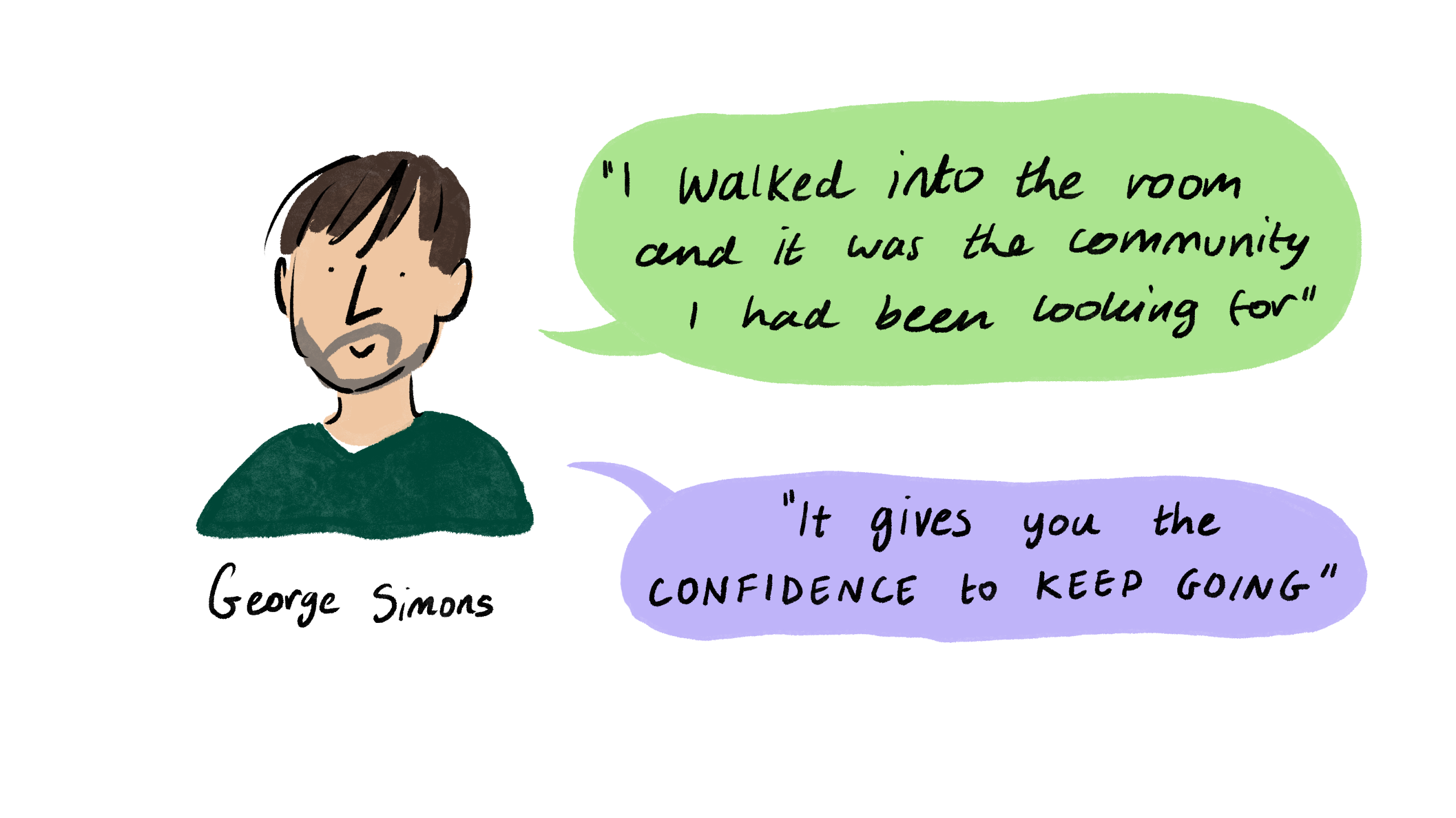
Green Futures
Our main focus has been engaging with communities and, in particular, young people. Inspiring them to be curious about the environment, the food they eat, and the world around them. Encouraging them to understand how our actions, habits and lifestyles can influence others and make a difference to the planet.
Our flagship project, Green Futures, has helped support the local green economy, empower young people through training opportunities and internships, and reconnect people to land and nature.
The Green Futures Network has been central to our ability to create lasting impact and embed change. Bringing together environmental and sustainable food organisations – focused on growing, cooking, distribution or campaigning – with education institutions and youth organisations, has helped them to share knowledge, ideas and build long-term partnerships. This has resulted in school-based interventions with cooking skills and horticulture lessons, to work experience schemes and group study visits to open young people’s eyes to potential future careers.
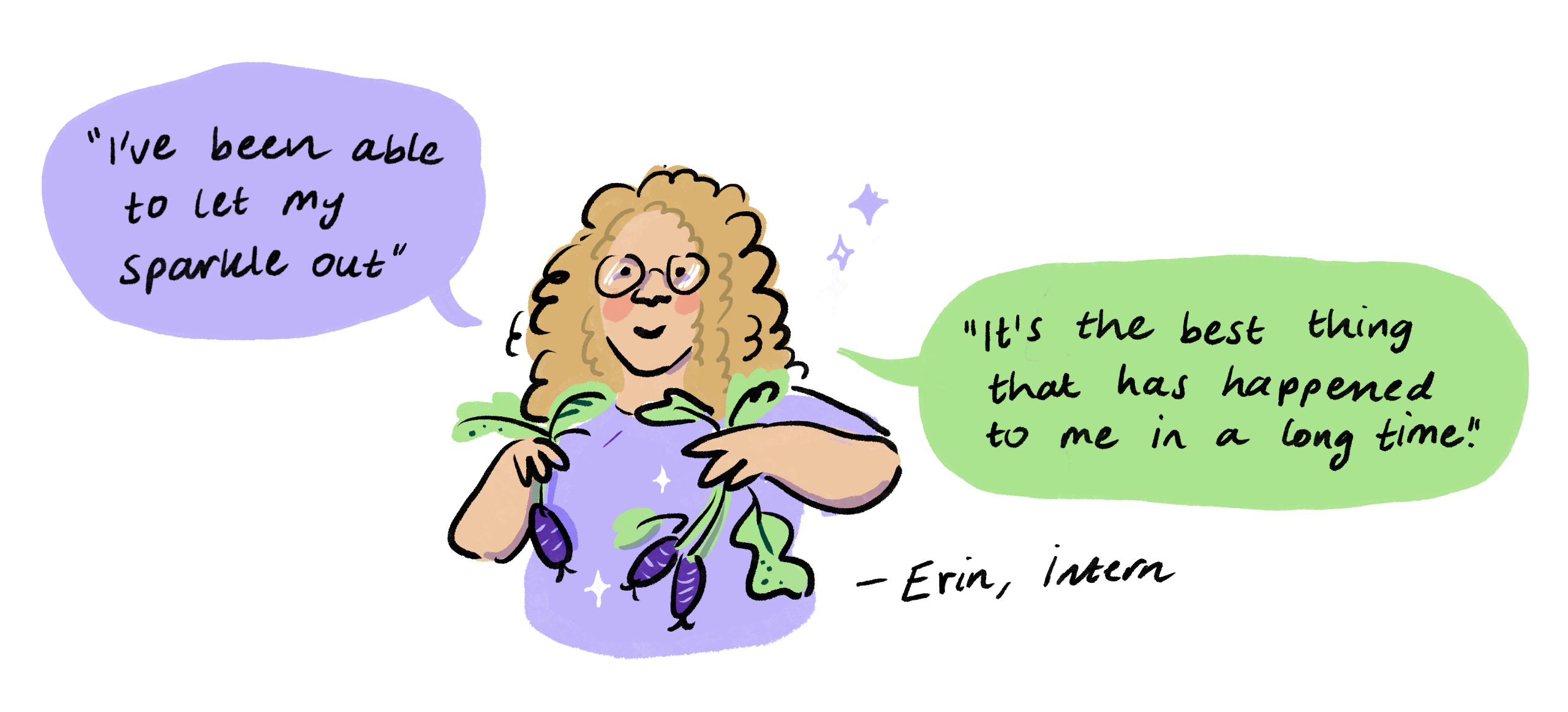
“The workshops were amazing, cause they expanded my horizons to things I wouldn’t have known about otherwise.” – Fiona, Intern
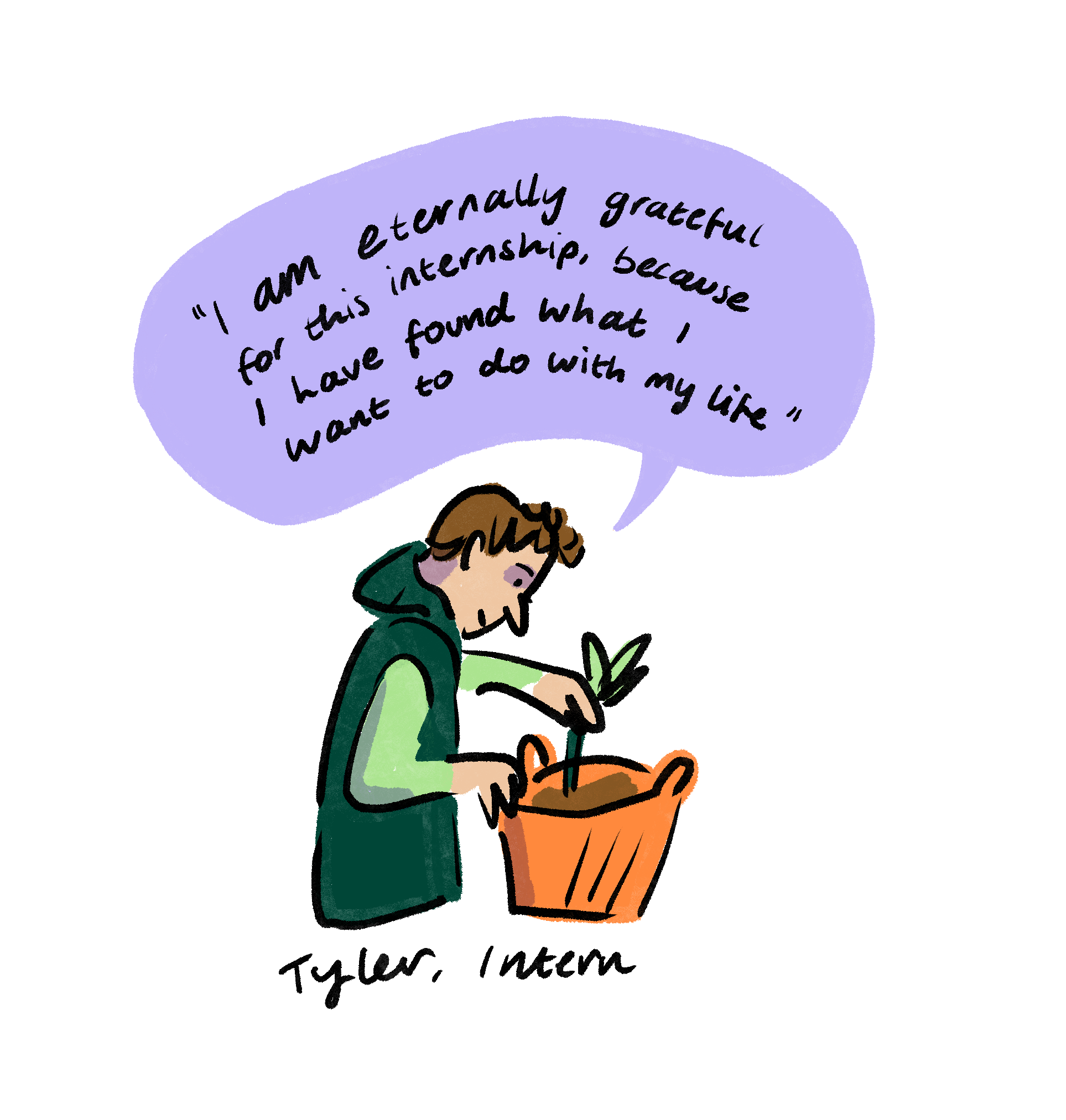
Many young people across Buckinghamshire face barriers to meaningful employment. Our Green Futures Internships sought to tackle this by creating opportunities for young people aged 18-24 to take part in 16-week paid internships in food and environmental organisations across the Green sector. From working in estate management and regenerative farms, to community kitchens and local cheese producers, the internships offered invaluable experience and insights into exciting new areas of work.
With a total of 14 paid placements, over 80% of the young people got into employment following their internship. The hosts also hugely benefited: receiving additional support, fresh energy and ideas, seeing what they do through a new pair of eyes, and offering new ways of sharing knowledge about their organisations with others.
Local Food Partnerships
Another aspect of our work has been being involved in local food partnerships; funding new innovative partnership projects, offering training and development opportunities, and influencing local and national strategies.
We’ve used our presence locally to embed public health schemes, provide food education and citizenship both in and outside the classroom. We’ve been able to share, influence and grow, and this is not just for us as a charity, but as part of the food community across Buckinghamshire.
So, although the projects are coming to an end, the legacy of what we have achieved will live on in those we have nurtured through our work.
Listen to reflections from our Green Futures interns:
Tyler
Fiona
Erin
Ella
Belle
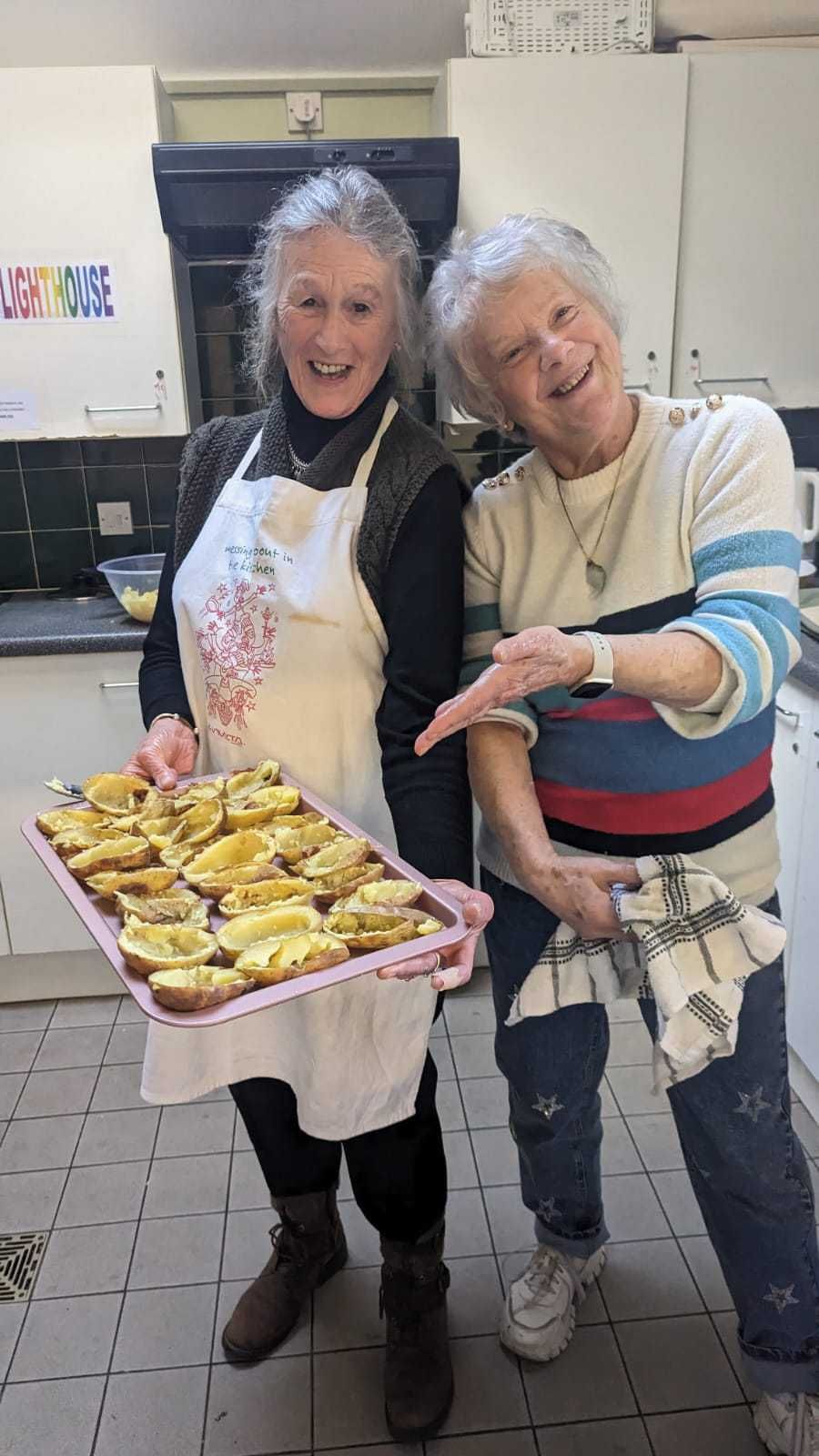
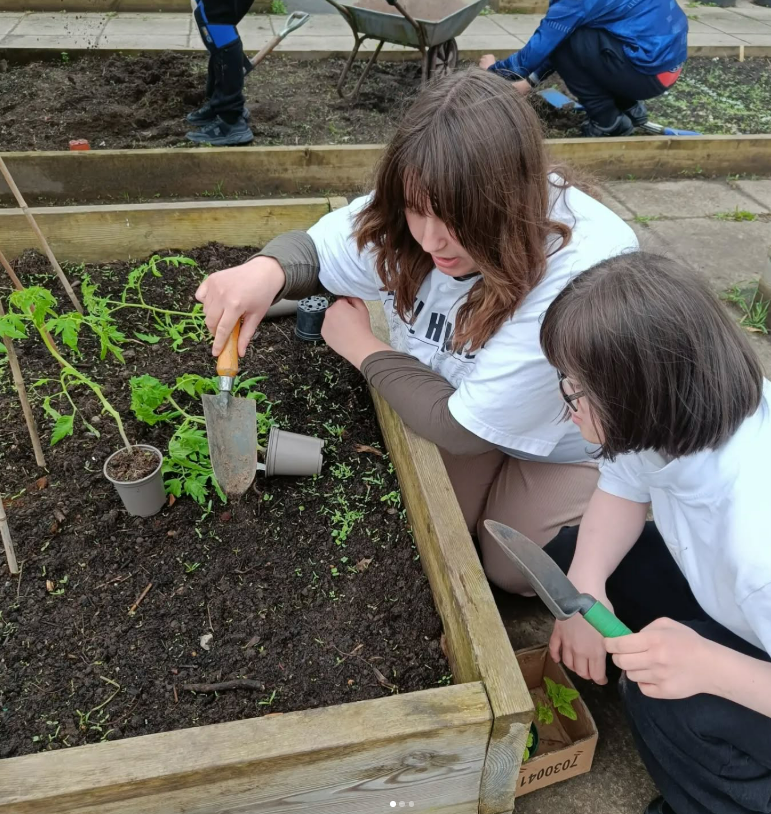
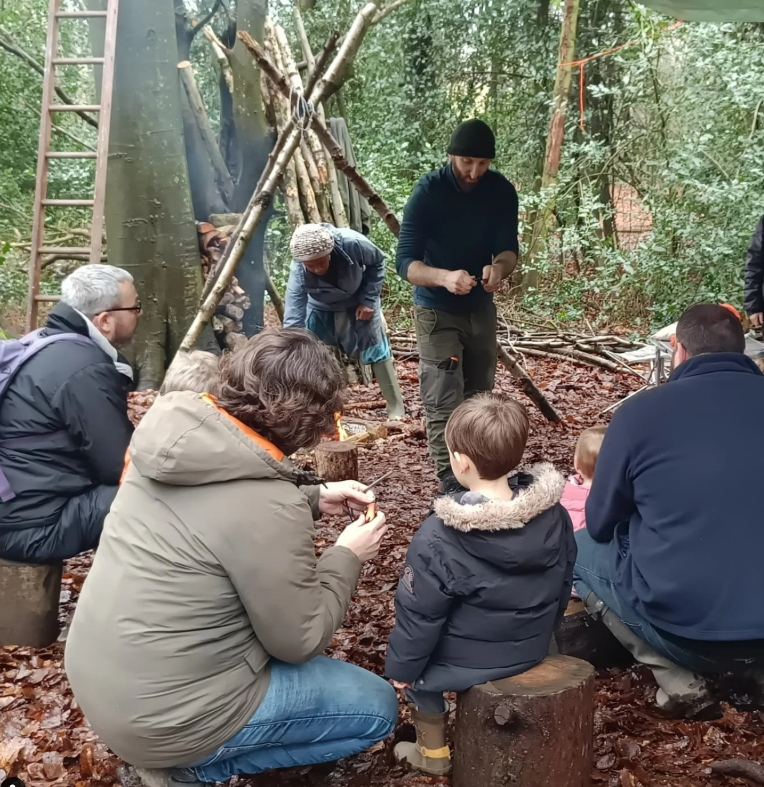
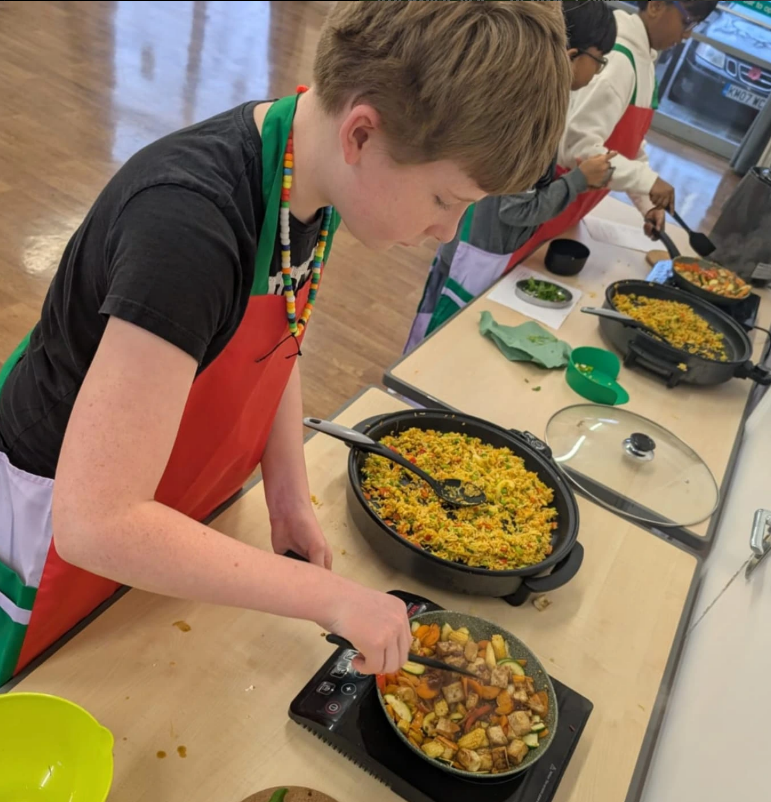

Growing skills, connection, and resilience through food and farming
See the issue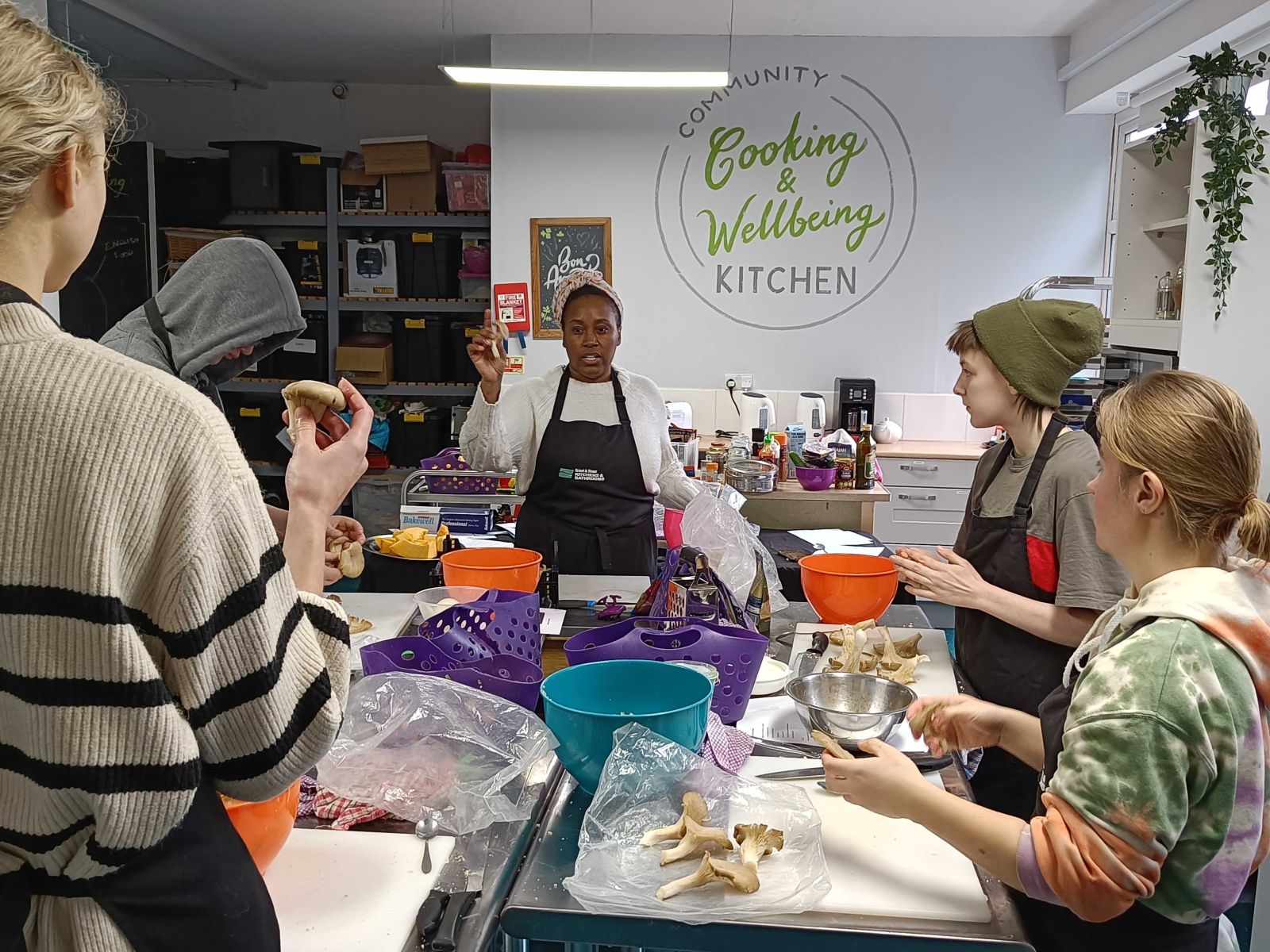
The UK’s biggest supermarket is profiting while selling us food containing ‘forever chemicals’, and keeping customers in the dark. It’s time to stop Tesco selling us toxic food.
You may have heard about PFAS, also known as ‘forever chemicals’. These toxic substances don’t break down naturally, and have been linked to serious health concerns, from damaging our immune systems to increasing the risk of multiple types of cancer.
Scientists have long been sounding the alarm about the serious risks of PFAS, and public concern is growing. But up until now, no research has assessed the extent that forever chemicals are present in our food.
That’s why we took a range of everyday meat, dairy and fish products sold by the UK’s biggest supermarket – Tesco – to be tested at the University of Birmingham’s state-of-the-art PFAS laboratory.
The result? Every single product contains toxic forever chemicals.
Every little hurts
Tesco claims that it is ‘committed to helping customers, communities and the planet’.
But our results make it clear: The supermarket giant is selling food products that could carry serious health risks, with no transparency or health warnings.
Several of the items tested – including family favourites such as fish, tinned hot dogs, and turkey sausages – contained especially worryingly high levels of PFAS.
A national scandal
Tesco receives more than £1 in every £10 spent by the British public in retail – and its boss, Ken Murphy, has previously taken home nearly £10 million in a single year.
Tesco is profiting whilst putting its customers at risk.
And supermarkets are well aware of this issue. Back in 2021, Tesco ignored a petition signed by almost 12,000 people urging supermarkets to remove PFAS from their food packaging. Meanwhile, other supermarkets have made commitments to phase out PFAS, and to investigate further.
Take action with us
Tesco must urgently recall the products found to contain high levels of PFAS, and tell its customers how it will ensure the safety of its food products going forward.
The UK government recently published a plan to take action on PFAS. We believe this plan needs to hold supermarkets including Tesco accountable.
We’re demanding that Tesco urgently reviews its food safety standards, and commits to eradicating harmful levels of PFAS from its food products.
Take a couple of minutes to contact Tesco using our email template, and tell Tesco boss Ken Murphy that we won’t accept forever chemicals in our food.
Alchemic Kitchen started in 2018 as a delivery project of Foodrise (formerly known as Feedback). Now, it’s become an independent community interest company (CIC), marking an exciting new chapter as it continues to create a fairer food system across the Liverpool City Region.
Creating change
Alchemic Kitchen began as a development kitchen in Merseyside, transforming surplus fruit and vegetables into jams, chutneys and ketchups to reduce food waste.
But in 2020, Covid-19 lockdowns exacerbated the problems many communities faced in accessing affordable and nutritious food. In response, Alchemic Kitchen shifted its focus to working with local partners to deliver emergency food provision to communities across the Liverpool City Region.
Today, Alchemic Kitchen is an action-led social enterprise working with communities and individuals to improve food access, create opportunities for knowledge exchange, and advocate for better food systems that support people and the planet. These three ways of working are connected by one belief: everybody should be able to eat a healthy and sustainable diet.
Improving food access
Queen of Greens
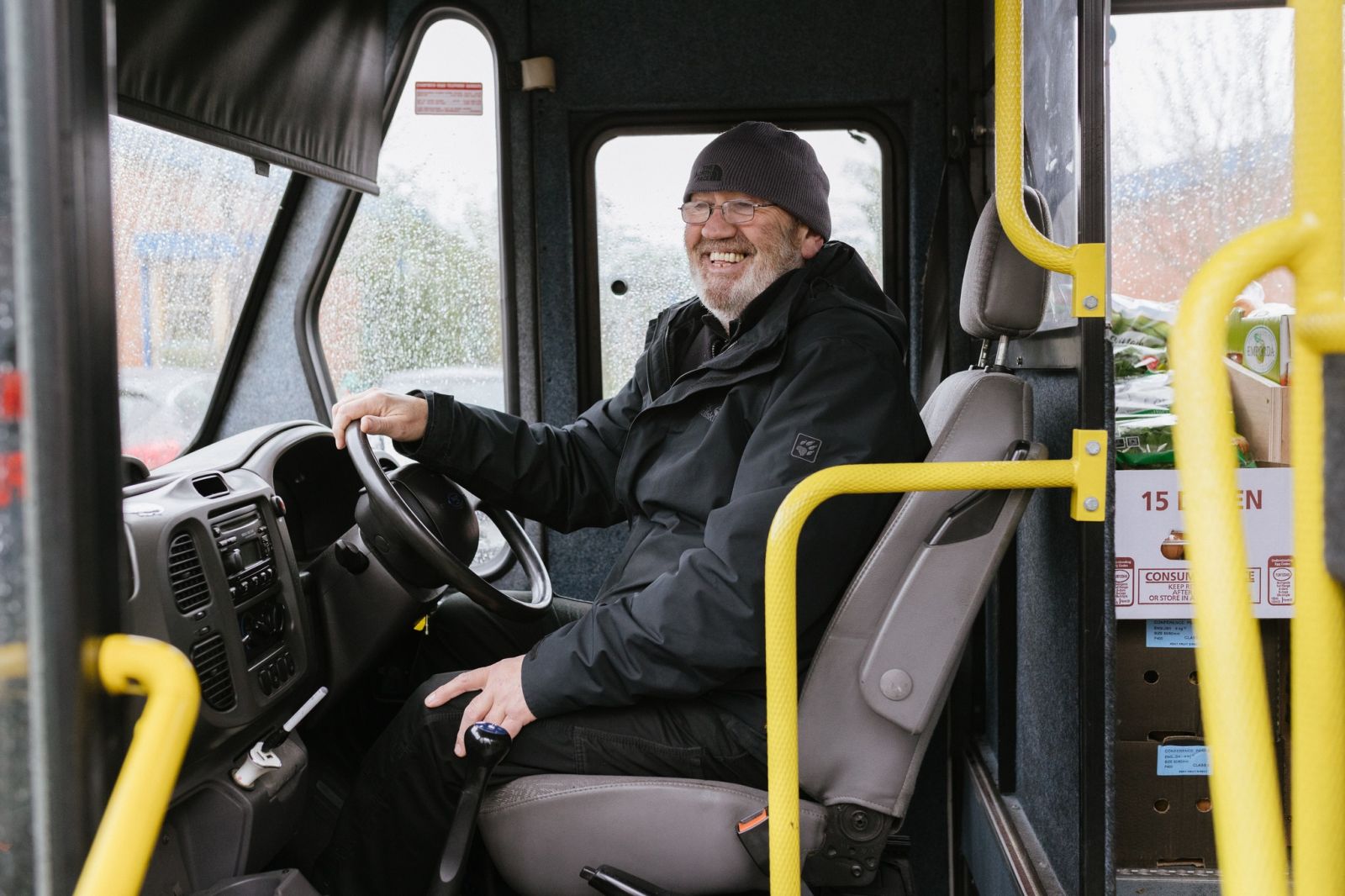
Bright and early each morning, you’ll find one of the Queen of Greens greengrocers stocking up the bus for the day ahead. They understand the needs of their communities, loading the bus with local and seasonal produce and an organic offer wherever possible.
The Queen of Greens is a mobile greengrocer visiting 40 stops across Liverpool, including hospitals, children’s centres and schools. The bus has become a staple, relied on in the community. Customers are welcomed by friendly faces and share stories about the health, social and financial benefits of stopping by.
“We really wanted to get into the spaces of Liverpool and Knowsley where it is easier to buy a vape than to buy an apple,” said Lucy Antal, Director Alchemic Kitchen CIC and Founder Queen of Greens Mobile Greengrocer.
Bringing fruit and vegetables directly to the people who need them builds a healthier, more sustainable food system, one that isn’t reliant on large supermarket chains.
Access and advocacy work hand in hand here. Research shows 77% of Knowsley is a ‘food desert’, meaning people simply can’t reach fresh fruit and vegetables easily. Alchemic Kitchen’s community team is running consultations across Knowsley to expand the service into the borough and reach communities where food insecurity is high. The team is meeting community leaders, council members and schools to plan routes to the places that need them most.
Knowledge exchange
Disco Chops
Knowledge exchange happens best when it’s fun. One way Alchemic Kitchen shares skills across Merseyside is by hosting Disco Chops. With a groovy beat and a whole load of vegetables that would otherwise go to waste, a Disco Chop turns surplus produce into a fun, shared community meal, and a chance to build the confidence to cook it again at home.
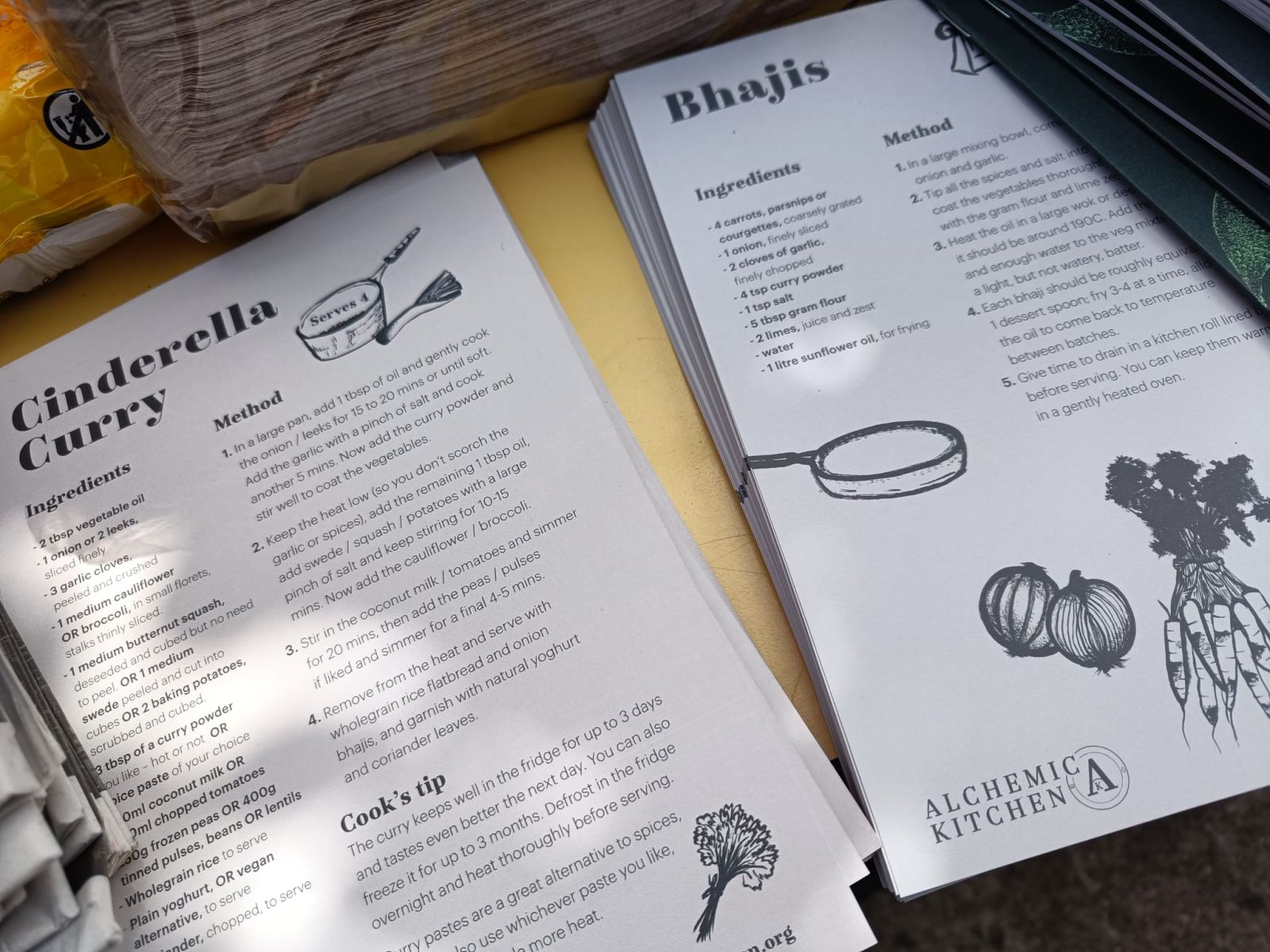
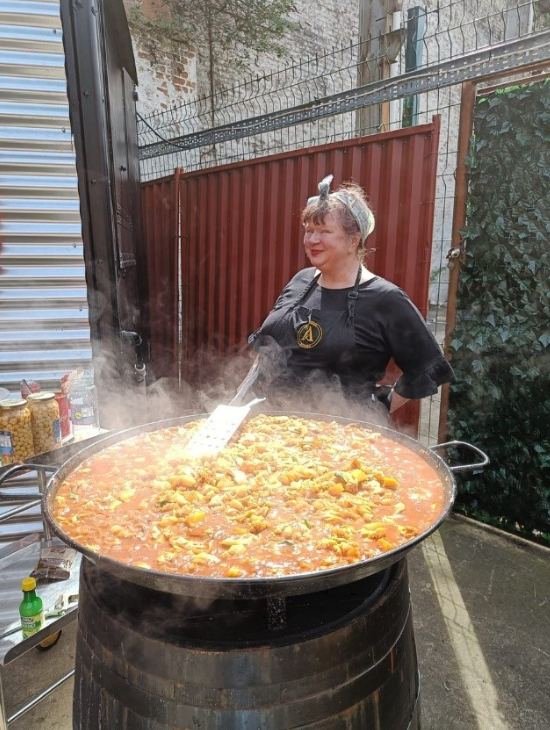
On a sunny April afternoon, a Disco Chop at Sub Rosa in the Baltic Triangle brought people together to cook a vegetable curry, parsnip bhajis and flatbreads. In true Scouse fashion, the team got by with a little help from their friends: Alison Lockett-Burke of The Fig and the Wild, resident chef on Growing Knowsley’s Future, joined the event. A wonderful crowd got stuck into the prep and, just as important, the eating. The team then headed to a school in Kirkby, where parents and students rustled up flatbread pizzas and apple crumble. Families left with new skills and the confidence to use them.
Alchemic Kitchen has recently secured funding from the Merseyside Recycling and Waste Authority to deliver eight more Disco Chops across the city region, bringing these high-energy events to schools and community centres over the next year.
Apple Day
No year at Alchemic Kitchen is complete without Apple Day.
Since beginning in 2022, the event has seen Liverpool’s historic Speke Hall welcome thousands of visitors to its orchard. Visitors pick apples straight from the trees and take them home with recipe books or help juice them and turn them into crumble. Either way, Apple Day stops two tonnes of apples from going to waste.
It’s hands-on knowledge exchange. Young people start to understand the connection between their food and the land, and families come together. As one visitor put it: “There’s teenagers in the trees. Well, at least they’re not on their devices!”. This year will mark the fourth Apple Day, supported by the Merseyside Recycling and Waste Authority.
Advocacy
Good Food Plan
Alchemic Kitchen also works to change the system that makes good food hard to reach in the first place, and that’s the third way of working: Advocacy.
As a member of the Feeding Liverpool alliance, Alchemic Kitchen helps deliver the Good Food Plan for the Liverpool City Region. It collaborates on research and evaluation, builds partnerships across housing, health and local food networks, and shares what works.
What’s next?
Alchemic Kitchen is continuing to grow, with new team members and new projects, while remaining focused on the same goal: good food now and a fairer food system for the future.
Stay up to date with the latest work at Alchemic Kitchen.
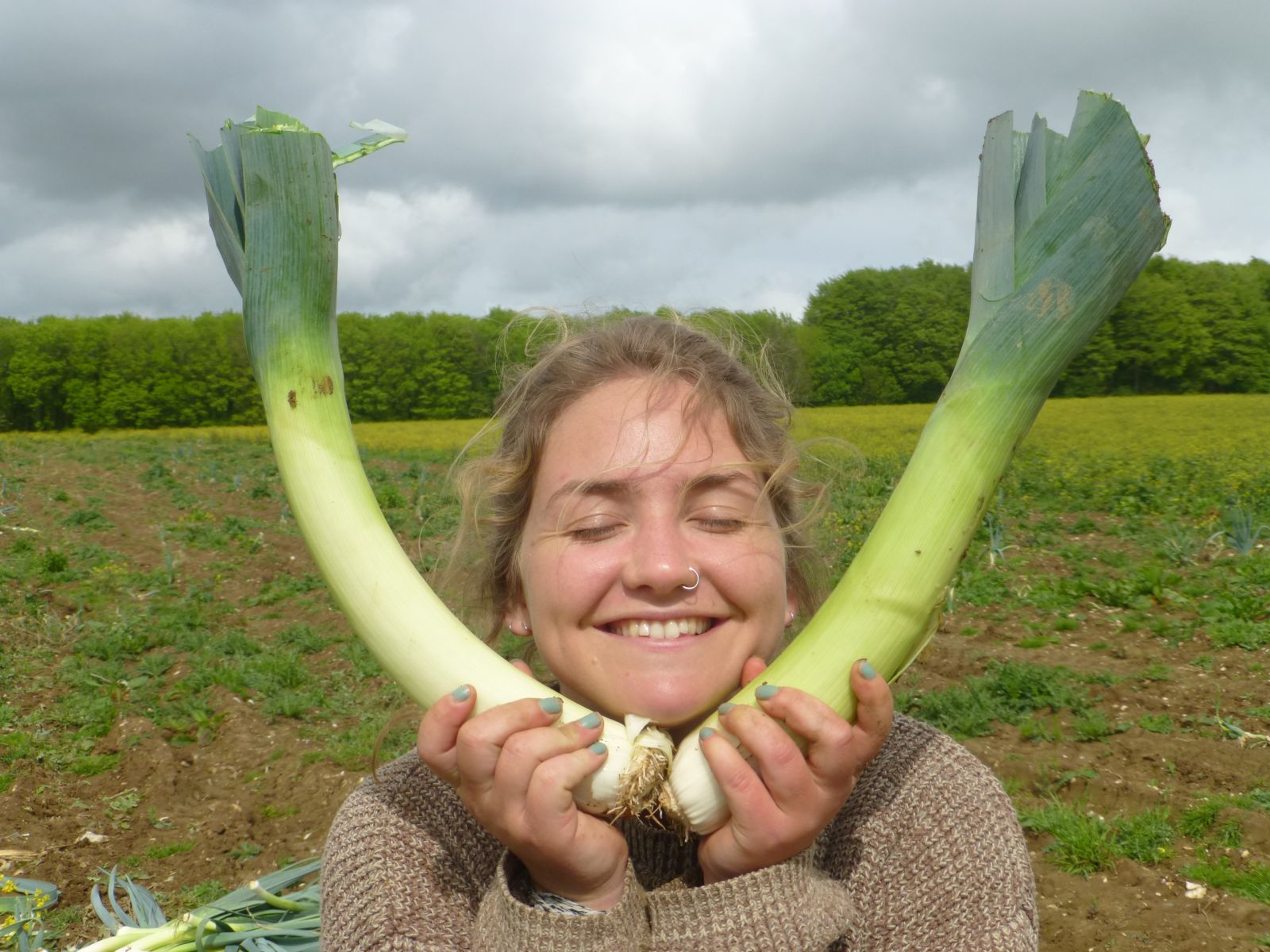
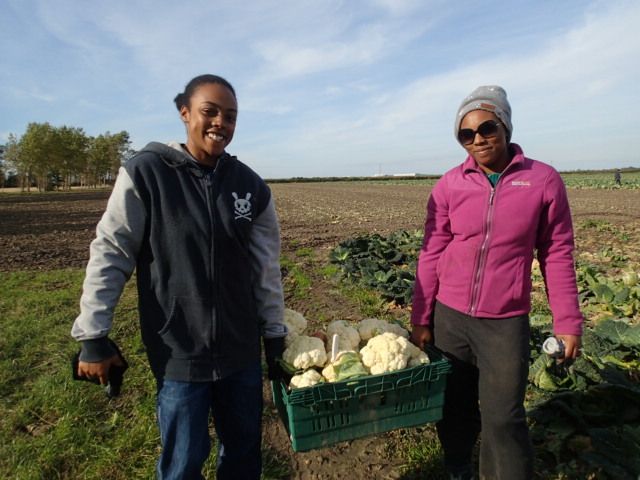
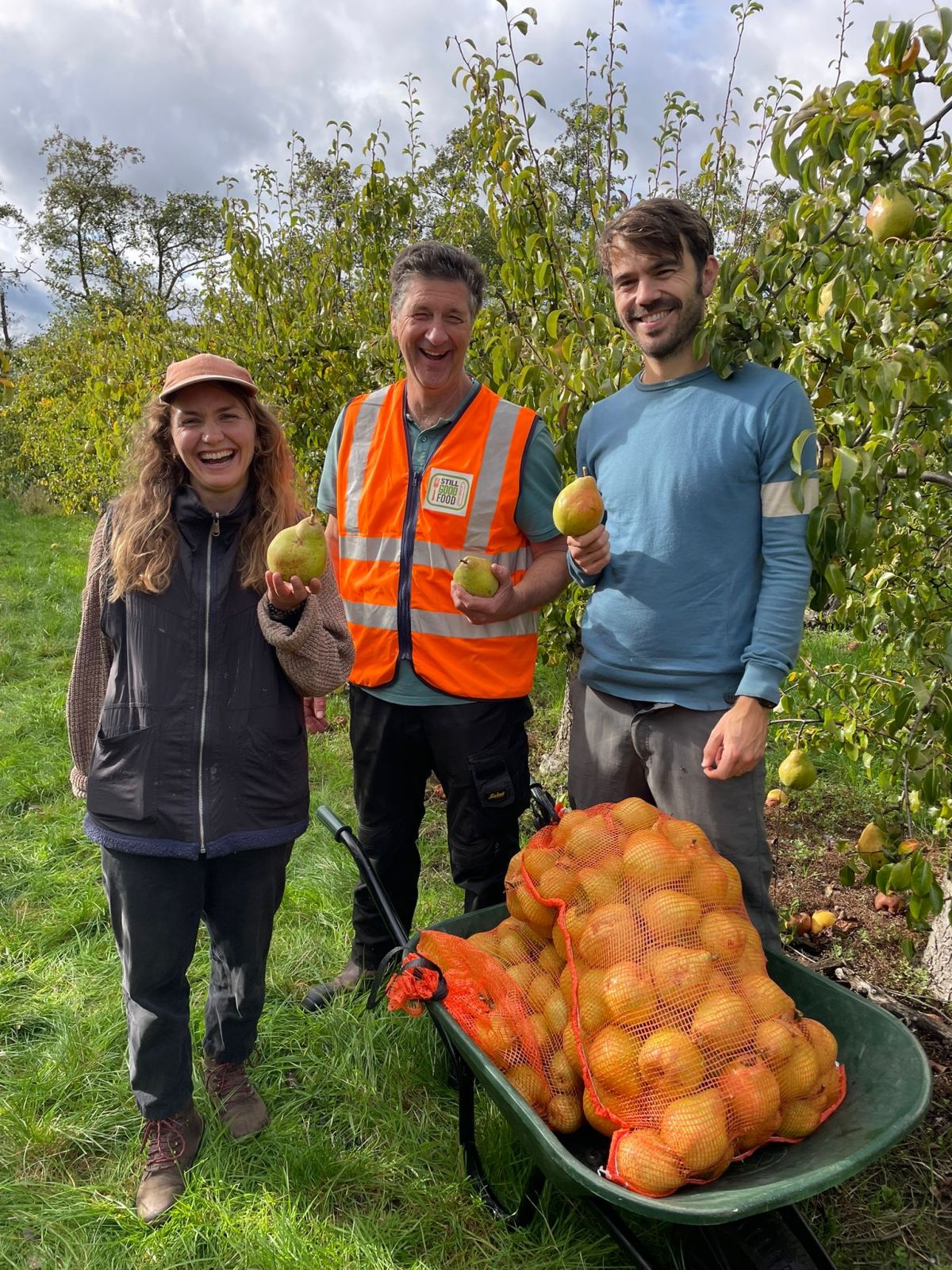
In 2012, in the very early days of Foodrise (then Feedback), a small group of food activists gathered in a field in Kent to harvest cabbages and cauliflowers that would otherwise have gone to waste after a last-minute supermarket contract cancellation. The term was “gleaning” was not a word the volunteers had heard before, but an activity they immediately loved. One of those original volunteers was Ren Piercey, now Foodrise’s Gleaning Network Project Manager, who has been involved in gleaning ever since.
Over the past year, Ren has worked with six gleaning groups across England as part of a Defra-funded project, Ready, Steady, Glean. The aim was to increase the volume of surplus food leaving farms and encourage more farmers to welcome volunteers to harvest produce that would otherwise go unsold. The six groups, Still Good Food (Suffolk), Avon Gleaning, Khepera (Buckinghamshire), Sussex Surplus, Alchemic Kitchen (Merseyside) and Deal With It (Kent), rose to the challenge.
Between June 2025 and March 2026 these groups gleaned an impressive 80.2 tonnes of produce, equivalent to £95,267 in wholesale value, preventing 53,752kg of greenhouse gas emissions and providing over one million portions of food. This food has reached social supermarkets, community meals, school kitchens and a wide range of local food projects, as well as being shared among volunteers.
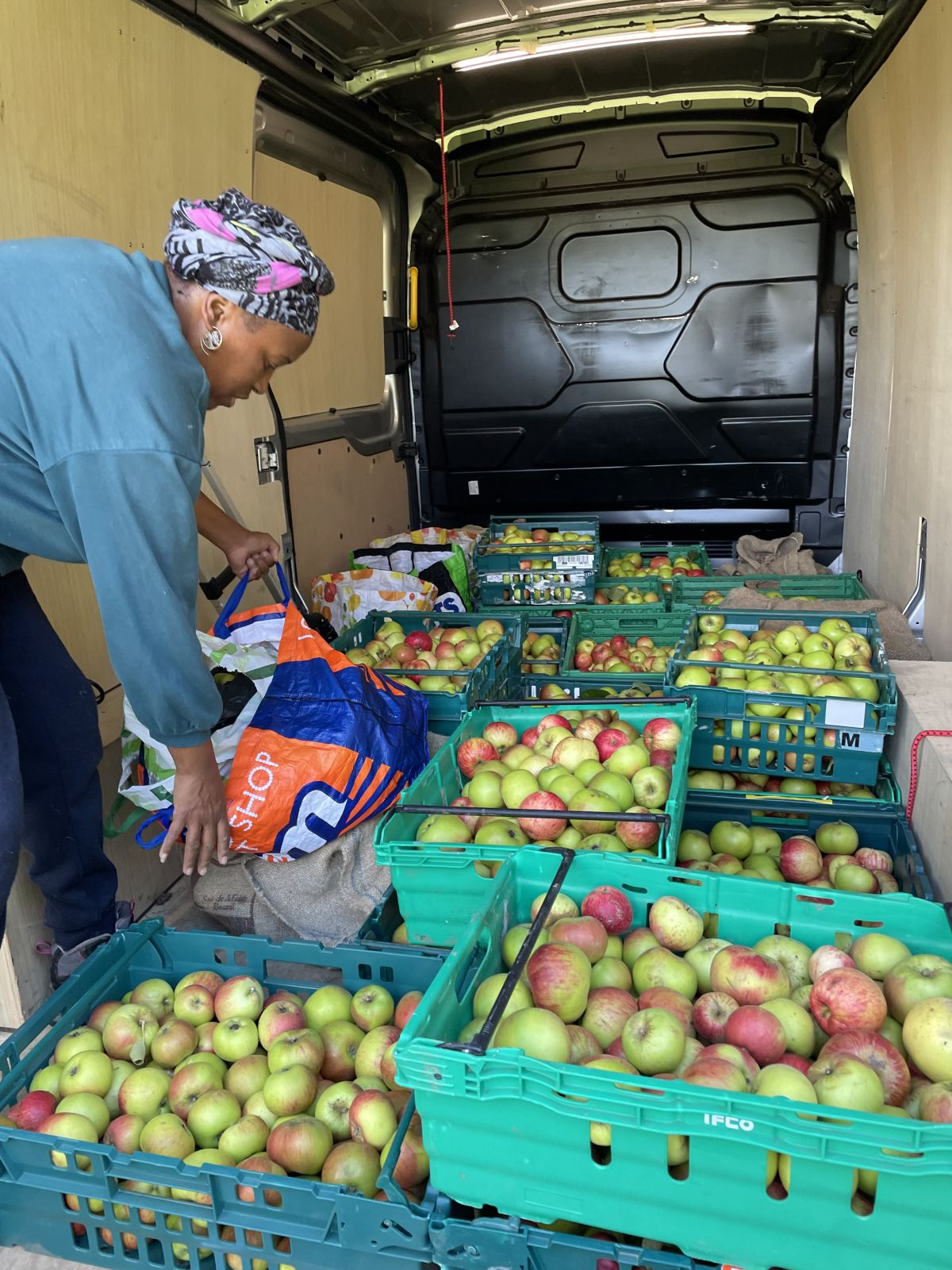
The funding enabled groups to expand their capacity by hiring coordinators and assistants, strengthening relationships with farmers and managing volunteer logistics. It also supported practical investments, from harvesting tools to infrastructure. Deal With It purchased a defibrillator, while Sussex Surplus invested in a shiny second-hand electric van.
A key focus of the project was to support gleaning groups to become more sustainable longer-term. Alongside increasing capacity, Foodrise supported groups to build skills in communications, grant writing and developing new income streams, ensuring they are better equipped to thrive in an increasingly competitive funding environment. We are grateful to Embrace Finance and Nova Fundraising for their support in the developing the capacity of the gleaning hubs.
This Defra project marks the final chapter of Foodrise’s direct coordination of the Gleaning Network, as the organisation shifts towards a national campaigning strategy. Over the years, gleaning has evolved from a Foodrise-led initiative into a thriving, community-driven movement. Today, independent groups work closely with local farmers and communities to ensure good food doesn’t go to waste.
These groups exist in all shapes and sizes, and operate in many different ways. Avon Gleaning runs small, regular sessions with a local community farm, while Still Good Food redistributes tonnes of surplus produce at scale. Whatever the model, each group plays an important role in connecting people to the realities of our food system.
Foodrise has always been clear: gleaning is not a solution to poverty. It should not replace a fair food system where farmers are paid properly for their crops, and everyone can afford nutritious food. But it is a powerful way to engage people – sparking awareness, conversation and action – whilst also offering a practical response to frequent occurrence of farm level surplus.
For many, including Ren, that impact is personal:
“Since that day on the field as a student in Kent, my life course was redirected. I was so outraged by the level of waste I saw and how hidden the issue was, I’ve been in the sustainable food and farming sector ever since. I’ve worked as a campaigner, food grower, food growing teacher, public health nutritionist and community organiser, all with a central aim of getting more people involved with food and how it relates to every element of our lives. Gleaning is a brilliant way to get people tangibly connected to their food system.”
The coordination of the Gleaning Network at a national level will now become a legacy project of Foodrise. While networks are vital for building movements, there is also value in knowing when to step back. Foodrise has played an important role in growing gleaning across the UK, but today, it is the independent groups who are leading the way. The Gleaning Toolkit website will continue to exist online as a resource for existing and prospective groups to consult and learn from.
With strong foundations, practical tools, and years of shared learning behind them, gleaning groups across the UK are well placed to continue growing and inspiring new initiatives. It seems fitting that the final funded project for the Gleaning Network involved groups whose existence has been supported and enabled by Foodrise, and managed by one the first ever gleaning volunteers.
While this Gleaning Network chapter is closing, the future of gleaning is firmly in the hands of groups and communities across the UK who are stronger than ever.


Environmental sector is uniting to express concern over upcoming Supreme Court judgement which could put environmental justice at risk
In 2023, Foodrise mounted a legal challenge to the government over the environmental impact of the UK-Australia trade deal, which gives Australian meat and dairy producers tariff-free access to the UK market, unfairly undercutting UK farmers who operate to higher environmental and welfare standards.
The High Court granted the case Aarhus costs protection, which sets a £10,000 cap on the costs to pay if we go to court and lose.
But the government successfully appealed the judge’s decision to grant the cost cap on the grounds the legislation being challenged was about tariffs rather than environmental issues – despite Foodrise bringing the case because of climate concerns.
The loss of the cost cap is extremely worrying for the wider environmental sector for two main reasons:
Essentially, legal routes to environmental justice are now at risk.
For this reason, we are challenging the Court of Appeal’s decision at the Supreme Court on 11 June.
We have taken this important step because accessing the legal system is a critical component of our work and the work of others on behalf of the needs and rights of wider society and nature.
Ahead of the hearing, we’re issuing a public statement to highlight the significance of this issue and unite with organisations across environmental, climate and food sectors who share our concern.
If your community group or organisation is working for a better, greener UK, please join Foodrise and allies including by adding your name to the statement or contacting hello@foodrise.org.uk.
—————————————————————————————————————————————–
Timeline of events
May 2023: Foodrise launches a formal legal challenge against the UK government over inadequate assessment of the environmental impacts of the UK-Australia Free Trade Agreement. The deal gives Australian producers significant (tariff-free) access to the UK market to sell beef, lamb and mutton and dairy. Foodrise’s key argument is that climate change impacts were not properly assessed before UK legislation implemented the agreement and that the government failed to have regard to the UN Framework Convention for Climate Change when signing the trade agreement. This has important implications for future trade deals. More detail here.
July 2023: Judicial review filed. Foodrise is represented by Leigh Day. More detail here.
June 2024: Permission to bring the judicial review challenge with an Aarhus costs cap granted by the High Court.
July 2024: The (previous Conservative ) government files an appeal to challenge the Aarhus costs cap on the case at the Court of Appeal (CoA), contesting that the claim relates to the environment.
May 2025: The new Labour Government pursues the appeal (it was previously expected the new government would drop the attempted block). The CoA rules in favour of the government and the costs cap is removed. More detail here.
July 2025: Foodrise applies to the Supreme Court to contest the Court of Appeal’s ruling on the cost cap. Foodrise argues that the government’s appeal could put the UK in breach of the Aarhus Convention. More detail here and here.
October 2025: Supreme Court grants Foodrise permission to appeal. More detail here.
April 2026: Supreme Court grants Friends of the Earth and the Environmental Law Foundation permission to file written submissions in support of Foodrise’s case.
11 June 2026: Supreme Court hearing date

A new form of factory farming
If you’ve been following Foodrise’s campaigning for a while, you will know that most of the salmon eaten around the world is farmed. Raised in marine cages off the coasts of Norway, Chile, Scotland and Canada.
But what you may be less familiar with is that companies are now starting to experiment with producing salmon in tanks on land. This is a new form of factory farming, bringing with it a fresh wave of animal suffering and environmental harms.
Salmon – born to swim through rivers and seas – are being crammed into sterile tanks on land, circling endlessly under artificial lights inside factories and warehouses.
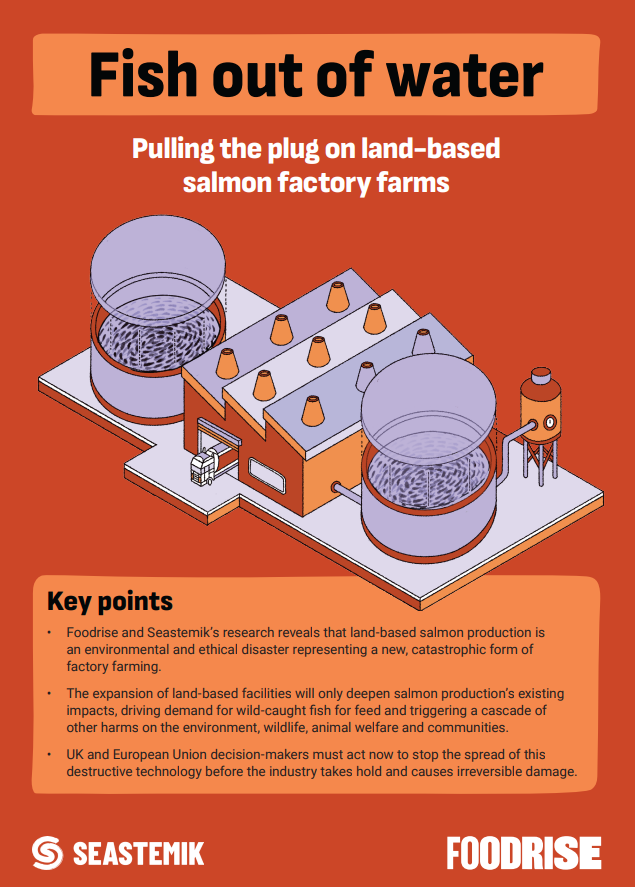
As outlined in our briefing Fish out of water – Pulling the plug on land-based salmon factory farms – published with oceans NGO Seastemik and endorsed by more than 20 organisations globally – these factory fish farms are only deepening the industry’s existing harms.
Whether on-land or at sea, salmon farming is an astonishingly inefficient and unsustainable food production system. It takes up to 6kg of wild fish to produce just 1kg of farmed salmon, harming marine ecosystems and taking food away from coastal communities.
Tech failures at land-based fish farms are leading to repeat mass mortality events where thousands of fish die. Our research has identified at least 17 major mortality incidents since 2020. Alongside this, up to six times more salmon are crammed into tanks compared to marine cages, amplifying intensification and animal suffering.
Land-based salmon is nothing more than factory farming.
Abel & Cole is opening the floodgates to this new fronter of factory farming
Last year Abel & Cole, the organic food delivery service, made the switch from selling salmon raised in marine cages to salmon produced in land-based tanks.
Foodrise has already been in communication with Abel & Cole, alerting them to the harms of land-based salmon, but they are continuing to promote land-based salmon as ‘responsibly farmed’ and a ‘trailblazing alternative’.
We’re deeply concerned that Abel & Cole’s move to land-based salmon will open the floodgates for other companies to follow suit – resulting in exponential growth of this new frontier of factory farming.
Are you being fooled?
Abel & Cole’s promotion of land-based salmon is misleading customers who want to make sustainable choices. Their website is full of customer reviews who are happy to be able to buy – and eat – so-called “sustainable” salmon. But how wrong they are.
“I regularly shop with Abel & Cole and I’m utterly appalled that they would seek to profit from such awful factory farming,” says Denise Long from Southampton after we brought Abel & Cole’s salmon sourcing to her attention.
Adding: “If a product can’t be sourced ethically and sustainably, then a company such as Abel & Cole should stop selling it altogether. If they continue to sell salmon produced in this way, then I will have no choice but to withdraw my custom.”
What can I do?
By pushing back against companies opening the floodgates to this new form of factory farming, we can still stop it becoming the new normal.
That’s why we’re urging Abel & Cole to tell the truth and stop supporting factory farming before it’s too late.
This is your chance to join our calls and say no to factory farming.
Take a couple of minutes to contact the company using our email template and join us in amping up pressure to do the right thing.
Amelia Cookson is Industrial Aquaculture Campaigner at Foodrise
Organic food delivery service Abel & Cole is misleading its customers with claims that a switch to salmon produced in land-based tanks is a guilt-free way to enjoy fish, according to the experts at charity Foodrise as they urge the business to tell the truth over environmental harms.
Abel & Cole has now stopped selling salmon reared in marine cages due to “increasing welfare and environment risks”. But its shift to salmon produced in land-based factory farms – which it calls a “trailblazing alternative” and “an even better solution than organic” – carries a fresh wave of environmental and ethical harms .
Land-based salmon farms are opening up a new front in the industry’s aggressive expansion, which is fuelling the continued extraction of wild fish used in feed, harming biodiversity and taking food from coastal communities. There are also issues with technology failures leading to major mortality events where thousands of fish die.
Contact Abel & Cole asking them to tell the truth and stop supporting factory fish farming.
Abel & Cole is being urged to tell the truth to its customers and develop a transition plan away from selling all farmed salmon. The charity believes Abel & Cole’s greenwashing justification for selling salmon produced on land will open the floodgates for other companies to follow suit – resulting in exponential growth of this new frontier of factory farming.
Foodrise has written to Abel & Cole raising its concerns but has yet to receive a response. It has also published a briefing Fish out of water: Pulling the plug on land-based salmon farms outlining the environmental and ethical impacts. The briefing was published jointly with French campaign group Seastemik and endorsed by 22 organisations including Greenpeace Africa, Green Britain Foundation, Communities Against Factory Farming and World Animal Protection.
This comes as the UK’s first land-based industrial salmon farm was given the greenlight in Cleethorpes last year. While a decision on a further factory in land-locked Wiltshire is currently being considered by the local council.
There has been significant local push back against these plans with hundreds of objections lodged against the industrial scale factory farms in the local councils’ consultation periods.
Abel & Cole’s website claims land-based salmon is ‘responsibly farmed’ and ‘limits environmental harm and increases welfare’. But the reality is that salmon produced on land in tanks is an ethical and environmental problem driving the extraction of wild caught fish, often taken from food insecure regions like West Africa, for feed and shocking animal welfare conditions.
Misled customers
The company’s website is full of examples of customers being completely misled by Abel & Cole’s claims, including “we’ve not eaten salmon for 5 years now thankfully this responsibly farmed salmon, juicy and very tasty” and “reassuring to know that these salmon are not damaging the wild fish population”.
Customers shop with Abel & Cole because of its commitment to sustainability and ethical sourcing – but this isn’t the reality for its land-based salmon.
Natasha Hurley, Deputy Director at Foodrise, said: “Abel & Cole is failing its customers by selling them salmon farmed on land. We are deeply concerned that this move will open the floodgates on demand for land-based salmon. The reality is that this form of industrial salmon farming is fuelling devastation to wild fish populations, continued food colonialism and has profound impacts on animal welfare.
“Customers shop with Abel & Cole because it is a sustainable business which purports to care about people and planet. That’s why Abel & Cole must act to remove the greenwashing claims from its website and urgently develop a transition plan away from selling farmed salmon.”
Denise Long, an Abel & Cole customer from Southampton, said: “I regularly shop with Abel & Cole and I’m utterly appalled that they would seek to profit from such awful factory farming. The consequences for the welfare of thousands of fish and the environmental impacts don’t bear thinking about. If a product can’t be sourced ethically and sustainably, then a company such as Abel & Cole should stop selling it altogether. If they continue to sell salmon produced in this way, then I will have no choice but to withdraw my custom.”
Contact Abel & Cole directly
Write to Abel & Cole using our email template asking them to tell the truth and stop supporting factory fish farming.
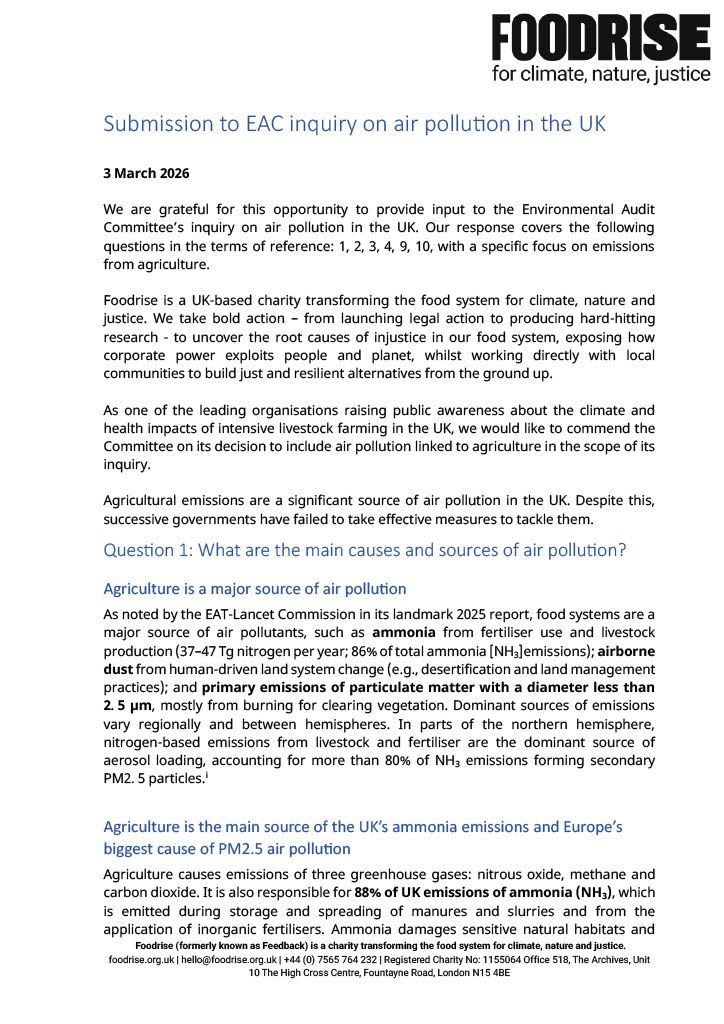
Foodrise has submitted a response to the Environmental Audit Committee’s inquiry on air pollution – outlining how agricultural emissions are a significant source of air pollution in the UK, and what actions the government must take to tackle them.
What’s the problem?
Agricultural emissions are a significant source of air pollution in the UK.
Agriculture causes 88% of UK emissions of ammonia (NH3), which is emitted during storage and spreading of manures and slurries and from the application of inorganic fertilisers. Agriculture is also estimated to be Europe’s biggest cause of fine particulate matter (PM2.5) air pollution – caused primarily by livestock manure and overapplication of fertilisers.
This pollution is harming us and the planet.
Ammonia damages sensitive natural habitats and contributes to particulate pollution in urban areas.
Air pollution from agriculture is a major public health threat linked to high mortality. According to the EAT-Lancet report (2025), agriculture accounts for one-fifth of global mortality related to poor air quality, which is largely due to nitrogen pollution from fertilisers.
Despite this, successive governments have failed to take effective measures to tackle them. In fact, we’ve seen unchecked expansion of intensive livestock units in recent years, with a 20% increase in megafarms since 2016.
Solutions
Research shows that reducing meat and dairy consumption is one of the best ways to reduce nitrogen pollution.
A 2014 study estimated that halving European meat and dairy consumption could lead to 40% lower nitrogen emissions. A 2022 study estimated that shifting to the Planetary Health Diet would see an estimated 23.4% drop in EU and UK fertiliser use.
A shift to lower meat and dairy consumption also has numerous potential co-benefits for public health and the environment. Low-meat diets have been shown to have approximately half the emissions and land use of high meat diets, whilst vegan diets have around a quarter of the emissions and land use of high meat diets.
Policy recommendations
There are several policy levers that the UK can use to achieve dietary change:
Read the submission:
The government must amend the National Planning Policy Framework (NPPF) to halt the expansion of factory farming, according to a letter signed by Communities Against Factory Farming, and green energy industrialist Dale Vince [1].
In another blow to the under-fire Labour government, 19 prominent environmental, public health and animal welfare groups, including The Vegan Society, Foodrise and Plant-Based Health Professionals UK, today [10/03/26] urged the government to rethink its flagship planning policy reform.
In the letter, the campaigners warn that the current draft NPPF “risks embedding decades of industrial livestock land use in rural and Green Belt locations without adequate scrutiny.” Instead, the government should “amend the NPPF to reflect the need for a just transition towards a sustainable, predominantly plant-rich food system”, the letter urges.
The letter comes in response to the Ministry for Housing, Communities, and Local Government’s consultation on a revised version of the National Planning Policy Framework that closed on Tuesday. If implemented, the new NPPF would facilitate the rapid expansion of factory farming by limiting local governments’ power to challenge the national framework.
Maya Pardo, Legal Strategy Coordinator at Communities Against Factory Farming (CAFF), and a signatory of the letter, said:
“The new NPPF would take power away from communities and allow conglomerates to build more factory farms without local democratic scrutiny. This reckless government is essentially proposing a national policy to encourage intensive livestock expansion.
“Stopping the expansion of harmful factory farming systems and prioritising growing crops for food instead of animal feed is crucial for food security, benefitting national health, and allowing ecosystems to recover. Rather than promoting the uncontrolled expansion of industrial livestock facilities, the government should create the legal environment for a plant-rich food system which protects communities and the planet.”
Communities Against Factory Farming has supported communities across the UK in challenging harmful intensive farming developments. In the past year alone, CAFF has helped overturn multiple planning applications for intensive farming units after legal challenges revealed failures in environmental assessment and planning procedure [2] [3].
Under the proposed changes, substantial weight should be given by decision makers to the economic benefits of “modernisation” of livestock, which refers to intensification. The intensification of the livestock industry has reduced Britain’s food security, with 40% of UK cropland now used for growing animal feed, and three million tons of soy imported every year to feed livestock [4].
A recent report by the Joint Intelligence Committee identified food security as a major risk to national security, explaining that ecosystem collapse around the world is likely to lead to food insecurity [5]. Policies that encourage more efficient and sustainable agriculture, such as arable farming, forestry, and horticulture, are required to make our food system more resilient. The report also noted that “food production is the most significant cause of terrestrial biodiversity loss” and that “the UK is unable to be food self-sufficient at present, based on current diets and prices”.
Instead, say campaigners, the NPPF should adopt a food-first policy of encouraging arable farming and horticulture for human consumption.
Labour is already facing accusations of abandoning its environmental ambitions. Last month, public figures including Vince signed a letter that accused the government of having “lost its way” on its environmental ambitions [6]
Promoting factory farming development on a national level would be a major deviation from Labour’s environmental pledges. Industrial livestock production is a leading cause of ammonia emissions, water pollution, greenhouse gas emissions and biodiversity loss. The livestock sector contributes approximately one-third of global anthropogenic methane (CH4) emissions and is responsible for up to 19.6% of greenhouse gas emissions measured in CO2 equivalent, while a transition to plant-based diets could reduce food related emissions by as much as 80%. The Climate Change Committee recommends a 25% cut in meat consumption by 2040, a 35% cut by 2050 (40% for beef and lamb), and a 20% reduction in dairy consumption by 2035.
Factory farm expansion does not align with the government’s other strategic priorities. A primary motivation for the NPPF reform is to help “tackle this country’s housing crisis”, yet industrial livestock production is directly responsible for blocking rural housebuilding: new homes cannot be built in many rural areas because water catchments are polluted by livestock manure and animal feed pesticides [7]. Research has also shown that pig and poultry farms impose over £1.2 billion annually in hidden costs on the public [8].
Natasha Hurley, Deputy Director of Foodrise, said: “The government’s proposed planning reforms would give environment-wrecking factory farms a green light to expand despite the damage they are already doing to communities, air quality, and rivers across the UK. We are urging politicians to act in the public interest and reform the planning system to support sustainable food production instead.”
References
[1] https://www.caff.org.uk/nppf-consultation-joint-response
[2]
[5]
[6] https://www.businessgreen.com/news/4525687/government-lost-green-step-calls-uk-nature-policy-reset
[7]
The government is being forced to defend a new trade measure which will flood the country with cheap sugar – using taxpayers’ money to undermine its commitments on climate and public health.
Legal proceedings have been threatened against the government by charity Foodrise over its decision to substantially increase the raw sugar cane Autonomous Tariff Quota (ATQ). This is a trade measure that allows raw cane sugar to be imported into the UK tariff-free and amounts to a £90 million yearly tax break [1] – which could instead pay for more than 35 million free school meals [2].
This tax break on sugar imports came into force on 1st January and is not due to end until December 2033. The announcement stands in stark contrast to the government’s recent strengthening of the soft drinks industry levy, which was widely welcomed as a public health measure.
Foodrise has put the Department of Business and Trade on notice of this potential legal action, which seeks the Government to reverse its reckless decision to increase the subsidy from 260,000 to 325,000 tonnes of raw sugar cane imports.
The charity, which works to transform the food system, is calling on Peter Kyle MP, the Secretary of State for Business and Trade, and Chancellor Rachel Reeves MP, to reverse the ATQ increases. If they refuse, then Foodrise plans to bring a claim for judicial review.
Tate & Lyle is the sole importer of raw sugar cane – which means this amounts to a £90million a year tax break to just one company.
The letter is a formal legal warning sent before court proceedings begin. Foodrise has argued that in renewing the ATQ the government has failed to take into account both its climate and public health commitments, to the detriment of domestic legislation and the UK’s international obligations. Foodrise highlights the lack of an environmental impact assessment and failure to assess the impacts of the policy decision on groups particularly vulnerable to health conditions caused by over consumption of sugar.
Sugar supply is already nearly three times greater than the maximum safe limit for population consumption in the UK, with enough domestic supply from British sugar beet farmers to meet the population’s recommended daily allowance.
Since the ATQ was introduced, Brazil has become the UK’s dominant supplier of raw cane sugar. Foodrise has outlined its concerns to the government over the environmental impact of Brazilian sugar consumption, including water use, soil erosion and deforestation of the Amazon and Atlantic Forests. Additionally, imported sugar cane has a far higher impact than British grown beet driven by emissions from its transportation.
The overconsumption of sugar contributes to major public health challenges including obesity, tooth decay, type 2 diabetes, and hypertension. On average, hospitals in England perform 83 decay-related tooth extraction operations each day on children and teenagers, costing the NHS £45.8 million per year [2]. This is equivalent to half of the £90million yearly subsidy to enable more sugar to flood into the country.
Natasha Hurley, Deputy Director at Foodrise, said:
“The decision to subsidise more sugar coming into the country is absolutely nonsensical for so many reasons, including that we already have an oversupply purely from sugar beet grown in this country. Any decision on trade by the government should prioritise the country’s health, support British farmers and properly – and transparently – consider environmental impacts. The sign off to substantially increase the ATQ on raw cane sugar imports falls way short on all three, which is why the decision must be reversed and quickly.”
Rowan Smith, solicitor at Leigh Day, said:
“Foodrise is concerned about the potential unlawfulness of the Autonomous Tariff Quota. They believe important considerations about climate change impact and worsening public health appear not to have been properly taken into account and hope that this letter prompts the Secretary of State to look at this issue again.”
Dr Kawther Hashem, Head of Research and Impact at Action on Sugar, said:
“It is astonishing that the government has introduced a trade measure allowing raw cane sugar to be imported into the UK tariff-free, which effectively equates to handing out a £90 million annual tax break. That money could fund 35 million free school meals instead. At a time when families are struggling, the last thing we need is another tax giveaway to companies importing sugar we simply do not need. As a country, we already consume at least twice the recommended maximum amount of sugar, contributing to rising rates of childhood obesity and tooth decay.”
ENDS
References
[1] Imports of raw cane sugar would cost £28 per 100kg outside of the tariff-free quota, so the full 320,000 tonnes tariff-free saves them £89,600,000: https://www.gov.uk/government/consultations/review-of-the-uks-raw-cane-sugar-atq-and-related-considerations/raw-cane-sugar-autonomous-tariff-quotas-atqs-public-consultation-information
[2] Institutions receive funding at a rate equivalent to £2.53 per student per meal: [Withdrawn] Free meals in further education funded institutions guide: 2023 to 2024 academic year – GOV.UK
[3] Short statistical commentary for hospital tooth extractions in 0 to 19 year olds 2024 – GOV.UK

Foodrise’s Blue Empire: 2026 Summary Update provides a progress update on the impact of Norway’s enormous salmon farming industry on communities in West Africa two years on from the publication of our landmark report.
In it, we highlight key changes to corporate sourcing practices and policy developments.
What’s the problem?
The global salmon farming industry is creating a new type of food colonialism, extracting huge quantities of wild fish from the Global South, not to feed people, but to feed farmed salmon in the Global North.
Our Blue Empire report, published in 2024, exposed the role of the world’s biggest producer of farmed salmon, Norway, in this global chain of extraction.
For the first time, we quantified the huge volume of wild fish used by the Norwegian salmon farming giants and detailed how they were taking fish from communities in West Africa, who rely on it as both food and a source of income, to fuel corporate profits.
Key updates:
Policy recommendations:
We recommend that Norwegian government:
What the experts say:
Amelia Cookson, Campaigner at Foodrise, said:
‘The Norwegian salmon farming industry cannot be left to police itself. This enormous industry is continuing to hoover up huge quantities of wild fish in West Africa, harming communities to fuel corporate profits. They must stop now. Guinea-Bissau is leading the way in turning the tide on this destructive industry by banning the production of fishmeal and fish oil. It’s time for other countries to step up and regulate this harmful industry.’
Read the updated summary:


CAP at the Crossroads: Reforming EU CAP subsidies to support healthy sustainable diets, a new report from Foodrise, reveals the scale of EU common agricultural policy (CAP) subsidies directed to meat and dairy, and makes the case for reform to support healthy sustainable diets.
What’s the problem?
Animal-sourced foods are estimated to cause a staggering 81-86% of the total greenhouse gas emissions from EU food production, yet only supply an estimated 32% of calories and 64% of protein consumed in the EU.
This new report reveals that a hugely unfair share of EU CAP subsidies, worth billions of euros of EU taxpayers’ money, are directed to propping up high-emissions meat and dairy production, and to promote meat and dairy products.
The EU is at a crossroads – poised to make crucial decisions on the future of CAP for 2028–2034. Right now, it has the opportunity to support a transition to healthy sustainable diets – a huge economic opportunity with multiple benefits for EU food security, climate mitigation, nature and health. Or continue with a broken status quo.
Key findings:
Solutions
Calls have been growing for agricultural subsidies to be reformed to support a shift to healthy sustainable diets and reduced livestock numbers – including the EU’s Group of Chief Scientific Advisors, the European Court of Auditors, the World Bank, and the 2025 EAT-Lancet Commission.
The benefits this could bring are huge.
The adoption of the plant-rich Planetary Health Diet in high-income countries could reduce agricultural production emissions by an estimated 61%. It could also reduce the EU’s reliance on food imports, boost agricultural incomes, reduce EU fertiliser use by about a quarter, reduce deaths from air pollution, and prevent up to up to 10–39% of cancers in Europe.
Policy recommendations
We recommend that EU policymakers:
What the experts say
Martin Bowman, Senior Policy and Campaigns Manager at Foodrise, said:
“It’s scandalous that such an unfair share of EU subsidies, worth billions of euros of EU taxpayers’ money, are being pumped into propping up high-emissions meat and dairy production and distorting European diets. CAP is at a crossroads, and EU policymakers have a huge opportunity to switch course and take the action required to support a just transition to healthy sustainable plant-rich diets. Which we know have the potential to boost farmer incomes, reduce reliance on imports, mitigate climate change, improve Europeans’ health and restore nature.
“At the very least, plant-based foods deserve a fairer share of CAP subsidies, to compete on an equal footing. In line with the recommendations of the landmark Strategic Dialogue report, EU policymakers should urgently introduce a Plant-Based Action Plan to promote plant-based foods across the supply chain, and an Agri-food Just Transition Fund to support farmers in the transition. The shameful use of EU funds to promote meat and dairy to EU citizens – which is directly contrary to EU health and climate goals – should end immediately.”
Read the full report:
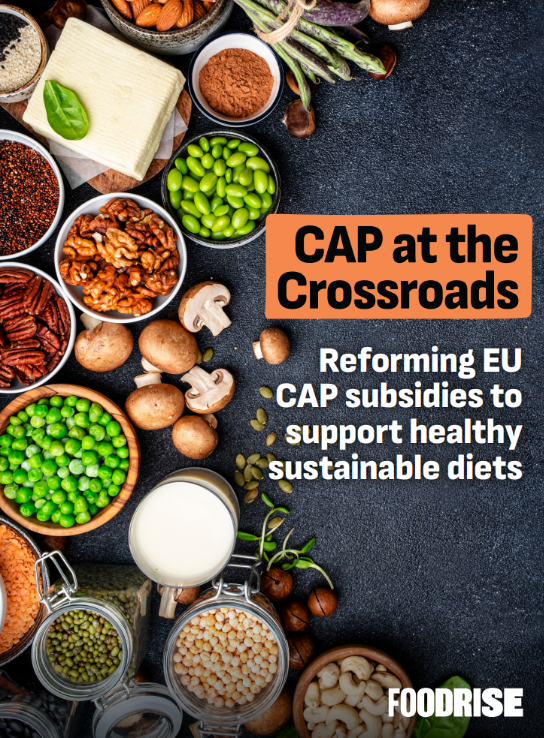
High-emissions beef and lamb received an estimated 580 times more common agricultural policy (CAP) subsidies from the European Union than legumes such as lentils and beans in 2020 (€8 billion compared to just €14 million), according to shocking figures released by charity Foodrise.
Similarly, dairy received an estimated 500 times more CAP payments than nuts and seeds (€16 billion compared to just €29 million). Overall, the EU directed three times more CAP subsidies to production of high-emitting meat and dairy than to plant-based foods in 2020 – around 77% of total CAP subsidies for farmers (€39 billion out of €51 billion).
The breakdown of funding for individual food types by the EU is published today in a new report, CAP at the Crossroads, from charity Foodrise (formerly Feedback) showing the production of meat and dairy received over 10 times more CAP subsidies than fruit and vegetable production, and over 16 times more than cereal production.
This comes as EU policymakers are due to make crucial decisions this year on public money given to farmers through its common agricultural policy for 2028–2034, with the significant risk that meat and dairy will continue to get the lion’s share.
These disparities come despite animal-based foods being estimated to cause between 81 and 86% of the embodied greenhouse gas emissions (the total emissions released during the lifecycle of products) from EU food production, [1] while only providing an estimated 32% of calories and 64% of protein consumed in the EU. [2]
On average, beef causes an estimated 21-62 times more emissions compared with pulses, per gram of protein [3] – and pulses have benefits for fixing nitrogen in soils and health. [4]
Calls have been growing for agricultural subsidies to be reformed to support a shift to healthy sustainable diets and reduced livestock numbers – including the EU’s Group of Chief Scientific Advisors, [5] the European Court of Auditors, [6] the World Bank, [7] and the 2025 EAT-Lancet Commission. [8]
But this comes in a context of the EU rolling back environmental commitments faced by agribusiness lobbying and the rise of the far-right – and is still mulling a potential ‘veggie burger’ labelling ban reserving words like ‘burger’ and ‘sausage’ for meat products.
Martin Bowman, Senior Campaigns Manager at Foodrise, said:
“It’s scandalous that such an unfair share of EU subsidies, worth billions of euros of EU taxpayers’ money, are being pumped into propping up high-emissions meat and dairy production and distorting European diets. CAP is at a crossroads, and EU policymakers have a huge opportunity to switch course and take the action required to support a just transition to healthy sustainable plant-rich diets. Which we know have the potential to boost farmer incomes, reduce reliance on imports, mitigate climate change, improve Europeans’ health and restore nature.
“At the very least, plant-based foods deserve a fairer share of CAP subsidies, to compete on an equal footing. In line with the recommendations of the landmark Strategic Dialogue report, EU policymakers should urgently introduce a Plant-Based Action Plan to promote plant-based foods across the supply chain, and an Agri-food Just Transition Fund to support farmers in the transition. The shameful use of EU funds to promote meat and dairy to EU citizens – which is directly contrary to EU health and climate goals – should end immediately.”
The food experts highlight the economic, health and environmental benefits of the EU supporting a shift to healthy sustainable diets – with a greater transition to plant-based foods, and less meat and dairy.
In addition to a move from funding from meat and dairy to plants, Foodrise’s report recommends that the EU takes forward key Strategic Dialogue recommendations, like implementing a Plant-Based Action Plan to promote plant-based foods across the supply chain, and an Agri-food Just Transition Fund to support farmers through a just transition.
The report also recommends ending the use of EU funds for the promotion and marketing of meat and dairy.
The adoption of the healthy sustainable Planetary Health Diet in high-income countries could reduce agricultural production emissions by an estimated 61%. [9] It could also reduce the EU’s reliance on food imports, [10] boost agricultural incomes, [11] reduce EU fertiliser use by about a quarter, [12] reduce deaths from air pollution, [13] and prevent up to up to 10–39% of cancers in Europe. [14]
The European Plant-Based Food and Beverage Market is projected to grow by over 50% to USD 83.3 billion by 2030, [15] and a recent report found that alternative proteins have potential to support 414,000 high-quality jobs by 2040. [16] Healthy sustainable diets could increase average EU agricultural incomes, according to a recent study. [17]
The 2024 Strategic Dialogue on the Future of EU Agriculture resulted in a breakthrough agreement between EU farming groups, civil society, businesses and academics, which acknowledged an EU trend towards more plant-based foods and recommended “it is crucial to support this trend”. [18]
ENDS
Notes to Editors
Methodology
Foodrise analysis was based on the underlying dataset from Kortleve et al (2025), shared by researchers at the University of Leiden. Figures are calculated on a consumption basis – so subsidies for crops fed to animals are counted towards animal sourced-foods. For instance, estimates for subsidies to beef and lamb includes estimated subsidies to animal feed used to produce beef and lamb.
Further info on meat and dairy subsidies
Promotion and marketing of European agricultural products is part of the CAP. Between 2016–2020, the EU spent €252.4 million to exclusively promote European meat and dairy products, including campaigns like “Become a Beefatarian” [19]. In 2023 alone, the EU spent nearly €75 million promoting animal products, of which €29 million was for campaigns encouraging people to eat more meat. [20]
Footnotes
[1] Based on various sources: Anniek J. Kortleve et al., ‘Over 80% of the European Union’s Common Agricultural Policy Supports Emissions-Intensive Animal Products’, Nature Food 5, no. 4 (2024): 288–92, https://doi.org/10.1038/s43016-024-00949-4; Directorate-General for Agriculture and Rural Development (European Commission) et al., Future of EU Livestock: How to Contribute to a Sustainable Agricultural Sector ? : Final Report (Publications Office of the European Union, 2020), https://data.europa.eu/doi/10.2762/3440; European Court of Auditors, Common Agricultural Policy and Climate: Half of EU Climate Spending but Farm Emissions Are Not Decreasing (European Court of Auditors, 2021), 28, https://www.eca.europa.eu/lists/ecadocuments/sr21_16/sr_cap-and-climate_en.pdf.
[2] EC, EU Agricultural Outlook, 2024-2035 (European Commission, DG Agriculture and Rural Development, 2024), 18, https://data.europa.eu/doi/10.2762/2329210.
[3] Joseph Poore and Thomas Nemecek, ‘Reducing Food’s Environmental Impacts through Producers and Consumers’, Science 360, no. 6392 (2018): 987–92, https://doi.org/10.1126/science.aaq0216.
[4] Fabio Stagnari et al., ‘Multiple Benefits of Legumes for Agriculture Sustainability: An Overview’, Chemical and Biological Technologies in Agriculture 4, no. 1 (2017): 2, https://doi.org/10.1186/s40538-016-0085-1.
[5] Directorate-General for Research and Innovation (European Commission) and Group of Chief Scientific Advisors (European Commission), Towards Sustainable Food Consumption: Promoting Healthy, Affordable and Sustainable Food Consumption Choices (Publications Office of the European Union, 2023), 29, https://data.europa.eu/doi/10.2777/29369.
[6] European Court of Auditors, Common Agricultural Policy and Climate: Half of EU Climate Spending but Farm Emissions Are Not Decreasing (European Court of Auditors, 2021), 28, https://www.eca.europa.eu/lists/ecadocuments/sr21_16/sr_cap-and-climate_en.pdf.
[7] The World Bank, ‘Recipe for a Livable Planet: Achieving Net Zero Emissions in the Agrifood System’, World Bank, 2024, xxiii, https://www.worldbank.org/en/topic/agriculture/publication/recipe-for-livable-planet.
[8] Johan Rockström et al., ‘The EAT–Lancet Commission on Healthy, Sustainable, and Just Food Systems’, The Lancet 406, no. 10512 (2025): 1625–700, https://doi.org/10.1016/S0140-6736(25)01201-2; EAT-Lancet Commission, ‘New Landmark EAT-Lancet Commission Warns Food Systems Breach Planetary Limits’, EAT, 2025, https://eatforum.org/update/eat-lancet-commission-warns-food-systems-breach-planetary-limits/.
[9] Zhongxiao Sun et al., ‘Dietary Change in High-Income Nations Alone Can Lead to Substantial Double Climate Dividend’, Nature Food 3, no. 1 (2022): 1, https://doi.org/10.1038/s43016-021-00431-5.
[10] Zhongxiao Sun et al., ‘Adoption of Plant-Based Diets across Europe Can Improve Food Resilience against the Russia–Ukraine Conflict’, Nature Food 3, no. 11 (2022): 11, https://doi.org/10.1038/s43016-022-00634-4.
[11] Jörg Rieger et al., ‘From Fork to Farm: Impacts of More Sustainable Diets in the EU-27 on the Agricultural Sector’, Journal of Agricultural Economics n/a, no. n/a (2023), https://doi.org/10.1111/1477-9552.12530.
[12] Zhongxiao Sun et al., ‘Adoption of Plant-Based Diets across Europe Can Improve Food Resilience against the Russia–Ukraine Conflict’, Nature Food 3, no. 11 (2022): 11, https://doi.org/10.1038/s43016-022-00634-4.
[13] Marco Springmann et al., ‘The Global and Regional Air Quality Impacts of Dietary Change’, Nature Communications 14, no. 1 (2023): 1, https://doi.org/10.1038/s41467-023-41789-3.
[14] In a 20-year risk period. See: Jessica E. Laine et al., ‘Co-Benefits from Sustainable Dietary Shifts for Population and Environmental Health: An Assessment from a Large European Cohort Study’, The Lancet Planetary Health 5, no. 11 (2021): e786–96, https://doi.org/10.1016/S2542-5196(21)00250-3.
[15] Mordor Intelligence, ‘Europe Plant-Based Food and Beverages Market – Size, Trends & Share’, Mordor Intelligence, 11 November 2025, https://www.mordorintelligence.com/industry-reports/europe-plant-based-food-and-beverage-market.
[16] Systemiq, ‘Seizing the Economic Opportunity of Alternative Proteins in Europe’, SYSTEMIQ, January 2026, https://www.systemiq.earth/economic-opportunity-of-alternative-proteins-europe/.
[17] Jörg Rieger et al., ‘From Fork to Farm: Impacts of More Sustainable Diets in the EU-27 on the Agricultural Sector’, Journal of Agricultural Economics n/a, no. n/a (2023), https://doi.org/10.1111/1477-9552.12530.
[18] Strategic Dialogue on the Future of EU Agriculture: A Shared Prospect for Farming and Food in Europe (2024), 10, https://agriculture.ec.europa.eu/document/download/171329ff-0f50-4fa5-946f-aea11032172e_en?filename=strategic-dialogue-report-2024_en.pdf. 11–12.
[19] Greenpeace EU, Marketing Meat: How EU Promotional Funds Favor Meat and Dairy (Greenpeace EU, 2021), https://www.greenpeace.org/static/planet4-eu-unit-stateless/2021/04/20210408-Greenpeace-report-Marketing-Meat.pdf.
[20] Party for the Animals, ‘EU spends millions in taxpayer money on meat ads’, Party for the Animals, 30 April 2024, https://www.partyfortheanimals.com/sv/eu-spends-millions-in-taxpayer-money-on-meat-ads.
The autumn budget saw a tax break for imported raw cane sugar renewed, but it isn’t a sweet deal for public health or the environment. Sugar campaigner, Ali Hines, spotlights how this move directly contradicts government missions and why it should be reversed.
Foodrise and Seastemik have published a stark new policy briefing Fish out of water: Pulling the plug on land-based salmon factory farms – calling for governments to ban land-based salmon production.
This is a call now backed by 22 organisations including Communities Against Factory Farming, Greenpeace France, Greenpeace Africa, the Green Britain Foundation, and World Animal Protection.
Key Findings:
What is land-based salmon production?
Globally, around 70% of all the salmon we consume is farmed. Most of this happens in open net pens – giant floating cages in coastal waters. However, a new trend has emerged as companies are starting to experiment with producing salmon on land.
Using costly and high-tech systems, salmon are now starting to be raised in warehouses on land, crammed inside artificial indoor tanks. This technology is swimming under the radar and presented as the new frontier of the salmon industry, bringing with it a fresh wave of environmental harm and animal suffering.
Land-based facilities are spreading across the globe, from the USA and Canada to Norway, the Netherlands, Iceland, and the UAE. In the UK, interest in land-based salmon is growing rapidly. While no such facilities are operating yet, multiple projects are already in the pipeline.
That’s why Foodrise and Seastemik have published this new policy briefing to give this emerging technology the scrutiny it needs and raise the alarm with decision makers.
What’s the problem?
Land-based salmon farms are nothing more than industrial factory farms. These on-land warehouses are sterile, unnatural and built for mass production. Salmon are packed into barren indoor tanks, denied natural light and space, suffering until slaughter or premature death. It’s factory farming at its worst – and it has no place in our food system.
The expansion of land-based production systems will only deepen the industry’s existing harms:
What can governments do?
Around the world momentum is building to stop these factory fish farms. 22 organisations have already joined the call for a ban on this destructive industry.
However, the responsibility to stop the expansion of the destructive industry must not rest with communities and local authorities alone.
It is therefore critical that government acts now to ban land-based salmon production before it takes hold and becomes the new ‘normal’.
What the experts say
“Land-based salmon production is one of the worst forms of factory farming imaginable, reliant on the unsustainable plunder of wild fish for feed and plagued by shocking mass mortality events where thousands of fish die.
This not the future of food. Governments must act now to stop this dystopian reality,” says Carina Millstone, Executive Director of Foodrise.
Read the briefing:
Nitrogen fertiliser corporations must become as well-known as the oil and gas industry’s BP and Shell for making billions while devastating public health, biodiversity and climate, according to a new report exposing the villains of the nitrogen crisis released by charity Foodrise (formerly Feedback) today.
Synthetic nitrogen fertilisers – made by multi-nationals like Yara, CF Industries and Nutrien – are used to promote plant growth. But their overuse is seriously harming the planet: surplus nitrogen, most of which comes from agriculture, is currently more than double what the planet can sustain. Nitrogen fertilisers also release nitrous oxide – an ozone-depleting substance and potent greenhouse gas that is 300 times more powerful than CO2 in trapping heat in the atmosphere over a 100-year period.
The new report – Exhausted Earth: How corporations broke the nitrogen cycle and how to fix it – investigates the harmful industry playbook used by nitrogen fertiliser corporations to profit from pollution. This includes spending millions of dollars lobbying governments to block regulation and insidious greenwashing tactics like funding research and sponsoring conferences which paint the industry favourably.
This follows the UK government announcing its partnership with Brazil to tackle nitrogen fertilisers’ “environmental impact and embrace their economic opportunities” at COP30. The Belém Declaration on Fertilisers urges for more to be done to “enhance nutrient use efficiency and reduce emissions from fertiliser production as a key pathway to delivering climate goals, protecting and restoring nature, and ensuring food security for all in an equitable and just manner”.
Based on the landmark EAT-Lancet report, Foodrise calculates surplus nitrogen must be halved – meaning agricultural nitrogen inputs need to be cut by more than a third (42%) by 2050.
But – instead of shrinking – nitrogen fertiliser production has surged by a fifth (20%) since the first planetary boundary assessment was published in 2009, when scientists first warned that Earth’s nitrogen boundary had been breached. Food systems are the single largest driver of environmental degradation and the leading cause of planetary boundaries transgressions.
This shows the urgent need to over-turn the corporate control of our food system, as profit-driven corporations will always put making money for shareholders above people and planet.
The top three nitrogen fertiliser companies – Yara, CF Industries and Nutrien – accounted for over one-third (34.6%) of global nitrogen fertiliser production in 2022, raking in nearly $40 billion from their sales of nitrogen fertilisers. While these companies have taglines like ‘Feeding the Future’ (Nutrien) or ‘responsibly feed[ing] the world’ (Yara), they have knowingly produced such vast amounts of surplus nitrogen as to transgress planetary boundaries, putting humanity beyond its safe operating space.
In addition, the nitrogen fertiliser lobby has also expanded its presence at the United Nations climate negotiations, with triple the number of delegates from major nitrogen producers attending COP30, compared with COP26.
Fossil fuels are used to make nitrogen fertilisers which are then used to grow feed for meat and dairy. These three interconnected industries are having a colossal impact on the environment and the corporations profiting from nitrogen pollution must be tackled decisively and quickly to build a food system with fewer animals being farmed, less nitrogen fertiliser required for animal feed and a reduced need for gas extraction for fertiliser manufacture.
Strong government action and regulation is needed to protect humanity and the planet. In the new report, Foodrise is calling for reduction targets for nitrogen production in line with the EAT-Lancet recommendations.
Carina Millstone, Executive Director at Foodrise, said: “Nitrogen fertiliser corporations must become as infamous and publicly shamed as the fossil fuel giants for reaping billions in profits at the expense of public health, biodiversity and the climate. These companies are pumping millions into greenwashing nitrogen fertilisers and claiming to help feed the world – when in reality they fail it.
“Food system transformation will require significant political leadership to tackle the greatest barrier to change: corporate control. It’s time for our political leaders to rein in, require redress from and begin shrinking the nitrogen fertiliser industry before the window of opportunity closes. The nitrogen cycle must be de-corporatised if humanity is to return within its safe operating space, with a life-supporting nitrogen cycle, rather than a destructive nitrogen surplus.”
Million Belay, General Coordinator at Alliance for Food Sovereignty in Africa (AFSA), said: “Synthetic nitrogen fertilisers are devastating Africa’s soils and waters, accelerating climate breakdown, and trapping farmers in a cycle of dependence and debt. Meanwhile, powerful corporations are flooding the continent with fertilisers to maximise profit, no matter the human or ecological cost. It is time to break this toxic model. Governments and public banks must stop bankrolling harmful fertiliser expansion and invest instead in farmer-led agroecology that restores our lands, strengthens our sovereignty, and safeguards our future.”
Recommendations
To reverse the damage caused by the nitrogen fertiliser industry, Foodrise’s report demands the following changes:
We use cookies where necessary to allow us to understand how people interact with our website and content, so that we can continue to improve our service.
We only ever receive anonymous information, and cannot track you across other websites.
